New techniques to test for Down's Syndrome and oesophageal cancer feature in this week's Naked Scientists, along with the nanotechnology that may let you climb walls like spider man! We also take on your science questions and find out if it's possible to shoot a satellite, what keeps the Earth's core so hot, and how you can pass through fire unharmed! Plus, in a back-to-basics Kitchen Science - Dave makes drops of milk bounce out of his tea!
In this episode

01:42 - DNA answer to Down's Screening
DNA answer to Down's Screening
Scientists have found a simpler and safer way to screen a pregnant woman's baby for Down's and other similar genetic disorders.
 Currently the diagnosis of genetic abnormalities requires doctors to obtain samples of foetal tissue, either by drawing out amniotic fluid from around the baby and analysing the cells it contains, or by removing a small piece of placental tissue known as a chorionic villus sample (CVS). In both cases there is a small by significant risk of miscarriage, and these forms of diagnosis also require a baby to be over about 14 weeks old (12 weeks in the case of CVS).
But now Steve Quake and his colleagues at Stanford in the US have developed a technique to do the same diagnosis on a sample of the mother's blood. Their approach relies on the fact, discovered many years ago, that DNA (and to a lesser extent cells) from a developing foetus can "spill over" into the mother's bloodstream, where they can be analysed.
Writing in the journal PNAS the team analysed blood from 18 prospective mothers, 12 of whom were known to be carrying babies affected by Down's or two other conditions known as Edward's and Patau's syndromes. Each of these conditions occur when the baby has an extra copy of one of its chromosomes. The team diagnosed the condition by making copies of the DNA present in the mother's blood. Using the human genome map they were able to work out which chromosomes the copies were from and tot them up.
In a normal pregnancy, where both the baby and the mother carry the correct number of chromosomes, there should be the same number of DNA copies from all the chromosomes; but if the baby carries an extra chromosome number 21, as occurs in Down's, then there will be too many copies of the DNA from chromosome 21, alterting doctors to the problem.
Using this technique the researchers correctly identified all of the affected and normal pregnancies in the group of patients that they studied. And apart from being less invasive and therefore safer for mother and baby, there is another benefit to this approach.
According to Steve Quake the technique should work from as early as 5 weeks into a pregnancy, meaning that if termination is something a parent may elect to undergo they will know at a much earlier stage when the risks are lower and the process is much simpler.
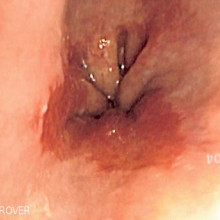
Sponge on a string could detect cancer
Oesophageal cancer, cancer of the foodpipe or gullet, is a growing problem in the UK. Not only are rates rising dramatically, but survival is often very low, mainly because the cancer isn't spotted until a very late stage when it's harder to treat.
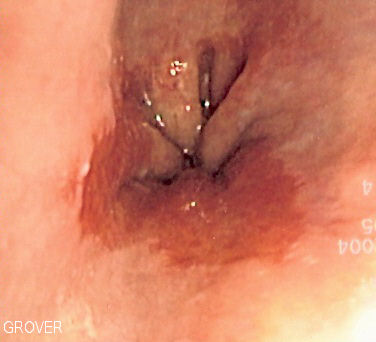 Now a new - but very simple - technique developed by Dr Rebecca Fitzgerald and her team at Cambridge University could help to identify those at greatest risk, so they can be offered preventive treatment.
It all centres on detecting a condition called Barrett's oesophagus. This is a pre-cancerous condition usually caused by acid from the stomach coming back up into the gullet - you may know it as heartburn, and it's experienced by around one in ten of the population. Then around one in ten of those will develop Barrett's oesophagus.
The acid causes the cells of the oesophagus to change, becoming more like stomach cells. This also increases the likelihood that they'll turn into cancer, and around one in a hundred people with Barrett's oesophagus will go on to get oesophageal cancer.
Currently, doctors use a technique called endoscopy to look for Barrett's oesophagus in people with chronic heartburn. This involves having to go to hospital, and have a telescope put down your gullet. It's expensive for the NHS and inconvenient and uncomfortable for people. But Dr Fitzgerald have developed a simple technique to get round this.
At the GPs surgery, a person simply swallows a little capsule on a string, which then expands in their stomach into a little sponge ball. After a few minutes, a nurse pulls the sponge back up, which removes a sample of cells from the oesophagus. These can then be examined under the microscope for signs of Barrett's oesophagus.
A survey of the technique showed that patients far prefer the sponge on a string to endoscopy, and as mentioned already, it can be easily done in a GPs surgery.
If signs of Barrett's oesophagus are found, then patients can be offered preventive treatment, such as radiofrequency ablation, which can get rid of dodgy cells and prevent the development of oesophageal cancer. And there's also research to find out if aspirin and anti-acid drugs can helps to prevent the development of oesophageal cancer in these people.
Although the technique still needs some more work, we could see it in GPs surgeries in the next five years or so, and hopefully it will make a big impact on rising rates of oesophageal cancer.
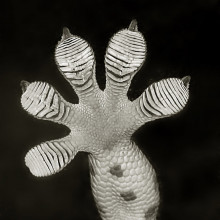
Gecko Glue
People have been fascinated by the ability of lizards called Geckos to chase their insect prey - not just on the ground, but up walls and even across the ceiling. Many scientists have tried to emulate their abilities, but up until now they have not managed to achieve the same level of stickiness.
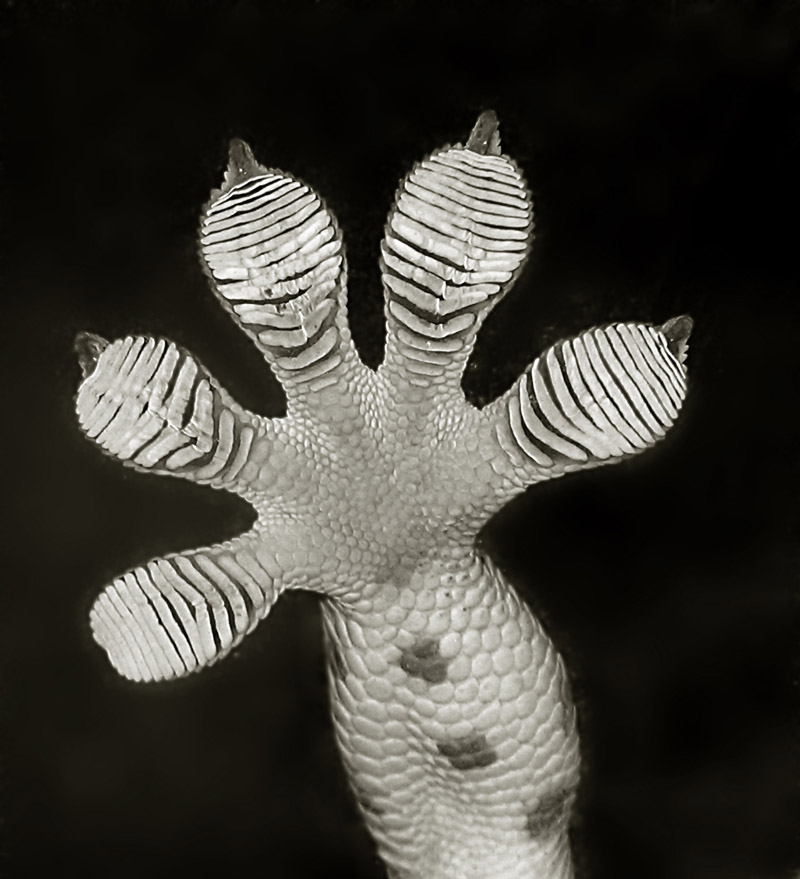 If you put two atoms very close together they will attract one another by what is called the van der waals force. This force holds materials like wax together, but normally if you push two objects together they don't stick because their surfaces are so rough that only very small areas touch. Geckos get around this by having millions of tiny hairs on their feet, hairs which branch into even tinier hairs at their ends. These hairs are flexible which means that when the Gecko pushes its feet onto the wall a large proportion of the tiny hairs are within an atoms breadth of the surface of the wall and so will stick to it. With feet like these, a Gecko can hold up about ten newtons of weight for every square centimeter of 'toe', (10N/cm2).
Scientists have been trying to copy this technique using carbon nanotubes, as they can be long and thin like the hairs on the Gecko's toes. So far, they've not had much success, but now, Liming Dai and colleagues at the University of Dayton have used carbon nanotubes with very flexible tangled ends. If you push them onto a material then the the tangled ends get very close to the surface, and stick through van der walls effects. If you then try to slide it off, the flexible ends of the tubes will drag across the material increasing the area of contact and therefore the stickyness.
Material made from these nanotubes is capable of supporting a force of 100N (or 10kg), but it does need to be pushed on to the wall with about 50N for every square centimeter in order to make it stick. This is far more than a real geckos foot requires and would make a spiderman suit a bit impractical.
However, it does have some other advantages - the nanotubes conduct electricity so it could be used instead of solder for making good electrical contacts, and, unlike many glues, they won't be affected by the vacuum of space.
So, for now, they will probably be more useful holding spaceships together than allowing people to climb buildings like their favourite web-slinging superhero!
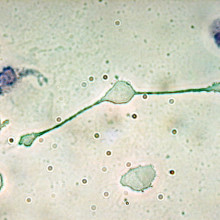
Giant-eater cells key to fat-diabetes link
Scientists have discovered the cellular culprit that causes obese individuals to develop diabetes.
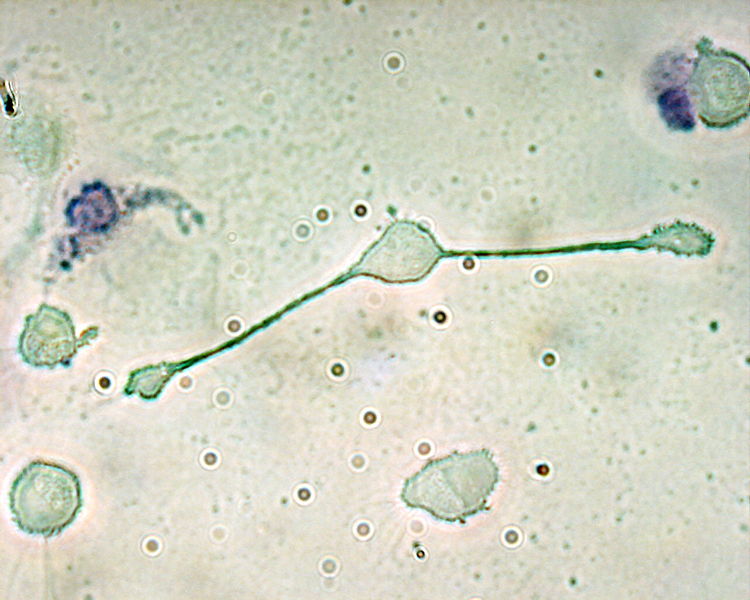 Writing in this weeks' Cell Metabolism, University of California San Diego researcher David Patsouris and his colleagues have found that an angry immune cell could be to blame. Ironically the cells involved are macrophages, Greek for "giant eaters". These are long-lived cells whose job it is to engulf and break down damaged and infectious material. But in obese individuals, in this case mice fed the rodent equivalent of junk food, a population of the cells move into muscle and fat tissue around the body and interfere with the body's handling of glucose and its sensitivity to the sugar-regulating hormone insulin.
Now, in an elegant series of experiments, the team have identified a chemical marker, CD11c, which is present on the surfaces of just these errant macrophages. This has enabled the researchers to selectively kill the cells by targeting them with the toxin made by diptheria bacteria. When this occurs in obese mice the animals show immediate and dramatic improvements in insulin and sugar levels and also markers of inflammation significantly decrease.
This suggests, the team say, that the same trick might work in humans by using the marker they have identified to target this cell population, either with drugs to shut down or disable the cells.
Exactly how the CD11c-positive macrophages are altering metabolism in this way for the moment remains a mystery, but one the researchers are hungry to get their teeth into solving.
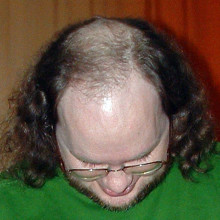
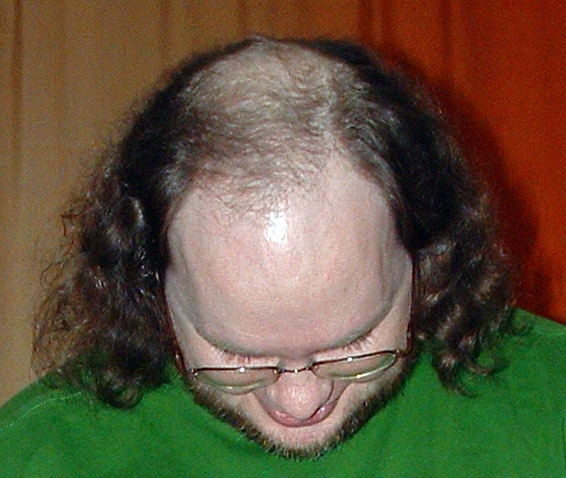
Male baldness genes found
Good news for any of our listeners who are thinning on top - two papers in Nature Genetics this week reveal genetic variations that contribute to male pattern baldness, which affects around a third if men by the time they're 45. It's the classic pattern of baldness where hair starts thinning at the temples. It's thought to be hereditary in around eight out of ten cases.
 Researchers have known for some time that there must be a gene linked to hair loss on the X chromosome - the female sex chromosome. This is the basis of the idea that baldness is inherited from the mother's side of the family. But the evidence has pointed to the role of other genes, which have been unknown until now.
The first paper, from scientists at McGill University, King's College London and GlaxoSmithKline Inc. describes two genetic variants in Caucasian men that, if found together, increase a man's risk of baldness by seven times. To find them, the researchers scanned through the genomes of 1,125 men who had been assessed for male pattern baldness.
The team found two previously unknown gene variations on chromosome 20 that substantially increased the risk of male pattern baldness. They then confirmed these findings in an additional 1,650 men. And rather surprisingly, the scientists showed that one in seven men carry both of the baldness variations.
Another team of scientists at Bonn and Dusseldorf Universities carried out similar studies on 300 men with hair loss, and pinned down an area of the genome on the X chromosome containing the androgen receptor, which binds male sex hormones. Previous research had already shown a role for this gene in baldness. But the study also revealed the same region on chromosome 20 that was also found by the team mentioned earlier.
The discovery of a gene linked to baldness that isn't on the X chromosome, which can only be inherited from the mother, may explain the similarity between hair loss patterns in fathers and sons.
Sadly, although the researchers say their discovery is a scientific breakthrough, they caution that it does not mean a treatment or cure for male pattern baldness is around the corner. But they suggest that being able to predict if someone might lose their hair could lead to effective preventive strategies.
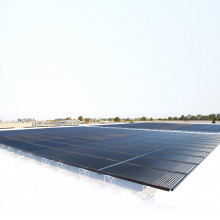
Cylindrical Solar Cells
At the moment, whilst solar cells are clean and environmentally friendly, the electricity they produce is still 3-4 times more expensive than electricity produced from fossil fuels such as coal. Part of the problem is their high captial cost of manufacture, but a less well known problem is the cost of installation. Because conventional solar cells are large and flat, they act like a great big sail in high winds, so they need to be securely bolted down. This is very expensive in terms of materials and time, especially if you are installing them on to an existing roof and in many cases this installation is more expensive than the solar cell itself.
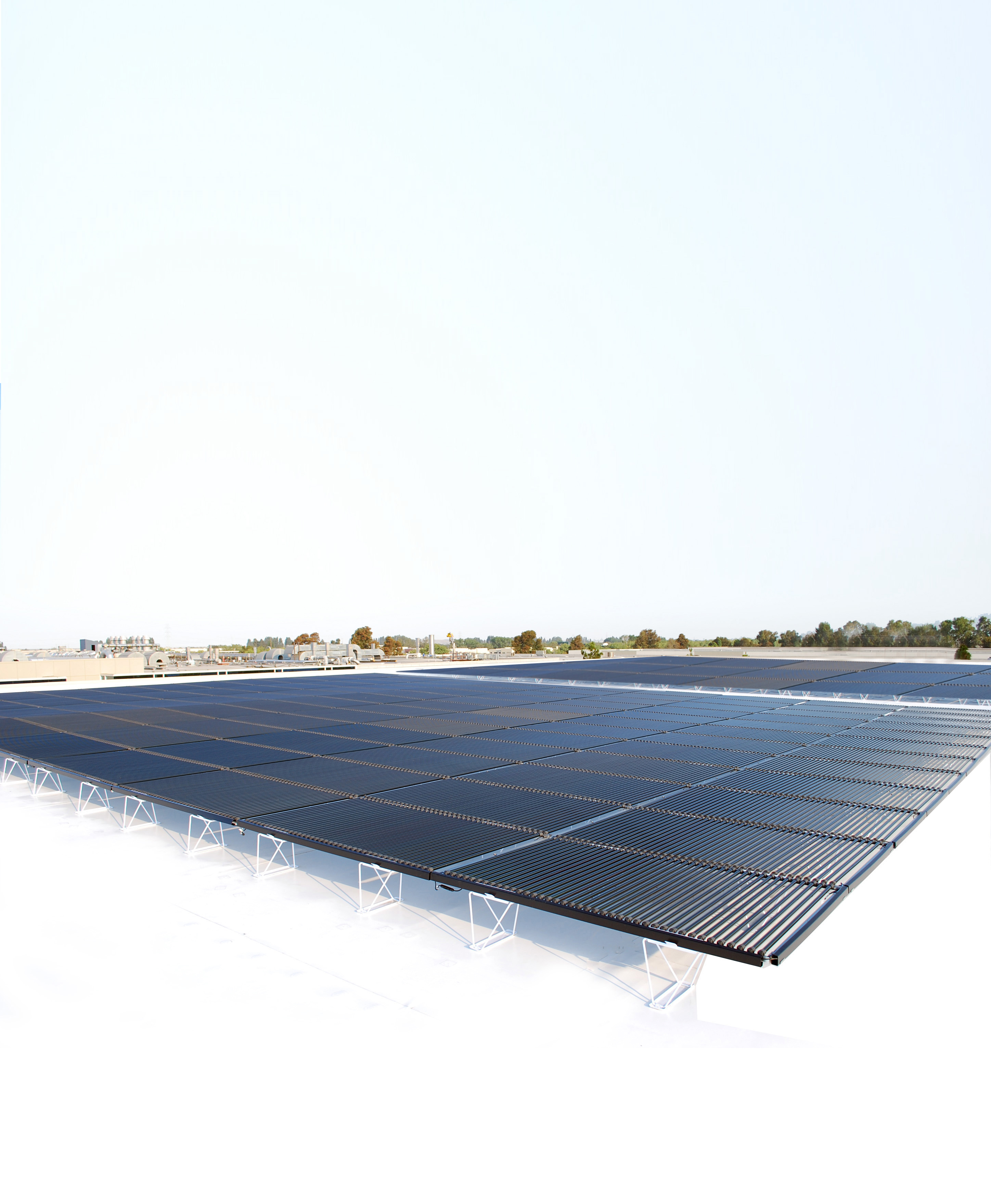 A company called Solyndra is starting mass production of a solar cell which may solve this problem. They are using thin film copper indium gallium selenide cells which only use a very thin layer of semiconductor, using less materials than conventional cells which should make the cell itself cheaper. Instead of making the solar cells into flat plates, they then form them into tubes about 3cm across. This means that they can pick up light from any direction and if you paint the roof white they will also be able to pick up reflected light from the bottom too! More importantly it means that the wind can move between them, stopping the 'sail' effect of traditional sheets of cells. This means that you don't have to bolt them down on a flat industrial roof and makes the cost of their electricity competitive with that from a fossil fuel plant.
How early in a pregnancy can you test for Down's?
Chris - Steve Quake told me when I spoke to him last week that at the moment their tests have been done at fourteen weeks which is roughly the same time you'd do an amniocentesis. But, he thinks he'll be able to wind the clock back even further and thinks we'll be doing these tests five weeks after conception. So very early in pregnancy giving people much more time to make decisions about what they want to do if they want to do anything about that.
Do the hormones that increase nose hair cause baldness?
Kat - That is a fascinating question. I think the point about male pattern baldness is that it's to do with these genes that they've identified and they're are probably other genes that are involved in things like sprouting nose hair, sprouting ear hair, back hair: all those lovely things that happen to men as they get older. Not to ladies at all which is very nice! Presumably controlled by other genetics and if any geneticists out there would like to do a study on the genes of nose and ear hair you may get funded for it. I don't know if they're linked.
Does lightning go from cloud to the Earth or Earth to the cloud?
Chris - Well, stats on lightning - lightning's fascinating and the amount of energy being unleashed all around the world all the time is absolutely huge. The stats suggest that there's something like two thousand thunderstorms raging all around the Earth at any given moment in time, unleashing about 100 lightning bolts per second. If you tot up the amount of energy that they're unleashing on us it's something like two megatonnes of TNT equivalent very day. It's huge amount of energy. Where does it all come from? It's pretty much down to static electricity. If you look at a big thundercloud there are lots of particles called hydro-meteors which are ice crystals, for want of a better expression. These are being jostled around, rubbed against each other and rubbed against the air by updraughts within the cloud. There're lots of different sizes, big ones and small ones. For some reason that scientists don't quite understand, the big ones stay at the bottom and get a negative charge. The smaller ones get a positive charge and they float towards the top of the cloud. You've now got a big charge difference inside the cloud. The concentration of negative charges at the bottom of the cloud creates an electric field which spreads out around from the cloud to involve anything that's near the cloud. That include the ground. The Earth's surface then feels this electric field pushing on it. This means that the negative charges in the surface of the Earth run away because they can move away. This makes the surface of the Earth net positive. Now there's an attraction between the two. The first thing that happens is when that charge in the cloud gets big enough to overcome the natural resistance in the air it starts to form a thing called a leader which is a very thin thread of electricity which runs down a bit of a disjointed, crackly path down to Earth. This starts ionising or stripping away from molecules of gas in the air. This creates a low-resistance pathway between the cloud and the Earth. Once that leader gets pretty close to the ground then you will get a lot of ionisation of positive from the ground coming up to meet it. Once you've made a connection then you've got a very low-resistance pathway. A lot of that charge from the cloud will come zipping down, the electrons rip down the lightning bolt creating a very big - what's called the return stroke - which then hits the ground and dissipates some of that energy. Interestingly the actual size of the lightning strike is only about the size of a one penny piece across, the actual pathway that the electricity comes down. It passes a current of something like 20,000 amps. A huge current which heats the air which it passes through to a scorching 30,000 degrees Celsius. This is something like 5 or 6 times the surface temperature of the sun. This creates this enormous shock wave because it heats up so fast. That's the thunder. The answer to the question is that it's, strictly speaking, dissipation of a lot of concentrated energy from the cloud. Electricity which is flowing away from the cloud to Earth or to another cloud or within the same cloud. Strictly speaking, the energy's flowing away from the cloud but it's a little bit of both. You've got this up-welling of positive. Charge near to the ground too.
How does a one-way mirror work?
Dave - There isn't actually such a thing as a one-way mirror. It's not possible without using some really exciting electronics. I don't know if you've ever sat inside a room where it's dark outside but light inside the room. If you look at a piece of glass all you can see is the reflection. You can't see outside. That's because a piece of glass will always reflect maybe 10% of the light that hits it. Normally if it's outside and it's brighter the light coming through it completely dominates and so you don't really notice the reflection. You just see stuff going on behind it. If it's really dark outside and there's no light coming from the outside so all you can see is a reflection. Normally, one-way mirrors are semisilvered. There's some silver on the back of them so they're more reflective than a piece of glass. Maybe they'll reflect 80% of the light which hits them so you can see the reflection very strongly. If you're in behind them it's very dark so you can't see that reflection coming through them. You can see people in the light side but the light side can't see you.
Chris - So when you see a detective story drama on telly where you've got these detectives watching someone being interviewed and they're in a brightly-lit room and the person being interviewed is in a brightly lit room, that's a myth. Dave - That wouldn't work, no.
How many times can an image be reflected between two facing mirrors?
Dave - Fundamentally, basically what happens when something hits the mirror light gets reflected. Depending on how good your mirror is a certain proportion of that light will get absorbed by the mirror. Most of it will get reflected. Normal mirrors around the house will reflect about 70% of the light. Really high-quality mirrors they use in optics labs in universities and research places will reflect 99.9% of the light. Basically it just depends how faint you can still see that light. With a normal mirror you probably won't be able to see it after ten or twenty times because it will get so dim. With really high-quality mirrors, maybe several hundred, several thousand times.

Why brief contact with a flame doesn't burn?
Kat Arney sheds some light on this one...
Kat - This is a fascinating thing to see. The first time I saw this done was by my vicar at church. I really thought, 'This man has come from God!' It was very impressive!
The thing behind this is that, basically, candles aren't that hot. The other trick is to do it fast and through the right part of the flame.
You need to know a little bit about how candles work. It all boils down to convection, heat rises. The top of the candle is much hotter than the bottom of the candle. If you ever try holding your hand over the top of the candle you find out extremely fast it's very, very hot. It's about 600 degrees.
You can actually pass your hand through the bottom of the flame because all the hot air is rising up the bottom of the flame is where all the cold air from the room is being sucked in. The bottom of the flame is quite cold. You can stick your hand through, get a bit of soot on it. You can do that so long as you do it at quite a quick speed, especially if your fingers are a bit wet. Then you'll just burn off the water rather than burning your hand.
Chris - Great, so now you can go and impress your mates with that but don't try it with a blow-torch or something!
Can you shoot down a satellite?
Dave - Do you mean a geo-stationary satellite, straight above your head or just any one in orbit?
Steve - If you knew there was one up there, directly above your head.
Dave - If you fire a bullet up fast enough you would be able to get it past the geo-stationary orbit up at about 36,000km. Basically the orbit takes exactly the same amount of time as a day so it looks like it's above our head all the time. However that still means the satellite is moving at about 11,000km per hour. I don't know if you've ever heard of people trying to shoot ducks or clay pigeons. If something's moving fast you've got to shoot in front of it because it takes a while for the clay pigeon to get to the bullet in front of it. If the satellite was straight above your head it would actually go miles and miles behind it by the time the bullet got there. If you aimed ahead enough and if you calculated it right, if you fired it out fast enough. If the escape velocity is about 11.2km/s - if it's going that fast it'll get out into the Earth's orbit and you should be able to get out of it and hit it. Chris - But you'd need a pretty powerful gun, wouldn't you Dave?
Dave - No one's built one fast enough yet!
Is the Earth getting heavier?
Chris - Yes but perhaps not for the reason that he was suggesting.
People often think that, as we increase our population, the weight of the people comes from nowhere. People just weigh more and the Earth therefore weighs more. That's not true. The Earth is an isolated system where all the of the mass that was on it to start with doesn't go anywhere. You don't make mass from nowhere, so people have got to gain weight by taking mass from elsewhere on the Earth: in other words, eating food that's come out of the Earth and into their bodies.
But, considering the planet as a whole, does that get heavier over time? The answer is yes, it can.
Every year, Earth gains about the weight of two aircraft carriers landing on it: two "HMS Ark Royals", or about 40,000 tonnes-worth of debris, which lands on Earth from space.
You can demonstrate this for yourself. If you put a big plastic sheet or a white sheet on your grass in the garden on a nice day, leave it for a few hours and then run a magnet over it. You can often find specks have just fallen down from outer space and landed on your magnet. Debris, dust and other stuff raining in from space contributes a huge amount of weight to the Earth every single year.
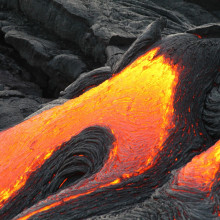
What keeps the Earth's core so hot?
Chris - It's a combination of things...
One, the Earth's quite a big planet relative to Mars, which is a bit smaller. There was a lot of heat that was in the Earth to start with. When the planets were first forming around the Sun, in what's called a protoplanetary disc, a lot of the swirling and spinning material was crammed together and squeezed together. It had a lot of heat from that, those frictional effects.
Also the Earth has what's loosely termed as radioactive compounds inside the Earth. As these radioactive compounds break down and decay they produce heat. The heat is obviously concentrated in the core of the Earth and then filters up towards the surface. Because the Earth's a big planet it's got a big core. It's got lots of radioactive decay going on. Some of the heat that we're seeing is because the Earth is sustaining it's own heat by radioactive decay.
Kat - Like having a nuclear reactor in our core...
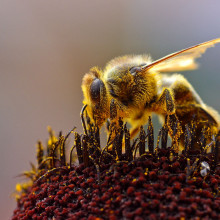
How high above ground level can bees fly?
Dave - I think there's a big difference between how high bees can fly and how high they bother to fly. There's not a lot of point in a bee flying more than a few hundred feet above the ground.
Chris - They can't bee bothered?
Dave - ...Because all their food is on the ground where they live. There's not a lot for them up high. You can find bees several thousand metres up in the Himalayas and they're flying around there. They're quite happy flying there. I think the biggest constraint is the temperature. The inside of a bee reaches nearly 50 degrees centigrade because it's using lots of energy, all the chemical reactions happen very quickly inside it. It needs to be very hot. As soon as the temperature drops they don't happen fast enough. The bee can't flap its wings fast enough so it'll fall out of the sky. I think the biggest limiting factor is temperature rather than the altitude.
Is there a temperature inside a cake at which it ought to be cooked?
Kat - There probably is because out therein the world of the internet you can buy cake temperature probes. I'm not sure off the top of my head what the correct temperature for a fruit Christmas cake is. You can also use a much cheaper toothpick method where, if you stick a toothpick in does it come out with the mixture stuck on it? That would depend on the temperature that you wanted to bake your cake at. Things like the sugar will get hot. Yeah, there will be a temperature and I'm not sure what it is.
Dave - I guess also because cooking is chemistry it might have to stay at that temperature for a certain amount of time. Just because it's got to that temperature doesn't mean it's already cooked yet. Kat - My very nerdy brother-in-law's a scientist and certainly when he does meat on the barbecue he has a temperature probe that's all electronic to make sure his steaks are cooked properly. Chris - Whatever happened to the fact we're all still here. Humans have been evolving for six million years since we split away from our ape-like ancestors and we didn't need all these things then. I don't think we need them today.
If they test atomic bombs again could it throw the Earth off its axis?
Dave - It shouldn't do anything particularly big to the Earth's axis. Although a nuclear bomb is very big, very powerful. It can release power equivalent to millions of tonnes of TNT. Compared to the weight of the Earth that's not very much energy. The amount of energy you'd need to flip the Earth over would be absolutely immense. It's just not enough energy there and also in order to do that sort of thing you'd have to build a rocket. You'd have to build a huge nuclear-powered rocket, throw a load of stuff into space and produce enough momentum to actually give a kick to the Earth which a nuclear bomb doesn't do. When a nuclear bomb goes off nothing actually leaves the Earth. It just lifts things up and lets them fall back down again.
Chris - I think probably the best evidence is that if you look at the power unleashed in the boxing day tsunami which was an enormous amount of energy - on par with something nuclear, I would say. This did make the planet jitter a tiny amount. It didn't actually destabilise the orbit.
What happens when a mild chilli plant gets pollinated with hot chilli pollen?
Kat - It's an interesting question. The misconception is that if you grow two plants close together (a hot one and a cool one) their peppers will be hot on the cool plant. Potentially their seeds could give rise to hot peppers in the next generation because the heat pepper is determined by capsaicin in the genes that make capsaicin. These are actually dominant genes so effectively if you breed a hot plant to a cool plant then the next generation - those seeds will potentially be hotter, yes.
Chris - but the fruits of the plant that are making them, they're just the genes of the plant that's growing the chillies. You've got to do the breeding experiment and grown the next generation.
Kat - Exactly. You have to take the F1 generation and plant them and then you'll get an interesting blend depending on the peppers you've bred together.
Could a magnifying glass lose its power?
Dave - A magnifying glass works because light goes slower in glass than it does in air. When it hits it, it bends. A magnifying glass is very carefully shaped so all the light which hits it at one point is focussed down into another point. In order to reduce its power as in reduce how closely it can focus would involve changing the shape of the magnifying glass or changing density of air which isn't going to happen very much. You can't change the shape of the glass. What you could do is change how much light is focussed into one place. If you're trying to burn a piece of paper with the magnifying glass - if the glass got scuffed then more of the light would get scattered out and less of it would get focussed down to point. For some definitions of power that could reduce it but not how close it could focus. Chris - I suppose it's worth bearing in mind that glass is a supercooled fluid. It does flow over time so if you kept your magnifying glass for long enough eventually it might go slightly out of shape and therefore lose its power. That's kind of speculative, isn't it?
Are soaps and sanitisers breeding superbugs as well as antibiotics?
Chris - No, they're not. The reason I would say that is because when we use soaps and things what the soap is actually doing is dislodging dirt, grease and effectively bacterial food from your hands as well as the bacteria themselves. This is assuming you're using them to get rid of bacteria. Your hands are a breeding ground for bacteria because they're covered in the vestiges of your last meal. They're covered in bits of you. They're covered in sweat. This is a bacterial banquet. If you come in with the soap what the soap does is to knock off all of that debris from places where bacteria could lurk making the hands much harder to provide a home for bacteria. It doesn't matter if the bacteria become resistant to the soap. What the soap is doing is making the hands into the equivalent of a Sahara desert instead of a bacterial oasis. That's why effectively washing your hands is good to get rid of bugs.
Kat - James also wants to know are soaps and sanitisers affecting our immune system? This theory that you need a certain amount of bugs and yuk to have a healthy immune system?
Chris - This is a huge can of worms. The answer is possibly but there's a concept called the "hygiene hypothesis." This suggests that the immune system needs educating from a young age in order to tell the difference between friend and foe. The way it does that is by exposure to things in the environment that we need to know are friendly and the things that are not friendly. Some people suggest that non-exposure to the things that are both friendly and moderately nasty - if you don't let your immune system learn to recognise those then the immune system almost twiddles its thumbs and says well, if I'm not doing that then I might as well react to everything. You get this hyperactive immune system that reacts to things it should be ignoring. It's a possibility.

46:13 - Why do songs sound better the more we listen to them?
Why do songs sound better the more we listen to them?
We put this to Adrian North, Professor of Psychology at Heriot Watt University, Edinburgh...
The reason why people seem to generally like music, or one of the reasons, is to do with the level of complexity in the melody.
By complexity we mean how erratic the melody is, or how varied the melody is. Basically, how "weird-sounding" the melody is.
For example, all the modern classical music, to many people, would sound quite weird, quite complex. Whereas a lot of modern dance music has got a fairly repetitive melody and so a lot of people regard modern dance music as being low in complexity.
We know, in the grand scheme of things, that people like moderately complex music - music that chops and changes a little bit, but not too much.
That's got big implications for how music fares when it's repeated. When you hear a piece of music the first time you don't really know what it's going to do next. When you hear it the second time you have a better idea of what it's going to do next. When you hear it the third, fourth, fifth, sixth, seventh times then you start to have a very good idea how that melody's going to progress. The more often you hear a piece of music the less complex it seems to you.
What that means is a piece of music that was originally too complex for you when you hear it a few too many times becomes moderately complex and you start to like it.
Conversely, a piece of music that was moderately complex and popular the first time you heard it, because you've heard it more times, becomes simpler. Now it becomes too simple for you and you don't like it any more.
In other words, liking for music is determined by complexity but complexity decreases with the number of times you hear a piece of music. That change in the level of complexity changes how much you like the piece of music in question...
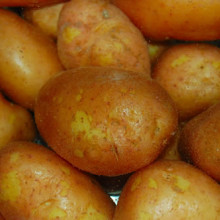
Are green potatoes poisonous or is this a myth?
Chris - Yes, they are. Potatoes actually entirely are poisonous. They are a member of a family called the solanaceae. They make a toxin which is a neurotoxin called solanine.
If you eat 5 kilos of potatoes that's actually a fatal dose. Watch it Kat, next time you're feeling peckish...!
The solanine tends to concentrate in the areas that are exposed to light. This creates a sort of "traffic light" that the potato has been exposed.
The green colour is chlorophyll, although it's not the greenness that's bad for you. The potato makes the toxic solanine in regions that are exposed to light because they are also exposed to insects that might try to eat the potato. So it's the potato's way of protecting itself, by enriching the flesh with neurotoxins in the regions most vulnerable to pest attack.
So, if you see a green potato, it's likely to have these solanine glycoalkaloids enriched in the flesh in the green areas and it could poison you. A small amount will almost certainly not affect you, but a larger dose could cause symptoms including an upset stomach. But definitely stay away from 5 kilos-worth!
Are hot air hand dryers an infection risk?
Chris - Potentially because when you're in the bathroom and you wash your hands - if you don't wash your hands very well and you've still got bugs and viruses on your skin and you put them under the cleaner - this will blow anything including a fine mist of water off your hands. If you look at the floor under a hand dryer you'll always see it's covered in water anyway. You've got lots of water landing on the floor with any bugs in it. Pus what they're doing is creating lots of air currents in the room that could also stir bacteria from around the toilet, from around the urinal and circulate them. This means you might breathe them in. I thin kit's worse than a towel. The best thing is probably paper towels where you take one, wipe your hands on it and chuck it away.

55:05 - Sunday Driver - In the City of Dreadful Night
Sunday Driver - In the City of Dreadful Night
with Kat Arney
Kat Arney is a multi-talented lady - not only does she regularly bring you the latest science with the Naked Scientists, bake excellent cakes and knit - she's also in an incredible band, Sunday Driver.
 Kat's very proud to announce the launch of their first professional album:
"My band Sunday Driver are launching our first ever proper album (i.e. not made by us on the living room floor with scissors and Prittstick). It's called "In The City of Dreadful Night" and it's funded by the Arts Council. The album is a richly textured fusion of Indian and Western sounds - acoustic, jazz, folk, Indian classical with the odd bit of heavy metal thrown in for good measure. "
Many of the Naked Scientists attended the launch night for the album, and were truly blown away by their performance. It's a unique and captivating album which brings together some quite diverse influences into a package that really takes you away to somewhere exotic - very much worth the meagre price of the CD.
In The City of Dreadful Night is
available to buy now, and do also check out Sunday Driver on their
website or
myspace page!
Subscribe for free
Support Us!
Forum discussions
Does regenerative braking have a hazardous complication?
QotW - 24.04.26 - What are the chances of a random act being repeated exactly?
What is the Hopf gauge?
Why is each solar day a couple of minutes faster or slower than the previous?








Comments
Add a comment