Saving Submariners and Studying Deep Sea Species
How can we save the occupants of stricken submarines? What species survive in the deepest depths of ocean trenches? Recognising the centenary of the Titanic tragedy, we're diving deep to meet the Rolls-Royce NATO Submarine Rescue System, we find out about a new initiative to discover what really lives at the bottom of the ocean and hear how volcanoes are acidifying the seas. Plus, what robots can tell us about cocktail party conversations, the mystery of the pigeon's magnetic navigation, and can oil-based face-cream make you fat...?
In this episode
01:41 - Saving sailors in sunken submarines
Saving sailors in sunken submarines
with Jonathan (Jonty) Powis, Rolls Royce
Submarines, manned or unmanned have been vital in learning about the deep sea as well as playing an essential role as part of our armed forces. But sometimes, subs get into trouble. Unlike the passengers of a surface vehicle, submariners don't have the option to simply bailout into lifeboats which make submarine accidents very dangerous.
To help save lives in these thankfully rare situations, Britain, along with France and Norway have funded the development of the NATO Submarine Rescue System or NSRS which is a project delivered by Rolls Royce.
Jonty Powis is a retired submarine commander who now works for Rolls Royce as a submarine expert.
Jonty - Well if you ask people how many submarines have been lost at sea in peacetime, most people can name the Kursk and one or two others, but the truth is, since the end of World War II, at least 34 submarines have sink. So submarining generally is a dangerous activity.
Ben - What sort of things are likely to go wrong?
Jonty - Collision is perhaps the single most important reason that submarines sink. Many of those 34 submarines were lost in collision.
Ben - What actually happens? What do the people inside experience?
Jonty - We've done a few trials actually. We've parked a submarine on the bottom which you can do and it's quite interesting because they go on to a minimum diet, very little water, high complex carbohydrates. The sort of biscuits they eat are ghastly.
But the principal issue is going to be one of boredom and that boredom is  complicated by the fact that if they're in elevated pressure. Eventually you're going to get an onset, if the pressure goes up sufficiently, of nitrogen narcosis. It is essentially a drunken sensation.
But of course, having a sunken submarine which is a pretty dangerous environment, full of people who are inebriated or suffering from nitrogen narcosis is an even more dangerous situation.
Another issue which isn't generally appreciated is that with the normal constituent of the atmosphere, as you raise the pressure, oxygen starts to become poisonous. There's a thing called 'oxygen toxicity' which essentially starts when the partial pressure of oxygen exceeds about half an atmosphere. So that's above about 25 to 30 meters of immersion. So you've got really quite a knotty medical problem to deal with once you extract these guys.
Ben - So, what is it that we're now hoping to do, or what is it that the NATO Submarine Rescue System has been trying to do?
Jonty - Well, submarine rescue really kicked off just before the Second World War. There was an American system based essentially on a diving bell which you could winch down to a submarine on a wire. It would attach itself to a prepared mating surface around the escape patch, pump out the water in-between and then hydrostatic pressure held it on, and you could get guys, 8 or 9 at a time, back to the surface.
So the idea of rescue grew wings, more or less literally, in that the Americans invented a thing called the DSRV, the Deep Submergence Rescue Vehicle which is capable of being flown anywhere in the world and rescue the guys 24 at a time.
At the same time, the Brits early in the '80s, realised that it was probably a good idea to develop some sort of capability of our own. So we modified a North Sea oil rig maintenance and diver transport submarine called LR3, subsequently replaced by one called LR5, and they could be used to mate to a distressed submarine on the bottom and extract people.
NSRS which went into service in 2007 is a much better system, completely air transportable, capable of reaching anywhere in the world in somewhere between 72 and 96 hours. That might sound a long time, but you would expect people to survive for perhaps as long as 7 days. So that gives us a margin to actually find them, reach them and rescue them.
Ben - So what happens for us back here on land? When we first hear that there is a submarine in trouble, what are the processes to then kick off?
Jonty - You're going to be confronted with a submarine relatively close to shore, one imagines. Too deep though for them to make a free ascent to the surface. So the alert will go up, a buoy will be released or something will arrive in the surface, the Inmar Sat satellites will very quickly produce a position which is quite accurate to within a couple of hundred yards. We then have two systems we deploy. One called intervention which is relatively small. This consists of a remotely operated vehicle, relatively lightweight set of equipment, and they can actually deploy to the scene about a day before the rescue system. They localize the submarine very precisely, survey it, establish communications with the people surviving inside, if possible. They can also engage in what we called 'pod posting' where watertight pods of life support stores of food, medicine, clothing, whatever you like can be posted into the submarine through one of the escape towers. So, when the rescue system turns up, some 24 hours or so later, we would expect the submarine to be ready for rescue.
But how do we get there? Well the system is stored, broken down into its constituent elements, no component except the submarine weighs more than 16 tonnes, so they can be readily transported by flatbed lorry, delivered to an aircraft, and flown to the sea. We can get the whole system on a prepared deck, secured, in about 18 hours. You then know that there's no point staying alongside, time to sail. The hyperbaric treatment centre is then commissioned on the way out there, and that means you would arrive on scene and you would just launch the submarine immediately and once you've got 30 or so guys out, that's one leg of the hyperbaric treatment centre filled, shut all the hatches, start the decompression process. Meanwhile, the submarine is still working like a little underwater ambulance.
Ben - What does the rescue sub actually look like?
Jonty - It's white. It's rather stubby and about 10 metres long and about 3 ½ meters high, and underneath the submarine hangs an inverted cup which is the skirt, the mating skirt which has a simple rubber seal around its bottom lip, and that's what makes the seal. Remember it is only hydrostatic pressure which holds this on, a considerable force, about 1.8 tonnes for every metre of immersion. It has a large window at the front. It might sound a very trite thing to say, but that window is one of the secrets of our success, the ability for the pilot inside the vehicle to actually see what he's doing. In exercises, we've demonstrated the ability to leave the surface, go to the disabled submarine perhaps 80 to 100 meters below the surface and achieve a mate in less than 15 minutes. Remotely operated vehicles can also do it, but it takes considerably longer.
Ben - I assume that it's versatile and if - heaven forbid - you did have to use it, it would actually work with most if not, all of the submarines that are currently out there.
Jonty - Yes, that's an interesting question. For some time, NATO had been running an annual working group which looked at submarine rescue and escape. It's an opportunity to see what other people are doing. Gradually, the NATO standards have been accepted across the world. Virtually, anything you can think of has now got a NATO standard applied to it. Touch wood - if we find ourselves going to a rescue - the ability to have everybody following the standard has meant the saving of life has been made incomparably more likely.
09:34 - Studying life in the deepest depths of the ocean
Studying life in the deepest depths of the ocean
with Alan Jamieson, Aberdeen University
It's said that we understand the surface of the moon better than the deep sea, but new missions and novel submersible technologies are finally shedding some light on the darkness of the deep. Now, a major international collaboration is embarking on a mission to conduct the first systematic study of life in the deepest marine habitat on Earth; ocean trenches which are regions of the sea floor about 11,000 metres deep. This programme, known as HADES, or the Hadal Ecosystems Studies includes the University of Aberdeen's OceanLab researcher Alan Jamieson who joins us now...
Sarah - So, to start off with, when did we first realise that the deep sea was able to support life at all?
Alan - Well, the deep sea technically starts around 200 metres and I think it was in the 1800s or the 1700s when a guy called Edward Forbes once said there was absolutely no chance that life could survive in the deep sea. I think when somebody sticks their neck out and says something like that, it kind of prompted a whole wave of people to go out and continually beat that. But it wasn't until the 1950s where they actually pulled up animals that we could confirm were actually alive on the bottom, at depths greater than 10,000 metres.
Sarah - And if we're looking at the kind of creatures that live down there, what are the conditions that they have to deal with?
Alan - Well first, there's obviously a complete lack of sunlight. Beyond a thousand metres, you can't even detect photons. The food supply is fairly low, just because the majority of food comes from the surface and the farther removed you are from that, the lower the quantity is. Normally, the temperatures are between 1 and 2 degrees, and the pressure of course is something like 1 ton per square centimetre which is extraordinarily high.
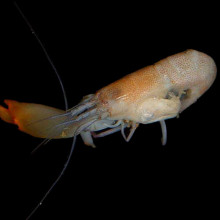
Sarah - So what sort of species do we see down there? I know that recently, you were involved in the discovery of a giant amphipod, this sort of giant shrimp.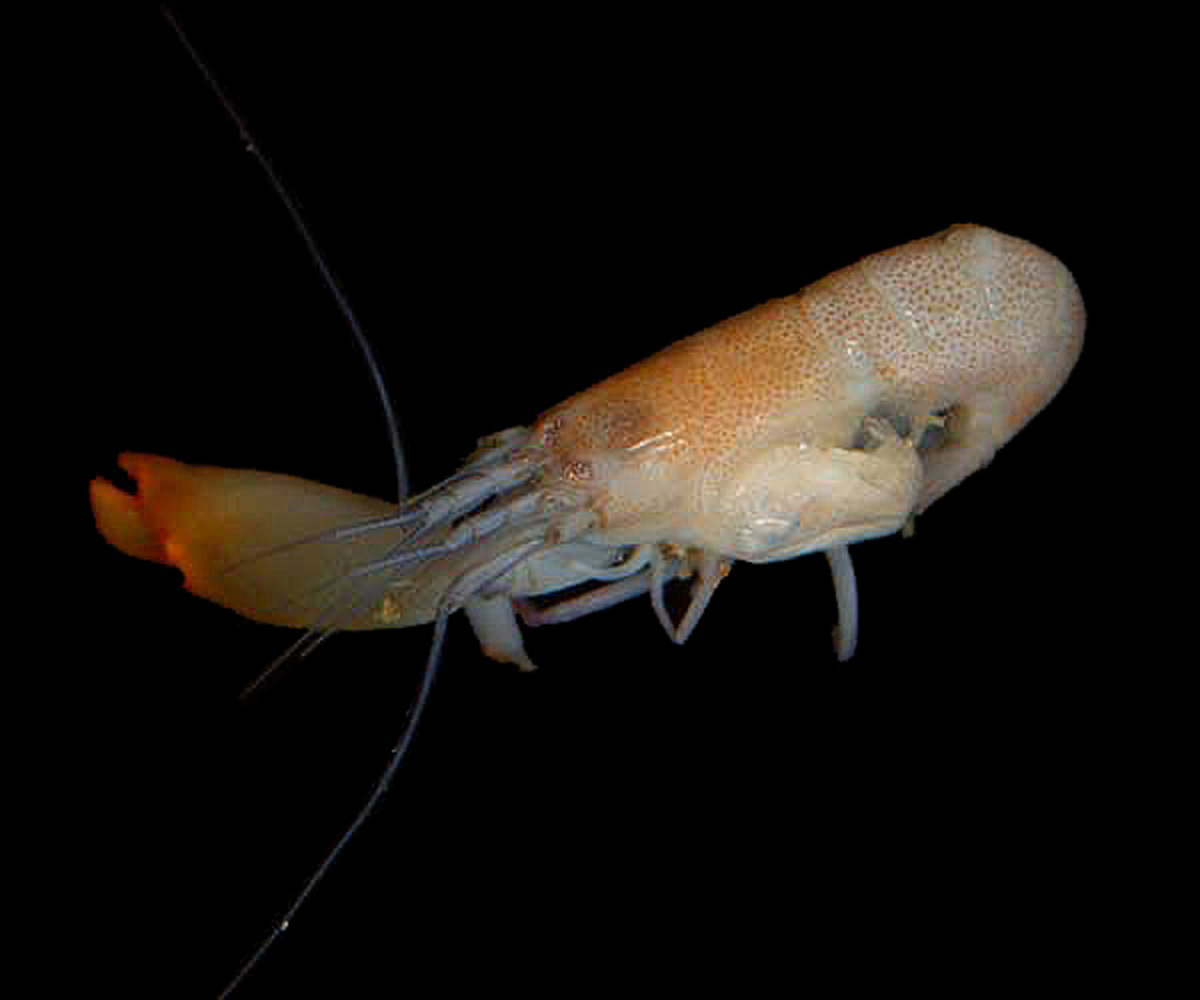 It seems like a lot of the species down there are pretty weird and wonderful.
Alan - Most taxa are represented in the very deepest parts and the 4 main ones are amphipods, sea cucumbers, worms and bivalves, and things like that. But there's an interesting thing where despite lots of taxa surviving at 10,000 metres plus, quite a lot of them drop out between 8,000 and 8,500 which is interesting and we think that's just a pressure effect. So, the likes of fish and decapods, and things like that, they only survive to about 8-8,500.
Sarah - Is it questions like that, like why do we see this drop off at that point that you're hoping to answer with HADES? What are the big questions you're hoping to answer?
Alan - Well, the thing with the HADES project, is when you're looking at the very, very deep parts, the Hadal zone is not a continuation of the slopes down to the abyssal plane because the Hadal zone is made up of trenches, big subducting trenches, and they're all isolated from one another. So it's similar to mountain ecology at high altitudes. There isn't one big continuous habitat at these extreme depths. There are pockets around the Pacific. So what we're looking at is - we know quite a lot about the abyssal planes, but how does that change once you start to plummet down into the trenches? The justification for doing it is there's lots of information, lots of science been done about depth-related trends, but they're missing out the bottom 45% of the depth range. So, there's a huge chunk of information that we don't know there and our overarching philosophy is that to sustain and conserve the oceans, we need to know everything from the surface to the very deep bed. You can't just study the top and assume that that's fine. So, somebody has to do the deep bed and that's where we come in.
Sarah - And what sort of equipment will you be using to go down that far?
Alan - Well we have two main sampling devices. One is the Woods Hole Oceanographic Institute's new ROV called Nereus and it's capable of descending to 11,000 metres and it has done a couple of years ago, and we use that to do video transects to look at what's living on the bottom, to take sediment cores and things like that. We'll be using our own systems which are called landers which are like free-fall camera tripods. So they just descend through the water column and crash-land on the bottom and they use bait to attract in the more mobile animals that you wouldn't normally see on the ROV. We have a couple of camera systems that do that and some traps as well, just some very simple baited traps work surprisingly well at those depths.
Sarah - So it's going to be a combination of looking at what's down there, live as it were, with cameras, but also, you're going to be bringing samples back up to the surface?
Alan - Yes, I think a combination of the two is really important. You have to get the samples for various cellular and physiological studies and things like that, plus from a taxonomic level, but the reason why Hadal biology for example is decades behind any other area in deep sea is because originally, when they did it, it was nothing more a taxonomic exercise. They didn't really look at what these animals were actually doing or what their role was in the ecosystem. So, it's important to do a combination of both.
Sarah - And if we're talking about the kind of challenges that life faces down there, the pressure, the darkness, how does that affect our job of designing stuff to actually go down there and look at these things?
Alan - Yeah, there's a whole bunch of problems involved in this and that's what's slowed down Hadal biology all these years, the technical challenges, but I don't believe they exist anymore. The problem is mainly two things, the extraordinarily high hydrostatic pressure at depth and coping with that, and the second thing is just the distance from the bottom to the surface because if you imagine you want to take a simple sediment core, if you wanted to do that, off the beach, you just walk out and take a core, but at 10,000 metres, you need to find a ship which has enough wire to lower down, hit the bottom and back up again. That operation itself would probably be the best part of a day, plus most research vessels won't carry that kind of wire and even then, most wires will break under their own weight at that kind of depth. So, this is why we use freefall instruments to try and overcome that. So once the vehicle leaves the ship, we have no more contact with it. It just basically sinks, hits the bottom and at the end of the experiment, we send an acoustic command to it and it drops its weights and then floats back to the surface again. So, it's a very complicated, very expensive business to be in.
Sarah - So what exactly are you hoping to find down there?
Alan - What we're looking at is to try and challenge this perception that the very, very deep sea is some kind of stagnant, stable environment that's just kind of eking out an existence in the dark and is of no consequence. There's more and more evidence to suggest or even prove that on a deep abyssal plane, even at 4 or 5,000 metres, there is natural variation throughout the year, but no one has really looked on long enough time scales and we know absolutely nothing really about ecosystems in these deep trenches, and where the food ends up and it's very difficult to try and predict what's going to happen because these trench habitats are so unique in terms of topography. And of course, they're subduction zones as well so you have this huge seismic activity going on there as well. So what happens to the ecosystem then with these enormous mudslides cascading down the trench walls and things like that. So it's a very unique habitat.
Sarah - And so, it's not a case that we can really compare it to the kind of energy flow that we see up on land.
Alan - No. I mean, if you look at the globe, most of the Earth is deep sea, but there's normally big, huge vast abyssal plains, so when all of the food and the productivity in the surface starts to rain down, it'll land on the seafloor more or less uniformly, whether constantly all year-round or in pulses. But when it goes to the trench, the trench doesn't hold it like that because the trench is kind of a V-shape cross section. So theoretically, anything that comes down should get funnelled along the trench axis. So therefore it's a question whether or not depth really matters. It's where on the trench really matters we think. So one of the things we're trying to prove is whether or not you have this thing called the trench resource accumulation depth where there's a greater amount of food on the trench axis than on the walls.
Sarah - That's right in the very sort of the point of the V.
Alan - Yes. So basically, all the food coming down will get funnelled towards the bottom whereas on the abyssal plains, they would just lie uniformly.
17:21 - Conversations over Cocktails: How we Converse in a Crowd
Conversations over Cocktails: How we Converse in a Crowd
Picking out a single voice in a noisy room can be a challenge. Our ears are assaulted by a wide range of noises that compete for our attention, yet somehow we are still able to enjoy a coherent conversation. Now, research suggests that the way we move our heads may have a significant impact on how we interpret the sounds that reach our ears.
 How we distinguish different streams of audio has been studied for a long time. A very basic example is distinguishing between two tones in different patterns. If you listen to a basic two tone pattern that simply alternates ABA- (where "-" indicates silence), it's almost impossible to hear it as anything other than a sequence. But as we hear it looped (ABA-ABA-ABA-ABA-...) the brain will adapt and separate it into two streams, so we can distinguish A-A-A-A-... and -B--B--B... However, should you then rapidly move your head, this adaptation briefly goes away.
But why should moving your head, even when the auditory environment doesn't change, cause you to lose this adaptation? To untangle the potential consequences of head movement, Hirohito Kondo and colleagues at the NTT Communication Science Laboratories in Japan set up a robotic mimicry study, and describe it in the journal PNAS this week. A special robot, known as the Telehead, was set up to exactly mimic the head movements of a series of volunteers. Microphones in the robot's ear canal broadcast sound to the volunteer's headphones, so they heard exactly what the robot was hearing.
Alternating ABA sound sequence | A looped ABA-ABA sound sequence |
A series of sounds were then played to the robot, while the volunteers were asked to move their head. In a second series of experiments, the volunteers remained still while the robot repeated their previous movements. Crucially, this would present the same acoustic cues to the volunteer, but without the changes in movement or attention. This allowed the researchers to see if the change in sound, or the movement of the head itself, was responsible for the change in perception.
They found that a sudden change in sound, either through intentional head movement or the change in auditory cues from the robotic head moving, caused a "resetting" in interpretation of the sound. The authors argue that the brain must rely on both head position and the relative difference in sound between our ears in order to interpret the audio environment, and pick out the gossip over cocktails.
22:02 - A possible long-term treatment for Fragile X Syndrome
A possible long-term treatment for Fragile X Syndrome
Researchers have found a possible treatment for Fragile X syndrome - the most common genetic cause of mental retardation in boys and the main single-gene cause of autism.
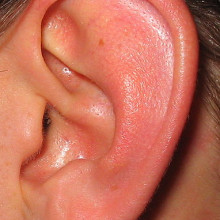
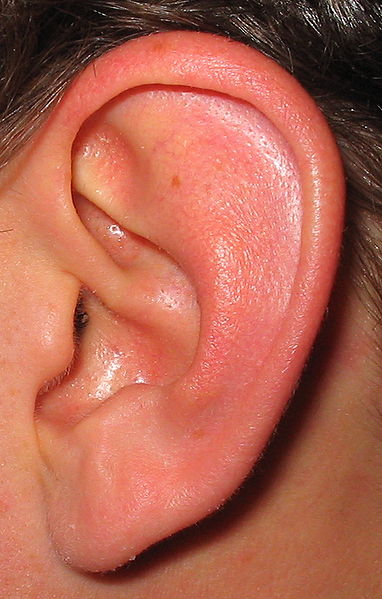
Fragile X syndrome is caused by a mutation on the X chromosome, in the Fragile x mental retardation 1 or FMR1 gene. It stops the protein that this gene codes for from being made. The protein, FMRP, is essential for brain development and for female fertility. Individuals with the mutation show symptoms including learning difficulties, problems with social interaction and physical symptoms like prominent ears and enlarged testicles in boys after puberty. 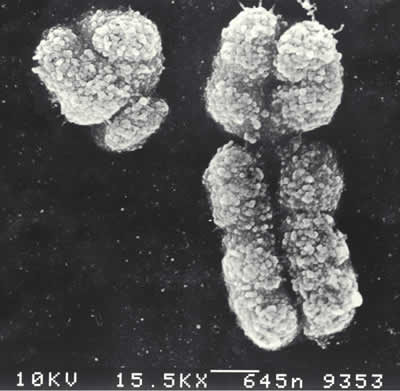
At the moment there isn't a treatment for the syndrome as a whole, and individual symptoms like hyperactivity and anxiety are treated separately. But now work carried out by Aubin Michalon and Michael Sidarov and their colleagues, published this week in the journal Neuron, has pointed to a possible treatment for multiple symptoms of Fragile X.
Previous work has shown that one of the ways FXS affects the brain is through one of the receptors for the neurotransmitter glutamate. This mGlu5 receptor behaves abnormally in patients with FXS and prevents proper signalling at the synapses between nerves in the brain, causing the cognitive impairment. Drugs that cause short term inhibition of these receptors have been shown to produce a reduction of symptoms, but until now, no studies of longer-acting mGlu5 inhibitors had been carried out.
Michalon and Sidarov worked with mice without the Fmr1 gene, that show similar learning and memory defecits to humans with FXS, as well as sharing a hypersensitivity to auditory stimuli. The team administered the drug CTEP to adolescent mice and then observed them after 4 weeks of treatment and 17 weeks of treatment. The idea of using adolescent mice and not newborns was to see if treatment with this drug could reverse symptoms in a brain that was almost fully developed, rather than preventing symptoms from developing in a still-developing brain.
After 4 weeks the treatment had reversed the deficit in learning and memory, and their hypersensitivity to sounds. And after 17 weeks, the mice showed a reduction in their hyperactivity and it also partially corrected their enlarged testicles, without causing any reduction in testosterone levels or general fitness of the mice.
mGlu5 inhibitors are already in clinical trials for Fragile X syndrome, so the researchers hope that they will show the breadth of improvements for patients as they found in their mouse study.
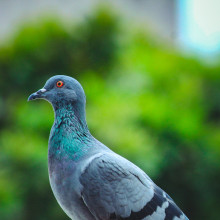
25:30 - Compass Confusion - Pigeon's Magnetic Myth
Compass Confusion - Pigeon's Magnetic Myth
with Dr David Keays, Institute of Molecular Pathology, Vienna
Ben - Now, how do birds navigate very long distances? It's been known for a while that many different animal species are sensitive to Earth's magnetic field and they use this to find their way around. So when researchers spotted iron-rich cells in the beaks of homing pigeons, they concluded that they must be magnetically sensing nerve cells wired up to the bird's brain, like a sort of neurological compass. But it looks like this conclusion was actually a step in the wrong direction because now, new research obtained by scanning the heads of hundreds of pigeons has shown that these iron-rich cells are not neurons. They're actually immune cells and probably have nothing to do with navigation. David Keays from the Institute of Molecular Pathology in Vienna explains more.
David - The big question in this field is how do animals detect magnetic fields and for the last decade or so, it's been believed that pigeons detect magnetic fields by using neurons that contained crystals of iron that were located in the very front of their beak. We started working on this about 4 years ago and our goal really was just to replicate those studies that had previously been published, but unfortunately, we weren't able to do so.
Ben - What is the evidence that birds have this magnetic navigation at all? Could it just be that we've got the wrong idea entirely and so we're going off looking for a mechanism for something that doesn't actually happen?
David - So it's clear that when birds migrate, they use multiple cues. They use vision, smell, and the evidence is that they also use magnetic fields, and multiple groups have been able to show independently that birds can detect and respond to changes in the Earth's magnetic field.
Ben - So obviously, the question is still open, but what were you actually doing to look at what was thought to be these iron-rich neurons?
David - We took a pigeon and we sliced it up into wafer thin sections from the tip of the beak, all the way back and then we took these sections and we stained them with a very simple and basic chemical stain called Prussian blue - it makes iron-rich cells bright blue in colour. And then we wanted to map the location of these cells onto the pigeon beak so we used MRI and advanced imaging technologies, and this revealed a startling diversity in the distribution of the location of these iron-rich cells in the pigeon beak. In one of our pigeons, pigeon 203 (which is a reflection of how many pigeons we looked at), it had about 108,000 cells whereas pigeon 200, which was the same age and same sex, had just 200 of these iron-rich cells. So this kind of got us thinking that these blue cells probably were a bit of a red herring and weren't involved in the true magnetic sense.
Ben - You would assume that if it is so important for navigation that it would be quite well conserved between different pigeons and even between different species of bird. So clearly, that's an indicator that this isn't actually doing that job.
David - That's spot on. This is a big clue that these cells weren't the magnetic receptors and then we got another bit of luck really. Pigeon 199 had an inflammatory lesion in the front of its beak and it was surrounded by about 80,000 of these blue cells that kind of infiltrated this lesion, and that got us thinking that maybe these blue cells have something to do with the immune system. We confirmed this by using transmission electron microscopy to actually see inside the cells and we found these cells are packed full of ferritin granules which is kind of an iron storage protein and they have these long tentacles. And in some of their images, you can actually see them kind of engulfing other cells.
Ben - So that suggests that they are in fact macrophages, these big eater cells, part of the immune system that are responsible for getting rid of infections. Why would macrophages be so full of iron?
David - The other role that macrophages play is they recycle iron from red blood cells. So they build up all this iron and then they also play a role in iron homeostasis.
Ben - So we would expect macrophages to be sources of iron anyway and does this completely put to bed the idea that these are nerve cells and that they could be responsible for navigation?
David - We would say it does, but what it really does is just raise a whole lot of new questions. So, how do pigeons detect magnetic fields? How do other birds detect magnetic fields? It had previously been asserted that this was a magnetic sense system that was common to avian species. What we've shown is that macrophages are found in all avian species, so the jury's out as to how they do in fact detect magnetic fields.
Ben - When you were doing such high resolution imaging and looking very closely at this, did you get a clue from the distribution of what might be going on? Do we think that perhaps there's an interaction between the macrophages and nerves or are the macrophages purely doing their normal jobs and it's just a coincidence that we find them in the beak?
David - Well, we thought about this and I suppose it's hypothetically possible that a macrophage might be a magnetic receptor, but it really seems so unlikely. In the hunt for the true magnetic receptors, we're now looking at other regions of the pigeon head.
Ben - So where are we looking? Where do we think is the right place to start looking and, if they're not going to be these iron-containing cells that we originally thought, what are we now looking for?
David - At the moment, we're looking at the olfactory epithelium. So the olfactory rosette in rainbow trout has been implicated in magnetic reception and so, we're having a closer look at this region in the pigeon. And it's also clear that birds, particularly migratory birds, also use a light dependent mechanism that most probably resides in the retina and relies on a molecule, or is thought to rely on a molecule, called cryptochrome. And so, there's probably a magnetic compass in the eye of birds as well.
Ben - David Keays from the Institute of Molecular Pathology in Vienna and that work was published in the journal Nature this week and I think it's a good reminder that science is an ever changing field, and sometimes what we think we know turns out to be wrong.
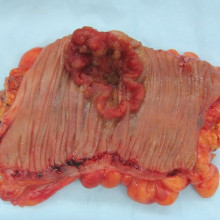
31:49 - The Signature of Colon Cancer
The Signature of Colon Cancer
Cancerous colon cells have a distinctive genetic signature, which could be used to develop personalised treatments, or identify those at risk of developing the disease.
Writing in the journal Science, Case Western Reserve University researcher Peter Scacheri explains how colon cancer cells, from different people at different stages of the disease, all showed certain epigenetic changes - alterations in the proteins that bind to and control expression of DNA. They coined the term Variant Enhancer Loci or "VELs" to describe them.
These VELs are interesting because the actual genes involved in colon cancer vary enormously between patients, and because epigenetic changes such as these should be reversible, providing valuable targets for treatments.
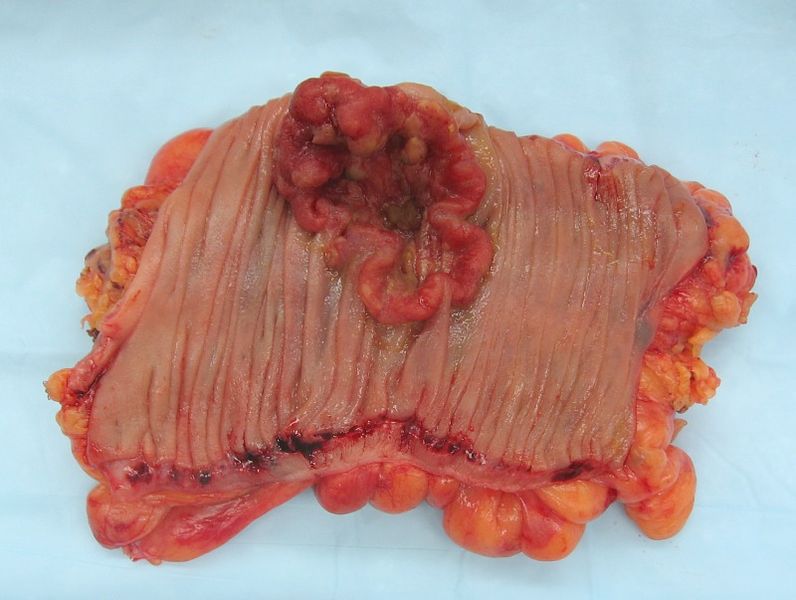 Looking at colon cells known as crypt cells, the researchers took samples of from healthy volunteers, as well as from early & late stage tumours, and labelled the genetic material with a marker that indicates the presence of gene enhancer elements. This allowed them to identify thousands of VELs in cancerous cells that are either lost or gained when compared with healthy cells. They also looked into gene expression to determine if these markers truly represented a change in the function of the cell, and found that the majority of common VELs did translate into up- or down-regulation of gene expression, with lost VELs having a more significant impact on cell function than those gained.
Epigenetic changes have a profound effect on the process of cells becoming cancerous. In all, they found that the number of gene enhancers that change in the disease was significantly higher than the number of mutated genes, and importantly, less variable from one tumour to the next.
Colon cancer is linked with diet and obesity, and is one of the most common forms of cancer. As with all cancers, identifying markers of the disease improves the likelihood of successful treatment. Understanding the changes that happen not only to genes, but to gene switches and regulators, is a major step in improving treatments.
34:02 - Modifying Memories to Treat Drug Addiction and the Effects of Social Status on Health
Modifying Memories to Treat Drug Addiction and the Effects of Social Status on Health
with Barry Everitt, University of Cambridge; Jenny Tung, University of Chicago; Charles Cockell, University of Edinburgh; John Barrow, University of Cambridge.
Modifying Memories to Treat Drug Addiction
Recovering drug addicts can reduce their chances of relapse by manipulating their memories of drugs use.
The process of extinction - where cues of drug use such as videos of others using drugs are shown over a period of time without actually administering the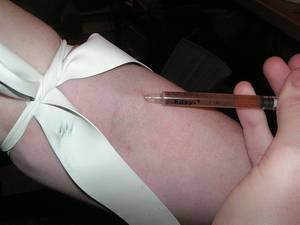 drugs- has previously been shown to reduce cravings in the clinic. But effectiveness in the real world can been limited.
Now, reporting in the journal
Science, Lin Lu from Peking University has found that briefly exposing addicts to these cues, up to an hour before then treating them through this longer process of extinction, can help retrieve and re-write their memories of drug use, reducing their chances of relapse.
Barry Everitt from the University of Cambridge comments...
Barry - The key point really is that there's this process called extinction where you keep presenting stimuli that are associated with something like a drug, again and again, and again. So then the stimuli change from meaning drug to meaning no drug, and so, you tend to stop responding to it. When the person goes back out onto the streets and encounter those stimuli again, they haven't lost their value at all. What happens when you do this brief retrieval before you do these things in training is that the contact specificity seems to have gone and the memory is erased. You seem to unlearn the fact that the stimuli ever meant drug and it doesn't seem to come back and it doesn't matter where you go.
---
The Healthy side of Social Ranking
Social status can alter the expression of genes and consequently the health of female macaque monkeys.
Working with females in 10 macaque social groups, Jenny Tung from the University of Chicago found differences in the expression and activity of 1000 genes, as well as levels of immune response, depending on a monkeys social ranking within the group.
The findings, published in the journal
PNAS, showed that monkeys with a higher social status had increased levels of immune regulation and inflammatory control based on these changes in expression with activity changing with any rises or falls in social rank.
Jenny - Social dominance rank in female rhesus macaques has a strong and pervasive impact on gene expression. We think that this signature is plastic and responds to changes in one's social environment. The findings that social stress influence the genome in such a potent manner is likely to be paralleled in humans.
---
Asteroid Craters give Clues to Life on Mars
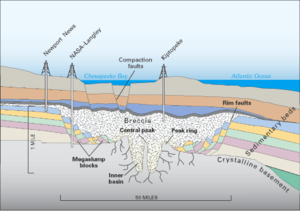 Craters formed by asteroid collisions could be a good place to search for life on other planets according to research in the journal
Astrobiology.
Studying craters on Earth, Charles Cockell from the University of Edinburgh found microbes living deep beneath the Chesapeake Bay crater in the US which was formed by an asteroid colliding 35 million years ago.
These findings suggest that similar crater sites on other planets could be hosting life beneath their surface.
Charles - What this work shows is asteroid and comet impacts can actually be good for life by creating fractures to which energy and nutrients can flow. So rather than just being catastrophic, they can be beneficial to life. This might also show that if we're to look for life in other planets, perhaps the deep subsurface of fractured impact craters, such as on Mars, would be the best places to look.
---
Running Faster with Mathematics
And finally, Athletes could be helped to run faster without any additional training according to mathematicians at University of Cambridge.
John Barrow calculated that if factors such as reaction time to the start gun, wind conditions and altitude were taken into account, Olympic champion Usain Bolt could improve his 100m sprint time by up to 0.12 seconds...
And that work was published in the journal
Significance.
38:35 - An Olympic Effort to Monitor Air Pollution
An Olympic Effort to Monitor Air Pollution
with Roland Leigh and Rosie Graves, Earth Observation Science Group, University of Leicester
Ben - The World Health Organisation estimates that every year almost two and a half million people worldwide die as a direct result of air pollution. Many more suffer respiratory problems and lung disease, which can cut life expectancy by years.
In London, air quality regularly fails to meet European standards - which is of particular concern this year when the city hosts the Olympics.
At the University of Leicester scientists and engineers have been developing a new scanning system to monitor urban air pollution, which they're getting ready to deploy in time for the games.
Planet Earth Podcast presenter Richard Hollingham went there to meet Roland Leigh and Rosie Graves from the University's Earth Observation Science Group.
Standing outside his lab, Roland explained what was in the air...
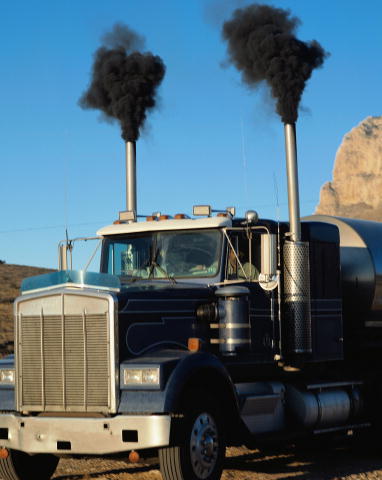
Roland - Urban environments are cleaner than they used to be, but still, we have a lot of emissions that come from the traffic network. In particular, we have nitrogen dioxide, we have particulate matter, and we have ozone coming out of the exhaust of cars that then we breathe in.
 Richard - And what's that doing to us?
Roland - Some of it affects the airways to the lungs, so what we breathe in in our respiratory tract and the way that our body responds to that, and some of it gets into our bloodstream and actually affects the cardiovascular system and how our heart responds.
Richard - So none of that is good. Where is it all coming from?
Roland - Much of it, 95% of the nitrogen dioxide for example in an urban environment comes from the vehicles - from cars, from heavy goods vehicles, and from buses.
Richard - Now pollution is already monitored. There are monitoring stations around the country, particularly in big cities, but you've developed a new type of scanner which is here in front of us. Now I guess, it looks a bit like an oversized speed camera, mounted on a plinth, so that means it can rotate. It's triangular, I suppose, with a hatch at one side.
Roland - We realised several years ago that we could monitor air quality using scattered sunlight, so there is a possibility to create an instrument that just receives scattered sunlight and tells you how much nitrogen dioxide there is in the air. So this instrument is designed to sit on top of a tall building and produce an image of the nitrogen dioxide over a complete urban environment, really letting you see the individual emission sources and where those pollutants end up downwind.
Richard - So does that mean you could map where these particular pollutants are, where these chemicals are in the atmosphere, rather than get a snapshot of how much there is?
Roland - Exactly, yes. With multiple instruments, you can get a 3D reconstruction of where these gas fields are. So traditional sensors take in a single point measurement. They suck in air down a tube and they give you a very accurate point measurement that might be by a roadside. We, between two or three instruments can map out a complete urban area, and tell you where the nitrogen dioxide is in that space. So for example here, several years ago, we picked up the railway station in Leicester with an early prototype of this instrument and watched trains leave the railway station. That was quite a new bit of information for the local authority that didn't really realise how much was coming out of an individual train as it pulled out of the station and where that emission went.
Richard - It is a curious looking machine. Imagine around the size of a microwave oven, but a triangular microwave oven. You look inside, it's full of circuit boards and wires, and there's a box in the middle which is covered in a silver bubble wrap. I guess that the heart of it.
Roland - Exactly, that's the heart of the instrument. That's a spectrometer that was originally designed to be a satellite instrument for air quality mapping by Surrey Satellite Technologies. So the spectrometer takes in sunlight. In our case, we have filters that means it's just above UV to what is about yellow to red, and we then pull out bits of information in the blue to green bits of that light, to the point where it's much more sensitive than the human eye would be to those slight subtle changes in colour. But this spectrometer can really tell us how much of one shade of green there is and that one shade of green is a shade that is absorbed by nitrogen dioxide. So with that real high sensitivity to these colours, you can pull out that information on the gases.
Richard - Now Rosie, you're looking to use this during the Olympics, as a way of testing it out.
Rosie - As part of a UK-wide project called ClearfLo, we'll be going to the Olympics in July and August this year. We'll be deploying three of the instruments on three different buildings around the city centre, to the west of the city generally, and try to map out the pollution over the city in this quite unusual time for us. Obviously, the roads will be different, there'll be a lot more people in London than normal so it would be quite interesting to see what happens.
Richard - So Roland, how is information from this going to be used, or from other sensors going to be used? Because you can look right now on a website and see London or a lot of other cities around the country and around the world, that pollution levels are being exceeded. This will again tell you that pollution levels are being exceeded.
Roland - We are in fact developing systems which take in data from this and enable the local authorities to make decisions on traffic management and air quality management at the same time, and that's where we're really trying to make a difference, where people can be informed when there's going to be poor air quality days in the future so the local authority knows where to direct traffic, which roads to avoid, which areas have sensitised individuals - that's really where you start making a difference to people's lives and having that societal impact that we all try and achieve.
44:10 - How do Volcanoes affect Ocean Biodiversity?
How do Volcanoes affect Ocean Biodiversity?
with Jason Hall Spencer, Plymouth University
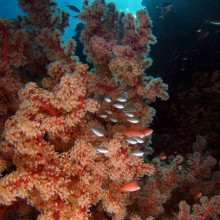
Arguably, one of the most extreme environments to inhabit is one near a volcano. But what about when that volcano is underwater? Subduction zones in the deep sea are very seismically active and Jason Hall Spencer from Plymouth University has been looking at how subsea volcanoes affect the acidity of seawater and how this affects the species found nearby. He spoke with Robyn Williams from the Australian Broadcasting Corporation's science show at a recent conference in Canada.
Jason - I was first studying carbon dioxide vents near the mountain of Vesuvius, the famous one in Italy where the toe of the volcano is acidifying the water naturally because of high CO2 release. The very clear thing that we saw at that vent system was that as you go into the carbon dioxide bubbles, you get less and less types of organism that can survive that. CO2 is a stressor for animals. It's actually a fertiliser for some plants, so some plants there are growing really well. They're like lush grass beds and various types of algae that thrive but unfortunately, many of the animals that you would want to be there are disappearing. That was my last 4 years' work, but then it became clear that if we're going to make global predictions about the effects of CO2 on the oceans, we need to see if we can replicate our evidence for this problem from other parts of the planet. So, I've been going to these vent systems in Baja California, three volcanoes in Papua New Guinea, and other volcanic vents in Europe to see if we get the same effects and worryingly, we get exactly the same response: As CO2 goes up, biodiversity goes down. There are key organisms like sea urchins and coral and algae that just can't survive these conditions.
Robyn - These are vents underwater, presumably.
Jason - Yes. Sorry, it's like a Jacuzzi of bubbles underwater. They're very, very beautiful. When you roll over the back of the boat, start swimming through as a diver, it's exotic. It's very unusual, but it's not until you start looking carefully and counting organisms on the seabed that you realise something's amiss, something's not quite right.
Robyn - If they're there anyway, haven't they been pre-adapted to that sort of environment?
Jason - Yes, they probably have. There's organisms there, they're growing very, very well. What we're doing actually, our new Nature; Climate Change paper is all about transplant experiments we've done. Moving organisms that are from in this high CO2 world of the volcanic vent system outside into current day conditions. And what's interesting is they have actually upregulated their ability to calcify. They're able to lay down shell much faster than in the normal world that we see today.
Robyn - So they have adapted to that. What happens if the CO2 goes even higher than at the vents?
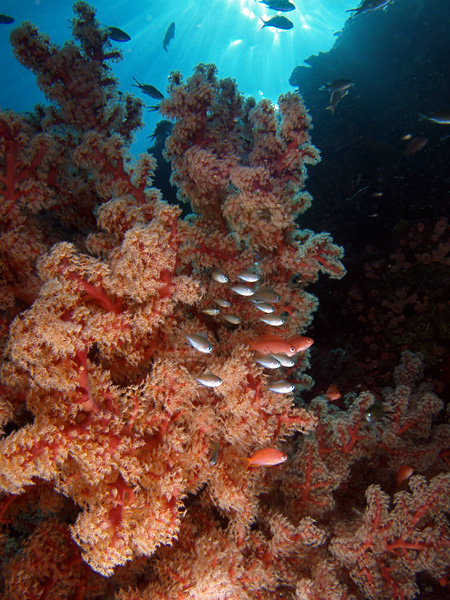 Jason - Well that is clearly problematic because then they die. The water becomes so corrosive that these organisms can't protect themselves. Unstressed organisms, ones with plenty of food, where the temperature doesn't get too high, they can actually protect themselves very often from corrosion. When you look at the CO2 vents in Papua New Guinea for example, there are corals there that are able to lay down skeletons and able to calcify despite the high CO2 levels that we expect in the coming decades. But the problem is, when you start swimming around in these high CO2 equivalents of the Great Barrier Reef, the numbers of species have gone through the floor. It's really crashed and that system is probably represents the least worst case scenario, because these volcanic vent systems in Papua New Guinea can be colonised by organisms from outside the vents. Now that clearly won't be possible when the whole global ocean is acidified. There won't be this recruitment from healthy populations outside. The Papua New Guinea reefs are the most diverse on Earth. They've got some strains of those corals that can survive. That's good news for coral reefs of course, but the bad news for people who like to see corals is the diversity has gone right down.
Robin - I see, and the whole point about survival is that the biodiversity needs to be complex. In other words, if you lose a great number of species, so the system then threatens to collapse.
Jason - Well that's right. Farmers typically like to reduce the biodiversity to the barest minimum because if you plough a field and grow crops, you make the system more efficient for producing food. You might think therefore that the seas will be better if we just simplified the whole thing, killed all these extra species that we don't want because we could get more food from it. Now that may be the case for some organisms that you can culture, but in Canada, here where this interview is taking place, the aquaculture industry is finding the waters are becoming too acidified for them to grow the oysters that they want to grow up into adults.
Robyn - Already that's happening?
Jason - Yeah, it's happening now. There's a quirk of oceanography that the coast on the northeast part of the Pacific is old water that originally sank in my part of the world, the North Atlantic, it sank down to the bottom of the deep sea, and it eventually wound its way round the Earth, and is upwelling here. It's coming to the surface here. So that's been accumulating carbon dioxide from the respiration of organisms all of that time. So it's already got CO2 loading naturally and we're adding in on top of that, from the atmosphere, extra CO2. That makes this water corrosive to things like oysters and so the oyster farmers here have got this double problem: upwelling, natural water that's high in CO2, which the oysters were able to cope with, but now, on top of that, that extra CO2 going in from above.
Robyn - How concerned are you that the CO2 increase is going to lead to a general problem? Because lots of people have said in the last few months that the adaptation that you mentioned, the fact that there can be some resilience in certain creatures, might be something that will obviate the whole thing?
Jason - Well I'm very encouraged that areas that are protected from stressors are actually more resilient as systems. So the more species you've got, the better they are to cope with things like acidification and that's why these marine protected areas that are being rolled out around the planet are such a good idea. I give them my full support because a resilient system buys you insurance against those chemical changes in the water that really, we can't do much about because the CO2 is already in the atmosphere. These areas are going to become acidified. You've got healthy sea grass beds for example - just by living there, they raise the pH of the water. Photosynthetic organisms raise the pH. That's got to be a good thing in the face of acidification, because calcifiers, things that build shells or skeletons continue to do so in the regions of sea grass beds. If you remove the sea grass beds, or if you abuse the habitats and lower their diversity then this natural solution to the problem can't happen.
Robyn - I was amazed to hear from the University of Queensland some research showing that mangrove swamps trees and sea grasses are 60 times more effective than even rainforests in mopping up CO2.
Jason - That's a good idea to look after them, isn't it? But they do the job for us. We're trying to pump carbon dioxide down below the seabed of the North Sea to lock it away because we're actually burning it and putting it in the atmosphere. That's got to be a good idea to stop doing that, to lock it up in perpetuity. But that's an engineering solution that's probably got its own inefficiencies, but if we can let nature do some of that work for us, that's sensible.
Are robots the best way to study deep sea environments?
I think remotely operated vehicles are one of the key tools we have now. I know that James Cameron has just built this manned-submersible but as soon as you have a human being inside it, you're completely limited on bottom time and you know, there's a danger in there and it's such horrendous support costs associated with that. So I think that the idea is to do it all robotically or remotely from the surface.
What have been the big developments in deep sea technologies?
Well, there's a couple of things. One is the materials that are available now, like titanium and sapphire, crystal in particular, to make high pressure view ports and there's been a big leap forward in terms of pressure proofing cameras to 10,000 metres. The other thing is data storage as well. I mean, you can get terabytes of in situ storage which is pretty good but our only problem normally is that we've obviously got to make this jump from standard video to HD. At the moment, handling that volume of HD video in terms of memory is becoming quite problematic.
How are deep sea vehicles recovered from the sea-floor?
Before we put them in the sea, we set all the cameras up to run on a time lapse more than we have our system whereby we attach three 40kg steel weights and then we deploy it over the side and the steel weights make it entirely negatively buoyant. It still takes about 4½ hours in complete freefall to get to 10,000 metres because remember that depth is about the same altitude as a jumbo jet will fly, so it's a long way to go. It crash lands on the bottom and then we decide that it's enough, maybe 12 or 24 hours later, we have devices on the land called acoustic releases and they are holding the steel weights. So each one has a unique number like a phone number and you just call it and say it releases the weights. It understands it over quite a long distance and then drops the weights, and we have floatation devices on the top of it that bring it back to the surface. So it's pretty simple. Expensive, but the principle is simple.
How are deep sea technologies powered?
We normally use a conventional lead acid car battery and we sink the whole thing into oil which is inert. So, it's pressure compensated. There's no air spaces, nothing to collapse under pressure and as long as the oil is inert, the electrical contact still works. But lead acid battery capacities are slightly limited so we have other systems where we use lithium ions but they have to be inside pressure housings because the last thing you want to do the lithium is get it wet. And there's a certain danger element involved with lithium as well when things don't go right, but batteries are a big issue with us especially in autonomous systems.
55:05 - Will my skin soak up the calories in skin cream?
Will my skin soak up the calories in skin cream?
We put this question to Richard Guy, Professor of Pharmaceutical Sciences at the University of Bath...
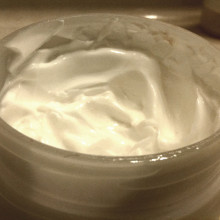
Given that a normal sized person, a grown up person, has a skin surface area of maybe 2 square metres and given that we're about 70% made up of water on the inside, we would lose a lot of water across the skin if it didn't perform efficiently as a protected barrier. It carries out this remarkable feat primarily through a very thin specialised layer, the stratum corneum. This layer on most parts of the body is only 1/100th mm thick. Under the microscope, stratum corneum looks a little bit like a brick wall. The bricks are the skin cells. All the bricks can take out water, the lipids filling the spaces between them provide an oily film into which water transfers reluctantly. Remember that old adage that water and oil don't mix. So, what happens when we apply oil-based creams to our face to provide some moisturisation during cold dry winters? Is the oil or fat in the cream absorbed into the body making us put on weight? Well, the short answer is no. Not to any extent that you would notice around your waistline. The function of the oily part of moisturising creams is to reinforce the lipids in the stratum corneum and to make it even more difficult for water escape. But where do the oils of the fats go in the end? Well, they mix in with the natural lipids of the stratum corneum and some may well move gradually into the deeper layers of this thin barrier. But once on the other side, they encounter an environment which is very watery. In oily substance, this is not an attractive place and therefore, fat transfer out of the stratum corneum will be very slow and unfavourable.
As a result, the amount of oils in the cream that will end up reaching the inside of the body will be very low.
Subscribe for free
Support Us!
Forum discussions
Does regenerative braking have a hazardous complication?
QotW - 24.04.26 - What are the chances of a random act being repeated exactly?
What is the Hopf gauge?
Why is each solar day a couple of minutes faster or slower than the previous?







Comments
Add a comment