Brownian motion in hot and cold water
This week Sheena Elliot and Derek Thorne demonstrate the science of Brownian motion...
Derek - Welcome to Downham Market High School, we have a very easy experiment for you to do at home. With us we have Sheena who has the experiment set up for us. What do we have today?
Sheena - We are just looking at how food colouring looks, and changes in hot and cold water.
Derek - So it sounds easy and indeed it is, and with us today we have a volunteer who is going to be doing the experiment. So could you introduce yourself?
Tom - I'm Tom and I'm in year 10
Derek - So do you like science?
Tom - Yeah it's ok.
Derek - That doesn't sound enthusiastic enough for the Naked Scientists, so we are going to try and turn you onto science. We have a very simple experiment for you to do and if you want to do it at home these are the things that you will need: two bowls which are able to hold, say, a litre each; a boiled kettle; and some food colouring. Now Sheena is going to tell us what we do with all these things
Sheena - First fill one bowl with cold water, and another with our boiled hot water. Then we just need to let them settle, so put a cover on the hot one to retain the heat and leave them to settle for 5-10 minutes.
Derek - A bowl of water may look like it is still but you are saying there is still some sort of movement in there?
Sheena - Yeah there will probably be some movement for quite some time, but if we leave it to settle for 5 - 10 minutes it should be fine
Derek - So we need to wait until the water is nice and still for 5-10 minutes.
Sheena - Then we add just a little food colouring in each bowl in a nice controlled way. So I would suggest dipping maybe a handle of a teaspoon into the food colouring and then just touch the surface of each bowl of water with it.
Derek - So you are not putting anywhere near a teaspoon full in there.
Sheena - Yeah just a tiny amount.
Derek - So Tom what do you think will happen?
Tom - No idea at all.
Derek - But we have one that is hot and one that is cold. When you put food colouring in the water what would you expect to see?
Tom - In one the food colouring is going to spread more than the other?
Derek - So if you at home are wondering what is going to happen you can do the experiment yourselves. It is very easy and you can tell us the result. So get those bowls filled with water and see what happens. We'll come back to you later with the results. Until then, back to the studio. LATER….
Derek - Hello there and welcome back to Downham Market High School. We've been waiting here to do this experiment with hot and cold bowls of water. Tom is here from Downham Market High School and Sheena set up the experiment too. So Sheena, would you care to instruct Tom over what to do right now.
Sheena - Ok so Tom, if you take the bottle of food colouring and then dip in the handle end of your spoon. Then put it into your bowl of cold water and just repeat for the hot water.
Derek - Tell us what you see.
Tom - It's moving a lot quicker in the hot water the cold water.
Derek - And in what way is it moving in the hot water when you look at that?
Tom - It's spreading far and then dropping down to the bottom, whereas in the cold water it's not spreading quite as far and then it's dropping down to the bottom.
Derek - Yeah and I suppose we've got a really definite shape in the cold water one. We've got this weird structure of food dye that's suspended in the water and it doesn't appear to be movign anywhere does it?
Tom - No, it's diffusing more in the hot water.
Derek - And we've been waiting here for a minute. Now, what does that hot water one look like?
Tom - It's all red, or a light pink.
Derek - So what do you think is going on here?
Tom - I thin it could be because of the heat in the hot water making the particles more energised, meaning the food colouring can diffuse more easily through it.
Derek - Sounds reasonable to me. What do you say Sheena?
Tom - That sounds like a perfectly good explanation. I think there are actually two things that might be happening here. First of all, in the hot water the molecules will be moving much faster and have much more kinetic energy. When we talk of heat, what we're actually talking about is kinetic energy and all these molecules are moving very fast. That's what we perceive as being hot.
Derek - If we were to look down an amazingly massive microscope at these particles, would they be moving around a lot?
Sheena - Yeah, they'd be moving around like crazy in there. So that's what I originally thought would be causing the food dye to be bashed around. It's Brownian motion: they're all being hit by the hot molecules around them. In the cold water you still have these molecules moving but they won't be moving as fast. However I think there might be another explanation that's actually the one we're seeing so quickly here. I think that's convection currents. The hot water at the top of the surface where it's next to the cold air will evaporate and cool down and it will no longer be the hottest water in the bowl. Hot water from below will then rise and take its place because hot liquids rise. You then set up these currents where hot water from below keeps rising and the cold water gets pushed down. All these currents cause the mixture to mix up very quickly.
Derek - Ok, so do convection currents just happen continuously in something with warm water in it?
Sheena - Yes. As long as the vessel is a different temperature to the surrounding air, then it will continue to evaporate and you'll get this cooling effect at the surface.
Derek - So you've talked about two different effects. I suppose it's quite reasonable that they might both be happening.
Sheena - Yes I think they will both be happening to some extent but we can't really conclude which is the dominant one.
Derek - So Tom, your guess about diffusion was to do with one of those, but do you understand the whole thing a bit more now?
Tom - Yeah it's clear.
Derek - Well thanks. Did you enjoy it?
Tom - Yeah it was fun.
Derek - Thanks you for doing the experiment with us and we'll be back next week for some more science from somewhere in the East of England. Until then, it's goodbye!
Ingredients
To do this experiment you will need:
 Two bowls that can hold at least a litre
 A boiled kettle
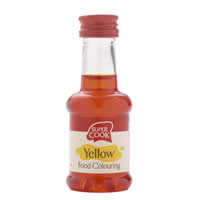 Some food colouring.
Instructions
First fill one bowl with cold water, and another with our boiled hot water. Then we just need to let them settle, so put a cover on the hot one to retain the heat and leave them to settle for 5-10 minutes.
Then we add just a little food colouring in each bowl in a nice controlled way. Perhaps by dipping a handle of a teaspoon into the food colouring and then just touch the surface of each bowl of water with it.
Then just watch for a few minutes and see what happens.
Result
The food colouring behaved differently in the two bowls:
In the hot bowl it spread far and then dropped down to the bottom.
whereas in the cold water it didn't spread quite as far and then it's dropped down to the bottom. It produced a much more definite shape and stayed more still.
Explanation
There are two possible effects that could cause the food colouring in the hot water to spread out more:
Brownian motion
If you looked at all the molecules in the water with a really powerful microscope they would appear to be jiggling around. The hotter they are the more they jiggle around, they will tend to push around any other particles in there too, such as the food colouring. So the hot water should spread the colour out faster than the cold. This process is called diffusion.
Convection
Because the hot molecules are jiggling about more they will tend to push each other apart, so you will get fewer molecules in a litre, so hot liquid will be less dense and float on the colder liquid. The liquid on the surface is least well insulated so it will tend to cool down quickest, so the hotter liquid underneath will float up over it. This is called a convection current, and will tend to mix up the food colouring with the water.
Probably convection will be doing all the large scale mixing, and Brownian motion the small scale. Of what you can see convection probably dominates.
- Previous Sounds from a Mug
- Next Making music with wine glasses



Comments
Add a comment