Ingredients
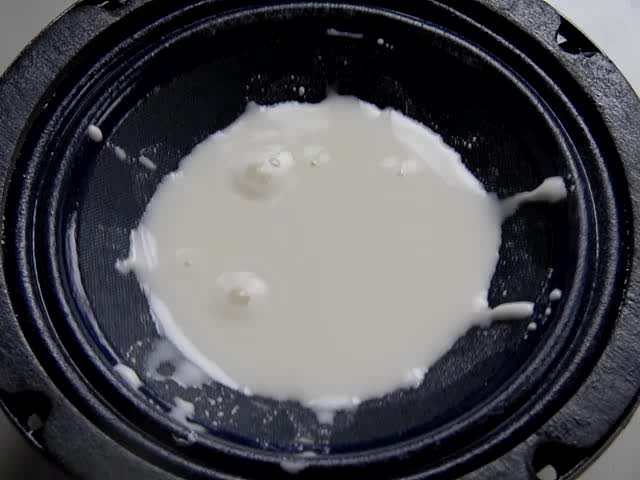 | Some cornflour (cornstarch) |  | Some vegetable oil |
 | Some polystyrene (styrofoam) or a balloon |  | A cup |
 | A spoon |
Instructions
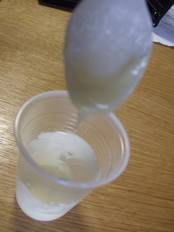 Put 2-3 tablespoons of cornflour in the mug
Mix in the vegetable oil until you get a consistancy like that of thick cream.
Charge up the balloon or the polystyrene, by rubbing it on your hair.
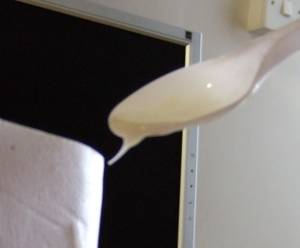
Pour some of the mixture out of the spoon, and then move the charged part of the balloon near it.
What happens?
Result
When you move the charged balloon near the slime, it will start to behave strangely, moving towards the balloon, and becoming much thicker.
Explanation
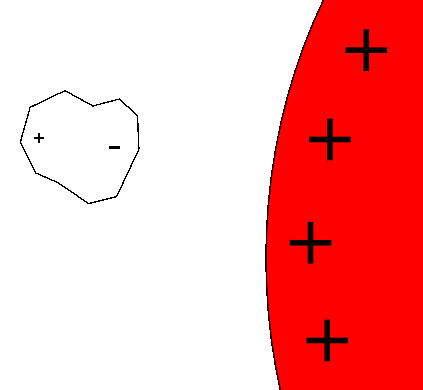
The cornflour is made up of tiny particles of starch, each less than 10 thousandth of a mm across. When the particles get near to the positively charged balloon, electrons will move towards the balloon inside the particle, making the side nearest the balloon negative and the side furthest positive. Because the positive is nearest the balloon it will be attracted more strongly than the other end is repelled, this is why dust is attracted to charged objects.
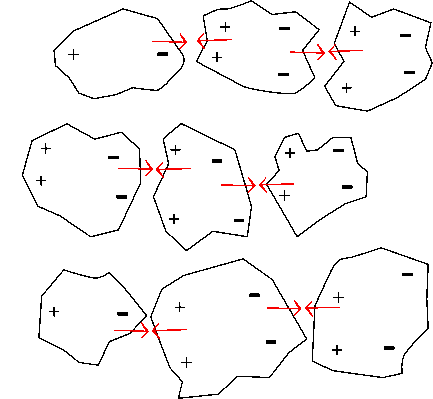
In the slime there are billions of these tiny particles surrounded by an insulating liquid so the charges can't escape. So you get lots of particles with positive at the balloon end and negative at the other, these are all attracted together sticking the particles together making the slime much more solid.
- Previous Fire Piston
- Next Stimulating Arteries
Related Content
Support Us!
Forum discussions
Does regenerative braking have a hazardous complication?
QotW - 24.04.26 - What are the chances of a random act being repeated exactly?
What is the Hopf gauge?
Why is each solar day a couple of minutes faster or slower than the previous?








Comments
Add a comment