We explore archaeologists' revelation that people have been riding on, eating and drinking the milk of horses for over 5,000 years; why the Amazon forest might become a carbon criminal; how marine organisms produce laughing gas; how a mutated gene has been linked to pancreatic cancer; how observations from space provide information on how the ground recovers after an earthquake. Plus in 'Stuff and Non-Science', are old glass windows thicker at the bottom because glass is a liquid?
|
We explore the discovery that super hot, burning chillies can be used for pain relief; how holes in the asteroid belt show scientists how the planets got to be where they are; why things smell the way they do; the new clue into the cause of Alzheimer's; how our reaction to an unpleasant taste is the basis for our reaction to things we find objectionable; how arsenic exposure can be monitored in your toenails. Plus in 'Stuff and Non-Science', are the sea and the sky blue because they reflect each other?
|
We explore the hottest breakthroughs from the world of research. Plus in 'Stuff and Non-Science', does sugar make kids hyperactive?
|
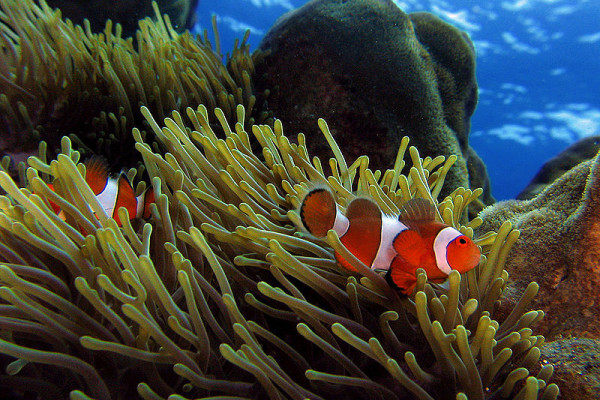
We explore the chemical link between asthma and eczema that has been uncovered; how a synaesthesia gene has been found; why rising levels of CO2 are affecting clown fishes' sense of smell; the evidence of a 700-million-year-old sponge which sets the clock back on evolution; how the butterfly species, Maculinea rebeli, convinces ants to look after their caterpillars; how IVF can help disentangle the effects of nature from nuture. Plus in 'Stuff and Non-Science', can you predict a child’s adult height by doubling their height at 2 years?
|
We discuss why the sequence of how four-legged animals move their legs is commonly misrepresented; Wi-Fi, the gaping hole in our internet security; why eating too much is bad for your brain; fossilised evidence of dinosaurs fighting; what makes locusts swarm and could they be 'deactivated'; why you have your DNA to thank for the party animal inside you and what this means for your health. Plus in 'Stuff and Non-Science', are lemmings suicidal?
|
We explore the discovery of a gene that triggers nerve repair; research showing that 'fake' acupuncture has the same pain relief effect as real acupuncture; how the analysis of brown clouds over East Asia shows the main culprit to be burning biomass; how the discovery of an 18 million-year-old fossil challenges the theory of when New Zealand was undersea; why DNA previously thought to be "junk" isn't; how the study of the genetic variations in stomach bacteria describe human migration. Plus in 'Stuff and Non-Science', does watching TV really make you short-sighted?
|
How fish lock carbon in their poo, why stress is bad for your attention span, why shiny plants could put a new sheen on global warming, how to make your own metal micrograbber and why your fingers can indicate your trading ability. Plus, in 'Stuff and Non-Science,' are daddy long-legs all that venomous?
|
How eco-friendly clothing could soon be made from chicken feathers and wheat; how mosquitoes use the harmonics of their wing beats to choose a mate; the new protein that could help fight blindness; a gene that may predict heart disease; the discovery of a new species of pink iguana on the Galapogos Islands; the discovery that the brain uses a tagging system to make us notice things. Plus in 'Stuff and Non-Science', do your eyes pop out when you sneeze?
|
How computers can now interpret what someone is seeing just from their brain activity – could we "see" dreams in the future? Oil extracted from used coffee grounds can be used to make a better smelling biodiesel; chimps recognise faces in the same way we do; proteins found to located specific DNA sequences very effectively; and the ethical issues surrounding the use of robots for care and war. Plus, in 'Stuff and Non-Science', are meteorites hot when they hit the ground?
|
How the growth rings of coral suggest a major earthquake is due in the next decade; the impact humans have on fire ant invasions; why extinct bird species are not what we thought they were; how paper and double-sided sticky tape have been used to make a cheap, effective disease diagnostic device; a new way to combat chronic viral diseases and possibly cancer; how studying the 'morals' of dogs gives an insight into the evolution of co-operation. Plus, in 'Stuff and Non-Science', does searing meat really seal in the juice?
|
How temperature, rather than genetics, regulates limb length in mammals; the assumption that melanoma follows the usual cancer stem cell model challenged; the discovery of 11 new regions of genetic variation that are linked to cholesterol levels; nagging can save your life – single men are less likely to have prostate cancer screening; how X-ray crystallography has given an insight into the molecular mechanism that prevents eggs being fertilized by more than one sperm; new discoveries that may help control epilepsy and brain damage from a stroke. Plus, in 'Stuff and Non-Science', does boiling water really freeze faster than cold water?
|
The differences between boys and girls, the discovery of the oldest turtle specimen that has turned turtle science on its head, the discovery of an enormous plume of water vapour on Enceladus, how calving of ice shelf gives an insight into icebergs and climate change, how robot lizards help us learn more about how lizards get themselves noticed, and the link between serotonin and osteoporosis. Plus, in 'Stuff and Non-Science', are crowds as volatile and unruly as we think?
|
The cochlear implant that uses infrared laser light for more complex hearing, clean energy from ocean thermal energy conversion (OTEC), how woolly mammoth DNA found in the permafrost is a mammoth step towards recreating extinct species, why social vocalisation replaces grooming in society, how early photon tomography (EPT) provides a safer way to image biological tissues and findings that how the brain categorises colours changes when we develop language. Plus, in 'Stuff and Non-Science', do cats always land on their feet?
|
How combining technologies has enabled the identification of the gene faults linked to cancer, how injections into the groin lymph nodes is a more effective way to treat allergies, why we now have a better view of another solar system, how sticklebacks select a leader, how cholera outbreaks can be predicted from space, and why a specimen of Homo erectus sheds light on our evolution. Plus, in 'Stuff and Non-Science', are silencers really as effective as Hollywood would have us believe?
|
A new technique for removing carbon dioxide from the atmosphere, the protein linked to alcohol tolerance, a method for cloning frozen mice, the awkward truth about the power of vitamins, and the friendly bacteria that could save lives. Plus, in 'Stuff and Non-Science', do your nails and hair keep growing after you die?
|
How planets came to be, lighting that brings midges thick and fast, and why flu jabs are even better than you think. They also looking into definitive proof that humans are responsible for global warming and ask "are you a descendant of Ötzi the iceman?"
|
Science fiction becomes reality as Dr Chris discovers that it's possible to wipe specific memories from the mind of a mouse. Where will this lead? He talks to Carlos Camara about X-rays powered by...er...sticky tape, and marvels at the resilience of the butterfly: if it loses two of its four wings it can still fly.
|
How being a silver surfer can help you keep your marbles, how proteins can be used in burglar alarms and the results of National Hand Washing Day are revealed…
|
Do we really use just 10 per cent of our brains, how to listen to a volcano and reveal the latest way to test unborn babies for diseases.
|
The latest research on the origin of the HIV virus, how superstitions are formed and why we think everything radioactive glows in the dark.
|
Why we pay too much in auctions and how moving continents can cause climate change. In this episode it is also explained how a deadly frog fungus has been spread from pregnancy tests.
|
The latest developments in global warming, stem cell research and the effect of dopamine on the brain. They also answer the age old question ‘does it take seven years for chewing gum to be digested?
|