Naked Oceans takes to the skies this month to explore the world of seabirds. They may not have gills, and only some of them have flippers, but there are plenty of our feathered friends that spend some or all of their time at sea. We look into the threats they face today and find out about a new network of conservation zones, called Important Bird Areas, that are being set up to protect seabirds around the world. And we find out how scientists study the bird with the largest wings on the planet - the incredible wandering albatross. As always, we have a run down of some of the latest marine science and conservation news headlines. And in Critter of the Month, we meet a colourful denizen of the deep that has trouble keeping its emotions hidden.
|
Things get distinctly festive in Naked Oceans this month as we crack open the mulled wine, scoff some mince pies, and settle down next to the roaring fire to bring you our exclusive guide to ocean-friendly gifts. Look no further for some exciting ideas to treat your ocean-loving family and friends - we've got it all here, from buying them their very own slice of virtual coral reef, to sustainable fishy pets, and some wonderful e-cards featuring a plethora of marine critters that help raise money for ocean conservation. And we're keeping things spick and span in Critter of the Month as we ask another marine expert to tell us, if they were a marine critter, which one they'd be, and why.
|
Fire and water don't normally mix but the ocean is full of living things that put on stunning firework displays. In a sparkling episode of Naked Oceans we celebrate Guy Fawkes night and Diwali as we go in search of some of the many marine animals that make their own light to hide, attack, escape, and woo. Chatting with ocean bioluminescence expert, Edie Widder, we find out about how and why so many ocean species emit light and how twinkling lights are being used to help track pollution through the seas. We also take our pick of the oceans' top 5 firework makers, including snails that glow like a green light bulb, squid that disappear before your eyes, and glowing seas that can be seen from space. And in Critter of the Month, underwater photographer Brian Skerry chooses a super-intelligent hunter.
|
The oceans were the cradle of life on Earth for billions of years before our ancestors took to the land and air. But they have also seen some of the most devastating mass extinctions in geological history. In this month's Naked Oceans we find out about the bizarre evolutionary experiments that appear in the first explosions of complex life over 600 million years ago, and what may have driven the catastrophic End Permian extinction event, and how it could teach us about potential future ocean extinctions. Plus we ask another marine expert to choose our Critter of the Month...
|
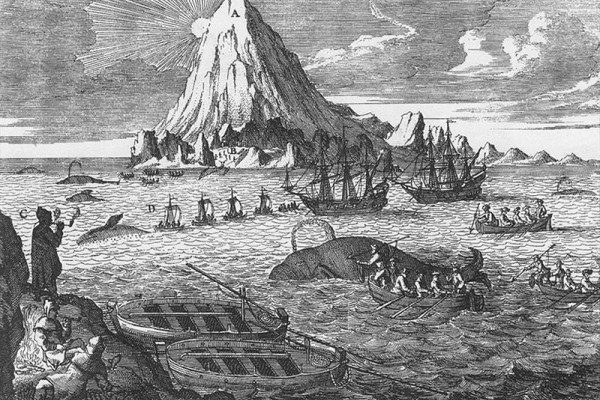
Is there such a thing as sustainable whale hunting? And even if there is, are we likely to see an end to the moratorium on commercial whaling. We find out in this first episode of a brand new series of Naked Oceans as we dive into the issues surrounding whaling. We pay a visit to the International Whaling Commission to find out the latest on whale research and management. And we venture into the past to the heyday of global whaling and discover how whaling ship logs from hundreds of years ago are offering vital insight into the changing climate. And Wallace J. Nichols launches our new series of Critter of the Month with a long distance migrant on a fascinating journey.
|
Naked Oceans has reached its 1st birthday and we celebrate by taking a look back at season one to pick out some of our favourite bits. We revisit a major milestone in ocean science with the Census of Marine Life, we venture once more into the depths to uncover some of the challenges of life miles beneath the waves and we call in on the extraordinary mating habits of coral reefs. One year on, we've made a special mixup of critters from the shoal of ocean experts who shared with us there thoughts on which marine species they'd like to be. And we reveal an exclusive glimpse behind the scenes at the making of Naked Oceans.
|
Naked Oceans ventures into the deep to find out how scientists are using cutting edge technologies to explore the darkest and most mysterious parts of the oceans. Sarah visits Scripps Institution of Oceanography and finds out how microbes cope with extreme life in the deep sea. And she got to play with some high-tech gadgets that bring samples back from the deep. We also find out find how researchers around the world are joining forces using the latest online social media tools to explore unchartered waters a long way down beneath the waves. And we meet an extraordinary bone-munching worm in Critter of the Month.
|
How do marine animals sense the world around them? This month on Naked Oceans we explore the many ways aquatic critters see, sniff, and hear in their watery realm. We discover out how tiny fish and lobsters find their way back home, and why this is vital for our efforts to help protect them. And we find out how scientists are using underwater robots to listen out for whales - even in the middle of a raging storm.
And we've got some good news - Naked Oceans has been funded for a 2nd series by the Save Our Seas Foundation. Before we start working on the new series we want to hear from you what you think of the show so far.
Fill out the NAKED OCEANS SURVEY before June 20th 2011 and you could win a signed copy of Helen's book, Poseidon's Steed.
|
Art meets science this month on Naked Oceans as we meet artists who bust myths about the dark, scary, monster-filled depths. We find out from sculptor Jason deCaires Taylor about how his work transforms into artificial reefs. We chat with National Geographic photographer Brian Skerry who blends the beauty of the oceans with the problems they face today. And we hear about a man who brought the beauty of the underwater realm to the masses before the invention of underwater cameras. Plus, our critter of the month is a curious beastie that can't see light, but can see heat.
|
From precious coral and slimey sea cucumbers to luxury fish lips and beautiful seahorses, this month Naked Oceans explores the many ways we trade the oceans. We sift through some of the highest price-tags in the sea and find out what impact this all has on ocean life. Helen pays a visit to an aquarium that breeds seahorses and finds out how to mail them around the world. And we ask, Is Blue Carbon the new green? Will converting marine life into carbon credits help fend off climate change? And in Critter of the Month we meet a very rare animal, with a very big appetite.
|
Valentines Day is here and this month on Naked Oceans we reveal some of the unusual mating habits of ocean animals. How do they track down a mate in the enormous oceans? What happens if they are stuck firmly in place on the sea floor? And what does all this mean for our efforts to protect ocean life?
We find out what happens when the animals that build coral reefs take part in a huge, synchronised love-in. We call in on the Cayman Islands to discover how the spawning habits of many fish put them in grave danger of being overfished. And we find out how jellyfish make more jellyfish and whether these prolific beasties really are going to take over the oceans.
Plus, we find out from a gender-bending Critter of the Month what life is like being both a male then female.
|
Join us as we venture beneath the waves to uncover alternatives to overfishing. We find out what lies behind the Marine Stewardship Council's blue eco-label for sustainable seafood and talk manta ray ecotourism with Andrea Marshall, "Queen of Mantas". Continuing our look at protecting the oceans, we catch up with Coral Cay Conservation in the Philippines to find out how they've been working with coastal communities to help them protect their local piece of sea and set up fish sanctuaries. And in Critter of the Month we meet a bird that lives above, on, and even in the ocean.
|