Christmas Question and Answer and the Star of Bethlehem
In the final show of 2006, Dr Chris, Dr Dave and Dr Kat answer all your science questions including why poppadoms curl upwards in the pan, how seedless grapes grow, and if lightning really does strike twice. To celebrate the coming of Christmas, Professor Colin Humphries from Cambridge University joins us to explain the astronomical phenomenon behind the Star of Bethlehem, and in Kitchen Science Derek Thorne and Alicia Webb knock back a few shots of vodka to find out how breathalysers catch drink-drivers. In the second part of the Science of Colour series, Anna Lacey finds out about the history of mauve and how hair dye conceals those dreaded greys.
In this episode
Climate Change Sexes Up Seals
There's tales of gloom and doom everywhere as we hear about the dangers of climate change. Depending who you believe, we're going to drown, boil or freeze in the next few centuries. But new research by scientists at Durham University and the University of St Andrews suggests that for grey seals living on the remote Scottish Island of Rona, global warming has brought some rather unexpected benefits. The seals live in colonies, with lots of females and their pups living with a few dominant males. Warmer and drier autumns have caused pools of rainwater to dry up. The pools are used by female seals for drinking water and splashing around. This means that the female seals have to travel further away from home to find fresh water, removing them from the watchful eye of the dominant male. These little trips away allow weaker males to nip in and get their end away. This isn't just good news for the weakling males, it's also helping to enhance the genetic diversity in the population, which is good for strengthening the species. So global warming's not all bad news, especially if you're a grey seal.
Stardust Reveals Solar System's Secrets
Listeners with good memories may remember that the Stardust mission came safely back to earth in January 2006, bringing with it precious samples or dust from the Comet Wild-2. Like the lump of ice and frozen peas at the back of your freezer, comets are dirty snowballs. They contain matter from the very beginning of our solar system, four and a half billion years ago. Researchers from Imperial College London and the Natural History Museum have used a technique called spectroscopy to look at the mineral content of dust samples from the comet. They found that the comet dust is made up of many different mineral compositions, rather than a single dominant one. The scientists think this means that there was a lot of mixing going on in our early solar system, before the planets formed. This means the solar system was born in much more turbulent conditions than previously thought - like some sort of cosmic blender. Some of the comet dust came from what is now the between Mars and Jupiter, while other particles came from a region much closer to the sun. Because Wild-2 was made in the far reaches of the solar system, some of the dust must have travelled great distances, suggesting a lot more turbulence than previous scientists have predicted. There's a great deal more analysis to be done on the dust samples from Wild-2, but they should reveal even more secrets about how our solar system was made
Smoke Is Poison
Many of us here at the Naked Scientists have done our fair share of lab work, and I've handled nasty chemicals like formaldehyde and benzene with the aid of a lab coat, safety specs, rubber gloves and a fume cupboard. But did you know that these, and a whole host of other chemicals, are also found in tobacco smoke? Cancer Research UK's latest campaign is called Smoke is Poison, and it's highlighting the fact that although most people know that ciggies contain tar and nicotine, around three quarters don't realise there's some really horrible chemicals in there too. Out of the 4,000 chemicals in smoke, around 69 of them are known to cause cancer in humans. These include arsenic, chromium and cadmium as well as benzene and formaldehyde. Funded by the Department of Health, the charity have teamed up with documentary maker Donal McIntyre to make a series of hard-hitting TV and radio adverts, showing the stringent safety measures that lab workers take when handling these chemicals, then capturing their reactions when they realise they're found in smoke. If you want to know more about the contents of smoke, then either text the word "poison" to 84118 in the UK, or have a look at www.smokeispoison.com.
Sweeping CO2 under a carpet...of lava
Researchers are planning to use the porous rocks in lava fields to combat global warming, by locking away the carbon dioxide from power stations. Peter McGrail, from the Pacific Northwest National Laboratory in Washington, and colleagues have found that water saturated with carbon dioxide reacts with volcanic basalts to produce insoluble calcium carbonate, the same material that furs up pipes and kettles. So what goes in shouldn't come back out. "It [CO2] completely converts to solid rock, so leakage is not a concern," says McGrail. Next year the team will pump 3000 tonnes of carbon dioxide, the equivalent of a few hours of power station output, about two thirds of a mile beneath the surface of a western US lava field and then track the movement of the gas below ground and check for leaks. Let's hope their solution is water-tight, or at least gas-tight.
No pain, no gain
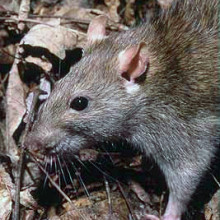
Scientists are investigating the possibility of using viruses to carry out pain-killing gene therapy in the spinal cord. So far the technique, which is the brain child of Andreas Beutler and his colleagues at Mount Sinai School of Medicine in New York, has only been tested on rats, but the results look promising.
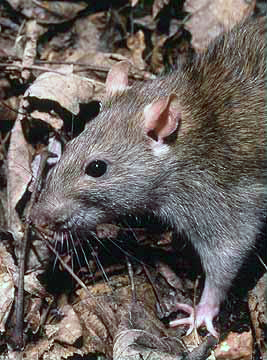 The team have used an adeno-associated virus which has been genetically modified to replace the normal viral genetic material with a gene for one of the body's own natural pain-killing chemicals called beta-endorphin, which works in the same way as morphine. Ten billion particles of the modified virus were injected by lumbar puncture into the spinal cords of each of a group of rats. These animals had previously sustained nerve injuries that simulate the chronic pain experienced during certain human diseases. At the same time a second group of animals were injected with a control virus containing a harmless marker gene instead of the beta-endorphin gene. The animals were then followed up over three months to look for effects on their pain. Initially nothing happened, but then after one month the animals that had been injected with the beta-endorphin containing virus began to show significant improvements in their pain, which continued until the end of the experiment two months later. The control animals, on the other hand, remained unchanged.
The team think that their approach could make life much more comfortable for human patients experiencing severe pain, such as those with terminal cancers. This is because effective pain control is a delicate balancing act since doctors need to walk a tightrope between patient comfort and side effects.
"Chronic pain patients often do not experience satisfactory pain relief from available treatments due to poor efficacy or intolerable side effects like extreme sleepiness, mental clouding and hallucinations," says Beutler. "But targeted gene therapy will likely avoid the unwanted side effects associated with opioid painkillers such as morphine."

- Science Update - Giraffes, Vaccines and Salmon
Science Update - Giraffes, Vaccines and Salmon
with Chelsea Wald and Bob Hirshon, AAAS, the Science Society Bob - This week for the Naked Scientists, we have to apologize for the noise, because we're broadcasting from Santa's workshop at the North Pole. It turns o
Chelsea - Sure! This one is an audio question:
Matthew - Why is it that giraffes don't have a stroke when they bend down to get a drink of water?
Chelsea - Excellent question, Matthew. Why don't giraffes have strokes when bending over? Well, we talked to giraffe circulation expert Alan Hargens of the University of California - San Diego. He explained that their brains and spinal cords are surrounded by fluid, just like ours. When they bend over, that fluid rushes to their heads, and squeezes the swelling blood vessels from the outside.
Alan - So when they bend head-down to, say, for example, drink water, the elevation of blood pressure due to the head-down tilt could be counteracted, one for one, by the increase in cerebro-spinal fluid pressure. WALD: Even so, he says giraffes generally don't keep their heads down for long, even when they're sleeping.
Bob - Fascinating. Thanks, Chelsea. Here's another. After hearing about threatened salmon populations, Merrie Smith from Mendocino, California, called to ask why we catch and eat salmon before they've spawned, rather than after. We asked University of Alberta salmon expert Martin Krkosek. He says that when salmon reach their spawning streams, they stop eating and metabolize their own flesh for fuel. On top of that, competing for mates and digging nests for eggs takes its toll.
Martin - So by the time they're actually spawning, and after they spawn, their bodies are really worn out, from fighting with each other, from digging, and they're also usually heavily infected with fungus; they're generally just really gross.
Bob - Very ecological-but not very palatable. Thanks, Merrie. One last one, Chelsea?
Chelsea - OK. Listener Luci Levesque from Augusta, Maine, heard that vaccines are made in fermenters, devices normally associated with beer. She asks, what's the connection? Good question! We turned to microbiologist Agnes Day of Howard University College of Medicine.
Agnes - The principle of using a fermenter is the same for beer as it is for vaccine production.
Chelsea - She tells us that a fermenter is simply a device that grows microorganisms on a large scale. In beer, those microorganisms are the yeast that convert sugars into alcohol. But in vaccine production, they are disabled versions of the disease-causing bacteria or viruses that will ultimately form the basis of the vaccines.
Bob - Thanks, Chelsea. We hope you naked people and all your fans stay warm and have a very happy holiday. Until next time, I'm Bob Hirshon…
Chelsea - And I'm Chelsea Wald, for AAAS, The Science Society.

The Science of Colour 2
with The Dye Industry and How Hair Dye Works - Anna Lacey
Anna - Last week, we had a look at colour vision, and the range of pigments found in the natural world. We humans have used colours from plants, animals and minerals to make dyes for centuries. But in order to achieve the fantastic array of hues we see in today's world, we needed a colour revolution. Here's Graham Alcock, from the Society of Dyes and Colourists.
Graham - The first man made dye was produced mainly by accident in 1856 by a gentleman called William Henry Perkin. There were certain chemicals readily available at that time, and they were using the chemistry of coal tar to try and produce a synthetic cure for malaria. In other words, synthetic quinine. And while he was actually trying to produce a synthetic quinine, he had many many failures. But what he did do was to produce one day, a black sludge in the bottom of a flask. He was going to clean it out, and to clean it out he put some alcohol in, shook it up, and he actually produced this beautiful purple colour. So he did some tests on pieces of silk and he found out that they were very fast. In other words they didn't fade in the sun, they didn't wash out etc. So he set up his own little factory. And along with his brother who was his business partner, they started to produce this purple dye which he called mauvine.
Anna - So can we still see this colour mauvine today?
Graham - You can't see the original mauvine because the original coal tar had masses of impurties in it, and the other chemicals they were using as well had lots and lots of impurities. And you can't recreate the impurities.
Anna - The success of mauvine, especially after being worn by Queen Victoria, sparked off competition across Europe. With chemists and industrialists vying to create new dyes that not only looked good, but didn't wash out. But what is it that makes a dye stick in the first place?
Graham - Each fabric will require a particular dye recipe, and also it will more often than not require a Mordent. Now a mordent is a chemical which opens the fibre and allows the dye to actually penetrate really deeply into it. And then it closes up again, which if you like grips it within the fibre and stops it from washing out and fading in the sun.
Anna - However clothes aren't the only thing to benefit from the dye industry. Hair dye is used by millions of people world wide, either to hide grey hairs, or just for a change. Hair itself is made of a protein called keratin, and consists of three main layers: the medulla in the centre, the cortex in the middle and a thin protective cuticle on the outside. But before we look at dyeing hair, where does natural hair colour come from? Here's the London College of Fashion's Judy Beerling.
Judy - Hair colour is actually determined by the pigment melanin, which is produced by cells called melanocytes, that are the base of the hair follicle. And there are two types of melanins: eumelanin and pheomelanin. And they have different colours. And it's the combination of those colours that actually gives you your unique hair colour.
Anna - Melanin is normally passed from the melanocytes, into the hair's cortex. But as we get older, the melanocytes stop working. This exposes the natural white colour of keratin, and the overall mixture of white and coloured hairs, gives the hair a grey appearance. But if grey's not really your colour, permanent hair dye can offer a solution.
Judy - Permanent hair dyes work by a mechanism whereby you mix something that gives you oxygen (in fact it's hydrogen peroxide) with another bottle of stuff contianing ammonia and these dye precursors as they call them. That ammonia has two purposes. It helps the hair to swell so those dye precursors can get into the hair, and it activates the peroxide to produce oxygen, which mixes with those dye molecules. The dye precursors are oxidised by the oxygen and you get slightly larger molecules which get trapped inside the cuticle of the hair. So you get something approaching natural colour in the hair.
Anna - So a guaranteed way to have grey-free hair. But there's another surprising beneficiary to this tale. Graham Alcock again.
Graham - In a royal procession in 1850 you'd have had to kill over 10 million insects to actually produce the dye to dye the uniforms of the people in the procession. So if nothing else, making man-made dyes certainly saved a lot of insects.
Anna - Next time, I'll be finding out how mauvine dyes lead to a headache cure, and how a spot of colour can be used to treat disease.

- What would happen to a ball dropping through the centre of the earth?
What would happen to a ball dropping through the centre of the earth?
It would depend on whether you took all the air out of the tube first, because if there was air resistance it would drop all the way down. It would be going quite fast at the bottom but probably not very fast because it would be losing lots of energy to friction. It would go over to the other side a bit, but then it would start falling in the other direction and it would start coming north again, and it would oscillate and eventually end up in the centre of the earth. If you took out all of the air from the tube, it would drop all the way through the earth and end up pretty much at the South pole, it would stop there and it would come back again. It would go backwards and forwards and would look like simple harmonic motion, a bit like a pendulum. It would take about 90 minutes to bounce back and forth. If you imagine that you don't take the air out, it's worth thinking about water as an analogy. Every time you go 10 metres underwater, you increase the pressure pushing down on you by 1 atmosphere. If you were to go all the way to the centre of the earth pretty soon the air would become so dense and there would be such a huge amount of atmosphere above you, it would be like trying to swim through a solid. Which is why the earth's core is solid; because of the huge pressure that there is down there. The thing is, you wouldn't be able to go very very fast because there would be this tremendous resistance. You'd actually fall probably forever, because you'd go so slowly.
- Why do popadoms curl?
Why do popadoms curl?
Possibly because the top of it's exposed to the air, so you get more evaporation off the top. The bottom's going to fill with oil, the top's going to dry out, so the top's going to get smaller and it's going to curve upwards.
- Do bats see the world upside down?
Do bats see the world upside down?
Now I've been having a look into this, and at Thomas Nagel's 1974 work, "What is it like to be a bat?". Basically, bats don't ever go the right way up. They fly sort of head down, and they hang feet up head down, and basically, that's the way they think the world is. There have been some experiments done trying to put bats in low gravity, and basically bats don't really care which way is up. There have been some experiments done with bats and gravity, where most things, if you put them in wrong gravity or reduced gravity, they start rolling over and they get very confused, whereas bats just don't really care. They can fly upside down, they don't really mind. So bats generally hang upside down rather cleverly, and they don't seem to mind which way is up. And here's a good bat joke for you: There's a bat hanging upside down in a cave, and he sees another bat standing on the floor and he says "What are you doing down there?" And the other bat says "Yoga". [Chris] I can beat that! There's three vampire bats in a cave. And they're really hungry. And they can't get hold of any blood to save their lives. And then one day one of them says "I'm so desperate I'm going out of this cave, I'm going to find us something to eat". So he goes flying out of the cave and five minutes later he's back. He's got his mouth drenched in blood. And the other bats go "where did you get that wonderful blood?" and he says "come to the mouth of the cave and I'll show you". And they all go to the mouth of the cave, and he points out and says "You see that tree over there?" and they say "yeah" and he says "I didn't".
- Could we insulate against gravity?
Could we insulate against gravity?
The force of gravity is a different think to heat, light and sound. Heat, light and sound are vibrations of various different types. Sound is a physical vibration in the air, or in an object. Heat is another physical vibration, a very much faster one. And light is a vibration in space itself. So in order to insulate against them you've just got to get something to sort of dampen their vibrations. Gravity is a force. So it's actually something which pulls something. You can insulate against forces such as electromagnetism, because they've got positive and negative. And so if you want to, you can rearrange positives and negatives in order to insulate against it. But because you've only got one kind of gravity, you've only got positive gravity, you can't have the negative ones there which you'd need to insulate against it. So you can't, unfortunately, insulate against gravity. Though it might be very useful if you wanted to build a space ship or something. However, people do talk about anti-gravity though. I'm just wondering if you could really create anti-gravity maybe you could counteract gravity. So maybe that will be possible in the future.
- Does all matter exist somewhere?
Does all matter exist somewhere?
It's not quite true that matter can't be destroyed. You may have heard of Einstein's formula E=mc2, which basically means that mass is the equivalent of energy. So you can convert mass into energy or energy into mass. But you can't destroy the total amount of mass and energy together. So the total amount of energy-mass stuff, that can't be destroyed. And that is always somewhere. John - So everything that has ever been created in nature, is still in existence somewhere in some form? Dave - Well, all of the energy in the universe is still there. Chris - It originated in the big bang, which was the unleashing of a huge amount of pent up energy that existed in a tiny amount of space that was enourmously dense, and minute. John - I'm thinking of matter created on earth like an acorn grown into an oak tree. Chris - Well those are all atoms and those are all molecules, which are built from atoms, and the point is that all of the things and all of the complex elements you see here on earth must have been made in a star somewhere else in the universe. Nothing that was produced in the big bang came out more complicated than Hydrogen, Helium, and a little bit of Lithium. Which are the first three elements of the periodic table. And more complicated things were produced in stars like our own sun and bigger stars that very quickly ram things together and make very complicated elements which when the star blows up, are disseminated all around the universe. And then they gather together to make a new star, and new planets and things like our solar system.
- Does lightning ever strike the same place twice?
Does lightning ever strike the same place twice?
I'd say probably it's not true. Especially if you have a tall building or something pointy on top of a mountain it actually is much more likely to hit something that it's struck before. Because it tends to hit sharp things. The empire state building that's in New York in America got hit 15 times in 15 minutes a few years ago. So there's evidence that lightning certainly does strike the same place far more than once. 15 times, in fact. Because it's always trying to find the easiest way down to earth. And if there's an easy way made handy, it will use it every time. Kat - I never realised this but aeroplanes can get struck by lightning. I had to fly to Glasgow and a friend of mine was on the next flight and got struck by lightning! Crazy! Chris - It happens with a frequency of about once in every 10 years, in an aeroplane's lifetime. A friend of mine flew to America. He was already late for his flight, he finally got on the aeroplane, it was delayed landing by an hour and a half because the storm was so bad around Chicago, and then his plane got hit by lightning, and then it got hit by lightning again, so twice in the space of about ten minutes! And then they did land, and because all the flights had been grounded there were no hotels. So he ended up having to spend the night in a five star hotel which was the only thing that had any rooms left over and it cost him about 500 quid. Then he finally did get his connecting flight to the conference he was going to, and he was so late he missed his talk.
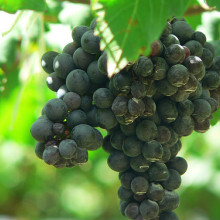
Where do seedless grapes come from?
The correct answer is that the plants that grow them are actually clones. So instead of growing them from seeds, they're grown from cuttings taken from existing plants. Obviously, the first seedless grapes were from a plant that arose through mutation - a genetic change - that meant that it didn't have seeds. And, presumably, some grower noticed this. He or she would have taken a little shoot or a stem off the plant, put it in the ground, and a new plant - genetically identical to the seedless parent - would have grown. In fact, this is how a lot of plants are cultivated now, and also a lot of seedless varieties. But, this technique is causing problems in some cases. Bananas, because they're all clones, are getting struck down by fungi - like Panama disease. And if a population is created by cloning, all of the plants are genetically identical, so they can very easily be wiped out because the plants have the same defences to a pathogen. And if the pathogen evolves to sumount this defence, every cloned plant is susceptible...
- Do fizzy drinks make you drunk quicker?
Do fizzy drinks make you drunk quicker?
This is a bit dodgy. Scientists have looked at whether champagne makes you tipsy more quickly. There was a piece of research done at the university of Surrey by a researcher called Fran Ridout, in about 1999. They got all the researchers in their laboratory one week to drink some still champagne that had been flattened by leaving it open for a while. Then a couple of weeks later they got them to drink the same amount of fizzy champagne. And after each drinking session they got them to do some simple tests to work out how well their brain was working. And they found that they were working less effectively after the fizzy drink, than after the non fizzy drink. But then of course there's a big placebo effect here because you know it's fizzy and so you're more likely to think that you're getting more drunk.
- Can the muscles in the bowel be repaired?
Can the muscles in the bowel be repaired?
Well those types of muscles are what are called smooth muscle. And this is different to the parts of the body which you move around voluntarily, things like your arms and legs. They have a slightly different form of muscle. The answer is that they can't necessarily spontaneously repair unless you give them a bit of help. What scientists are now finding is that there are certain stem cells that we can inject into people. And those stem cells come out of the blood, they go into the muscle, and they then turn into muscle cells, and they can repair. And there's a scientist who's working in Italy, who published a paper recently when they were looking at muscular dystrophy, which is a disease of muscle in the legs and the arms, skeletal muscle. And they managed to steal some stem cells from the walls of blood vessels, put them into the blood stream of some dogs that had muscular dystrophy, and the dogs got better. Because the cells they injected went into the muscles and repaired them. But in terms of repairing the bowels, it depends why there are problems with the muscles in the bowels. There are a number of disorders, which can affect your intestines, and it depends which one you've got, and whether or not it's possible to put it right. There's one disease which is called Hirshprung's disease and in this one, for some reason you don't get proper nerve connections formed along the bowels, and so messages which tell the bowels to push food along don't get through properly. So the bowels don't work very well. That's very difficult to repair unfortunately. But there are some disorders where, if there is a bit of the bowel which isn't working properly, by taking it away, and stitching the two ends together, you can overcome the problem. Your bowel has a hell of a lot of nerves in it, it's got as many nerves as parts of the brain in fact, and it can actually learn. That's why we have a bowel habit. Your bowel actually learns what your daily rhythm or pattern is all about.






Comments
Add a comment