There's a bulging mailbag of science questions for the Naked Scientists this week, as we find out why we stop smelling smells, whether we can use viruses to kill cancer and why crisp and sweet packets make so much noise? Also, how unmanned spy-planes can speed up medical diagnoses in rural countries, how Internet anti-spam technology is helping to interpret ancient manuscripts, and the first water bears in orbit - how tardigrades survived a trip into space, without a suit! Plus, in Kitchen Science, Dave shows you how to impale a potato using only a drinking straw!
In this episode
- A drop of water contains one molecule per litre of water on Earth!?
A drop of water contains one molecule per litre of water on Earth!?
This is their maths: There are about 24,000 droplets in one litre. That gives you a droplet volume of about 0.03cm cubed. The relative molecular mass of water is 18g per mole. A mole is the number of molecules, it's the mass in grams of the molecules in one mole. You need that to calculate the next bit of the equation. In one litre there must be 1000/18 moles. We know from Avogadro's constant there are 6.022 X 10 to the 23 molecules in a mole of something. That means that in a litre of water there must be 1000/18 X 6.022 X 10 to the power of 23 molecules in a litre. That means per droplet you have to divide that number by 24,000 because there are 24,000 droplets in a litre. That means there must be 1.39 X 10 to the 21 molecules of water in an individual droplet of water which is an amazing number of molecules. The volume of the Earth's oceans is 1.37 X 10 to the 9 cubic km. That's a reasonably well-understood figure. If you need to convert that into m cubed you have to times it by 1000 cubed because there's a thousand m in a km. That's 10 to the power of 9. To turn that into litres you've got to times it by 1000 cubed again. So that's 10 to the power of 12. That means that on Earth there are 1.37 X 10 to the 21 litres. That's nearly the same number as there are molecules in the droplet of water. If you put one into the other you have almost one molecule of water per litre of water on Earth.

Robotic Carrier Pigeons
As rural areas especially in developing countries are very spread out and often have an awful transport infrastructure clinics can be many hours if not days away from the nearest hospital with a lab able to do tests. This means that any treatment that depends on the results could be delayed by days, which is obviously not good for the patient.
 Barry Mendelow of the South African National Health Laboratory Service has a solution to this problem - spy planes... Not the big ones costing millions of pounds, but the small Uncrewed Aerial Vehicles (UAVs) that have been developed for soldiers to be able to see over the next hill. These are like radio controlled planes with a computer and GPS system so that they are essentially autonomous and able to fly a preprogrammed course of over 50km at 45km/hr and report back on their progress by mobile phone.
The first UAV they developed had a payload of 500g and is able to carry up to 20 blood or saliva samples or 2 units of blood or even life saving drugs such as rabies vaccines. It can be given coordinates to drop off the samples and then instructed to fly back to base. It is then landed manually by remote control.
While they developed this UAV, technology for doing tests has moved on and molecular diagnostics techniques have been developed that only need a spot of blood or sputum on a piece of paper. This has lead the team to develop a much smaller and cheaper UAV with an only 10g payload which is small but still enough to carry 10-20 paper spot samples. It only weighs 800g but can be launched and retrieved by hand and has a range of over 50km.
In tests they have sent a sample by UAV to a lab and got the results back to the clinic by SMS within 6 hours.

CAPTCHA-ing old texts
Anyone who's a regular web user will be familiar with CAPTCHA's - the little box of oddly shaped letters that you have to type out in order to access certain web pages. CAPTCHA stands for Completely Automated Public Turing test to tell Computers and Humans Apart, and it's a highly effective security measure that means a computer system can tell if you're a real human, rather than a spambot.
 Now researchers from Carnegie Mellon University in Pittsburgh have harnessed this technology for a rather unusual end - transcribing old texts from printed material into digital form. Using the CAPTCHA system, the researchers have been asking computer users to decipher scanned words from books that can't be recognised by current character recognition computer programmes. The team found that this method had an accuracy level of more than 99% - as good as professional human text transcribers. Currently, the system is being used in more than 40,000 websites, and has been used to transcribe over 440 million words.
Bugs in space
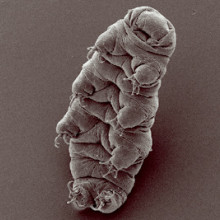
A handful of common tiny soil-dwelling animals from Earth have successfully gone where previously only bacteria and lichens have been before by surviving a trip into low Earth orbit where they were exposed to the void of space.
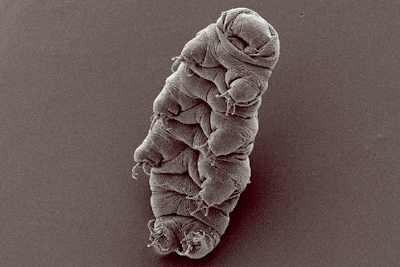 Known as tardigrades these animals are known to be very robust and can survive on Earth under extremely harsh conditions including almost total dessication but their ability to survive a space-walk like this is certainly a surprise. Ingemar Jonsson and her colleagues from Sweden and Germany sent both tardigrades and tardigrade eggs Heavenwards on a European Space Agency Mission last September. The samples were exposed to open space and varying doses of radiation ranging from just UVB and UVB to full solar radiation. Almost all of the animals survived vacuum exposure, two thirds survived the UVA and UVB exposure, and a few clung on even after a sizzling full solar radiation exposure.
The researchers, who have published the work in Current Biology, are intrigued as to how these tiny animals are able to resist such fierce conditions. As such they may have previously unrecognised cellular mechanisms that shield them from injury and also enable them to rapidly and efficiently repair DNA damage. Understanding how they achieve this could hold the key to techniques for improved DNA repair in humans and possibly novel anti-cancer therapies.
The convoluted family tree of a Lager
Scientists at Yale university have been studying the family tree of the yeasts which are used to brew Lagers. To do this they have been studying the DNA of the yeasts used to make both modern beers, and that preserved in yeasts up to 130 years old.
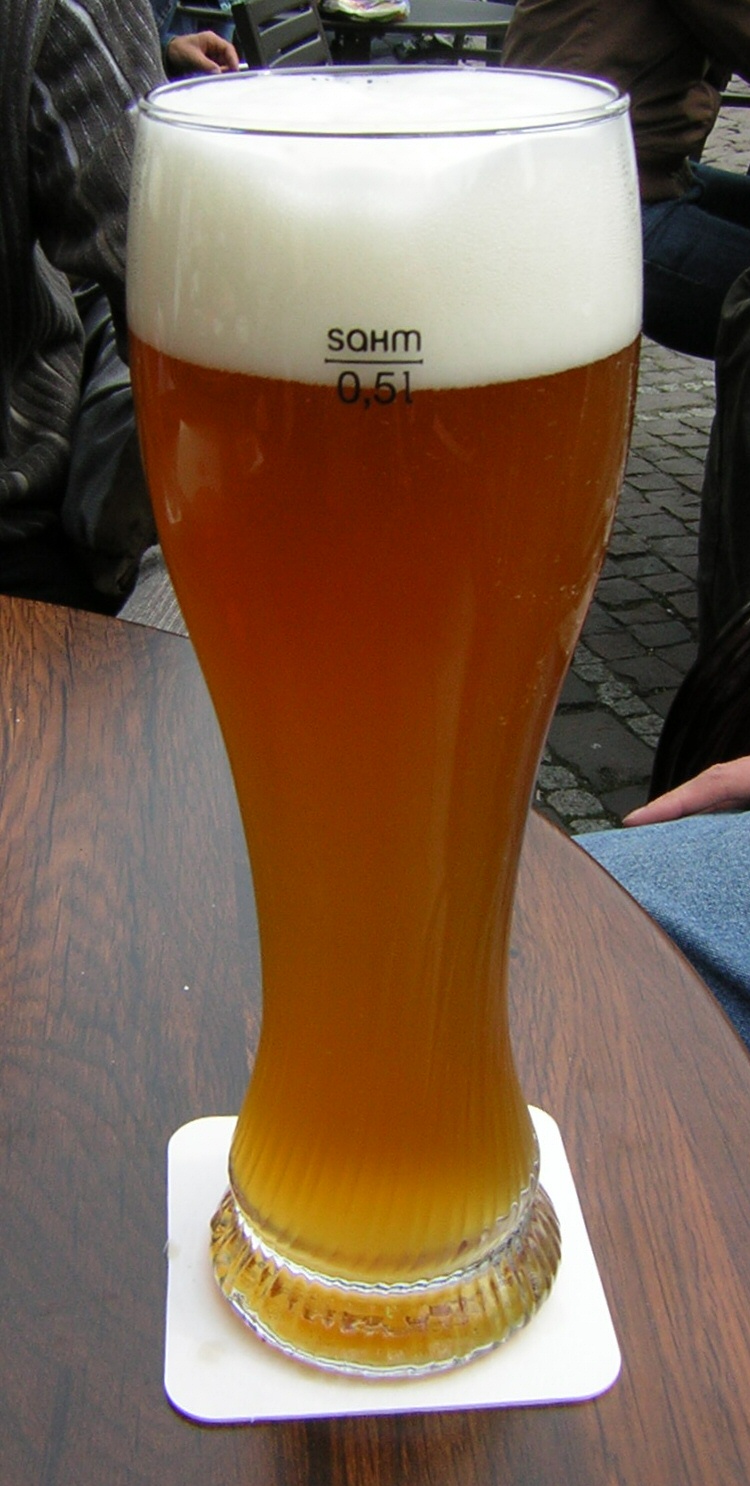 They discovered that there are two major families of yeasts, those which are used to brew "Saaz" beers such as Pilsner and Budweiser, and yeasts used to "Frohberg" beers such as Heineken and Orangeboom. Both families are thought to be the consequence of the Bavarian legal system. In the 15th century it was made illegal to brew beer in the summer, as the the beer was always ruined by the high temperatures, so all the brewing was done in the frigid winters.
Conventional brewing yeast, S. cervisiae does not survive well at these temperatures, and yeasts which survive well don't produce much alcohol. Fortuitously though at some point in this period brewing yeast interbred with S. bayanus, which thrives at low temperatures, not once but twice. The Saarz yeast is a conventional hybrid with one set of chromosome from each parent, but the Frohberg yeast is triploid with a second set of Brewer's yeast chromosomes.
They found that neither strain had lost much of the low temperature genome, and both had several copies of the genes vital for fermentation such as those to split up maltose into glucose.
This research is interesting but unfortunately it is very hard to do genetic manipulation on these yeasts as they are both sterile and can only reproduce by making clones of themselves. So it is unlikely that it will have any direct effect on the beer in your local pub, although in the future it may be possibly to make hybrids of other yeasts to make a more interesting pint.
Med diet prevents major disease
Back in July, Greek researchers working as part of EPIC,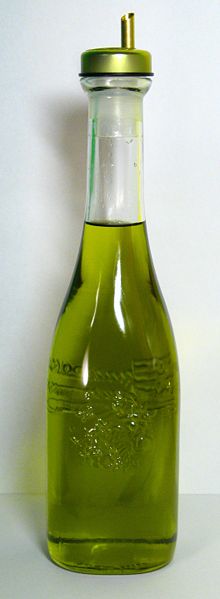 the largest study of diet and cancer ever undertaken, showed that the more Mediterranean a person's diet is, the lower the risk of cancer. That's a diet that contains lots of fruit, veg, grains, nuts and fish, along with a splash of olive oil, but is low in red and processed meat, alcohol, dairy and animal fats.
Now an analysis of 12 international studies of diet and disease published in the British Medical Journal has shown that a strict Mediterranean diet can help to reduce deaths from other diseases as well as cancer, including heart disease, Parkinson's and Alzheimer's.
Collectively, the studies covered more than 1.5 million people, whose diet and health were tracked from three to 18 years. All the studies used a score, to work out how "Mediterranean" a person's diet was. The researchers found that people sticking strictly to a Mediterranean diet had a 9% drop in overall death rate, including a 9% cut in deaths from heart disease, a 13% drop in the incidence of Parkinson's and Alzheimer's, and a 6% cut in cancer incidence.
The researchers suggest that a tool to help people to "score" their diets might be an effective way to help people cut the risk of these diseases and live longer.
13:02 - Preparing the Heart for Attack
Preparing the Heart for Attack
with Daria Mochly-Rosen, Stanford University
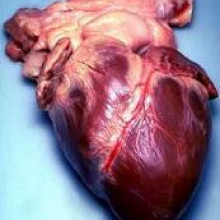
Chris - Now there may be a new way to tackle heart disorders and Daria Mochly-Rosen is a research at Stanford in America. She's come up with a new way perhaps to create a condition called cardiac preconditioning. This is where the heart in some way becomes resistant to the effects of stress and reduced oxygen and blood flow, perhaps because you've had that for a while so if you have preconditioning you're resistant to those effects. She's actually found a way of minimising the damage to hearts if you give animals a certain drug. We're now going to find out whether or not this might work in humans. Hello Daria, thank you for joining us.
Daria - Hello, thank you for having me.
Chris - So tell us a bit about this research.
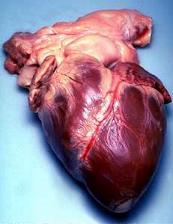 Daria - It started as you told the audience with a quest to understand how the heart is managing to protect itself from damage if a full-blown heart attack occurs. Quite a few researchers were trying to see if we could put it in a bottle, so to speak. First we took a number of agents which give the heart a preconditioning-like effect and see whether something in common came up. What we found is that this enzyme called aldehyde dehydrogenase is the one that changes more consistently with the amount of damage to the heart after heart attack: or a model of heart attacks. The bigger the damage, the lower the activity of the enzyme. The smaller the damage the higher the activity of the enzyme.
Chris - Is your theory then that what's going on in people who have long-standing heart disease, the heart by being stressed makes more of this enzyme so that if someone then has a heart attack they're more protected. If someone has a heart attack out of the blue they have low levels of this enzyme and therefore the heart is more damaged.
Daria - Actually what's interesting is not that the heart is making more of the enzyme but it actually makes it a little bit more active. We were interested to see how it happens and we found the mechanism but then we thought this is all a correlation that increasing the activity of the enzyme is really correlating with decreased damage.
Chris - How does the enzyme work, Daria?
Daria - It is getting rid of what's called free-radicals. These massive things that accumulate in the organ when there is less oxygen in the atriums. In fact, free-radicals are accumulating in a variety of diseases and this enzyme is one of the important enzymes. It gets rid of those very reactive agents that accumulate in the organ during this ischaemic event, heart attack events.
Chris - How are you managing to increase the levels of your enzyme in the experimental system?
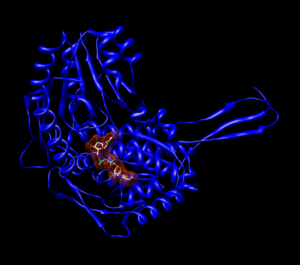 Daria - So what we do is we do not increase the level of the enzyme but we increase its activity. We search for a small molecule that can enhance the activity of the enzyme by screening hundreds of thousands of molecules in a sensitive assay. We found this little molecule being more-or-less the size of aspirin that can increase the activity of the enzyme by about two-fold.
Chris - This is in animals, presumably?
Daria - That's absolutely just right. Nothing has been done in animals other than rats. We like to point out that studies in rats, as encouraging as they are, they are not really telling you unequivocally whether it will work in humans. It's yet to be determined.
Chris - Sure but it's a guide isn't it? You would put this molecule into the animal or the human in future. It would in some way increase the activity of their own aldehyde dehydrogenase enzyme . This would protect the heart in the context of a heart attack. How much damage do you think you could prevent with this strategy?
Daria - In the rats when we know exactly. When we looked first we were inducing it we can reduce the damage by 60%. In human as you know we unfortunately don't know when a patient will have a heart attack and how long the heart attack will be and so on and so forth. It's difficult to determine how much protection you will have. We are particularly encouraged with this finding for uses in scenarios other than just heart attacks. For example, during bypass surgery when there is a period that is determined by the surgeon in which the oxygen and nutrients to the heart are reduced. We also think that it will be able to protect the brain, for example, during this period of low flow of blood through the body.
Chris - Thank you very much, Daria
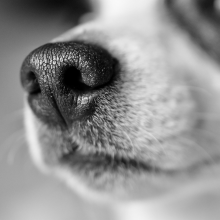
Why is it that some smells disappear with continued smelling?
Kat - The answer here is something to do with adaptation and desensitisation. It's the same reason why you're not sitting there going, 'Oh gosh, I'm not wearing clothes! Oh, I'm sitting on a seat!' all the time. If that happened, if our nerves responded to every stimulus we're getting all the time we would just be overwhelmed and wouldn't know what to do. What happens if you're sniffing vinegar or something with a really strong smell? It goes under your nose, up into your nose and it activates something called olfactory neurons. These are basically smelling nerve cells up in your nose and they send a signal to your brain that says, 'This is a really strong smell, this is what it smells like.' The signals that are being sent by those neurons are in the form of chemicals, little chemical messengers. They kinda get worn out. They run out of chemicals in these cells. Something called desensitisation happens. You stop being able to smell the smell. This is very important because say if you're - if you think back to our ancestors sitting around in the jungle or in their cave - you want to spot new things happening to you. You don't need need to know about what's going on that's already happening to you. You want to spot new stuff. Something like a very strong smell you need to spot it when it's new and it's happening so it can be over the level of noise that's going on around you. What happens if you're smelling a strong smell after a while you'll stop smelling it, basically. Anyone who's lived with boys and particularly whiffy toilet habits will know this. Chris - The evidence is that men and women make equal amounts of smells, equally often during the day.
Kat - Yeah, yeah...
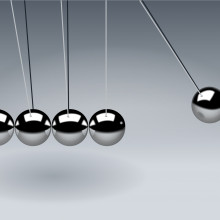
How does a Newton's Cradle work?
Dave - Newton's cradle is a whole series of collisions. You're taking a really bouncy metal ball, it's very hard steel ball and bouncing it into a row of them from one end and crashing into it.
In this kind of collision there's two things which are conserved, which have the same amount at the end that you had at the beginning. One is kinetic energy that you were talking about before. That's 1/2 x mass x velocity squared.
The other one's something called momentum which is your mass X velocity. You've got one ball dropping into it with a mass and a velocity you will have the same mass and velocity by having one ball coming out with the same energy and the same momentum.
With two balls with the same amount of energy then they'd actually be moving less than half the speed. So they'd have less than the same amount of momentum you'd put in. The only solution is to have the same amount of balls coming out as went in.
Chris - Is it not also that there's a little tiny delay between one ball hitting and the next ball hitting? The same when you get two separate collisions throwing off two separate balls. When you go two balls in you get two balls out because it spits one ball and then the next ball out.
Dave - That would be another way of looking at it. Physics can be looked at in different ways!
Does Sunblock stop vitamin D production?
Kat - Yes it does. For most healthy people you should be thinking about wearing the sun cream rather than worrying about your vitamin D. The simple reason is this: sun block does block ultraviolet radiation which is the stuff that helps you make vitamin D. It's also the stuff that damages your skin and gives you skin cancer. This is why in somewhere hot and sunny like Australia it's very highly recommended you protect yourself in that way. You do only need a few minutes of sun exposure to make enough vitamin D. It's certainly less than the time it takes for your skin to go red or to burn. It's really hard to be prescriptive about how long you need because it's different for every person. Someone who's very fair like me, I burn really easily. I'd probably need much less time in the sun that someone with much darker skin. Also sun block and sun screen are not perfect: they're not this magic shield against the sun. People don't use them in the way that manufacturers recommend. They don't put enough on, they don't apply it regularly enough. You'll know if your skin burns easily that you can put some on and still get burnt. There's some ultraviolet getting through. We know there are some studies that show we do need vitamin D to protect us from things like cancer but you can certainly get more than enough vitamin D with casual exposure to the sun: popping to the shops with your sleeves up. If you're going to go serious exposure to the sun then definitely protect yourself.
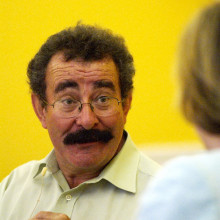
28:50 - The BA Festival and The Culture of Science
The BA Festival and The Culture of Science
with Lord Robert Winston, Imperial College London
Ben - This year's BA festival of science was held in Liverpool: a city more famous for football and the Beatles than for science. With hundreds of talks here and events to join in with Liverpool played a wonderful host. Over the last week we've heard why surgery may be the only option for the morbidly obese. Why binge drinking as a teenager could permanently change your brain, why performing conjuring tricks could do magic for your social skills, but first, the BA always attracts some of the biggest names in Science, keen for an opportunity to engage with the public. This year was no exception. 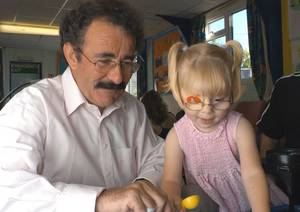 Lord Robert Winston, better known for his work on fertility dropped into the festival to exercise his position as Chair of Science and Society at Imperial College, London. In a talk all about the impact of science and technology on our society, held at Liverpool's Philharmonic Hall, Lord Winston explained how we need to understand that scientific advance has both its ups and downs.
Robert - I think it's fair to say that all technology has an upside or downside. Every technology we've produced, be it the stone hand axe, farming (farming produced all sorts of diseases which we didn't have before and also assisted in narrowing the diversity of crops, made us much more vulnerable to global warming, for example - climate change). Cities: probably the next technology, 8000 years ago, which resulted in a much higher death rate because of the spread of disease or water supply and so on. Transport, the wheel, energy comes into this as well. Everything you think about is at one level leading us down a very dark slope. I don't believe we should be depressed, I think we should be reflective. We should be optimistic but if we showed proper responsibility we can combat things like global warming. We can combat the risks that nuclear fission present and use them wisely. In order to do that I think we have to have a very clear idea of what the responsibility of the scientist is. I think we have to have a much clearer idea of our ethical responsibility, our commercial responsibility, our responsibility to society. Above all, I as a scientist who has to recognise like all of the scientists pretty much that the science we do is not the science belonging to me. It's not my science. The science belongs to society - society essentially is paying for it. Its negative effect is also an effect on society. We have to have a much clearer understanding that we have to have much better responsibility to society. That responsibility implies better citizenship from scientists. Some scientists don't like that message very much. That is changing, I think.
Ben - Do you think that scientists have a responsibility to provide society with the science that they want or the science that they need?
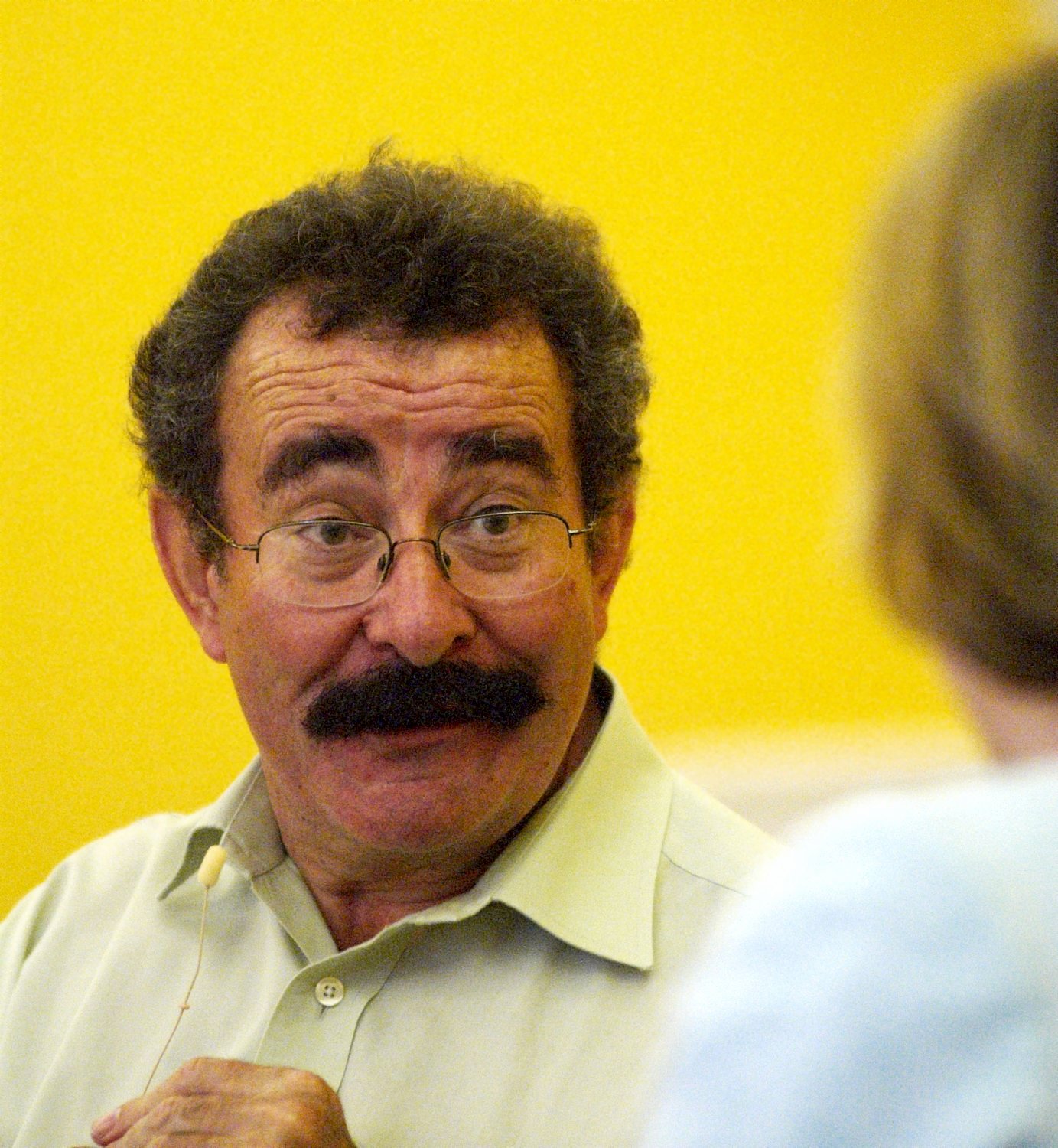 Robert - That is a very interesting question and it's one that is always being asked by the research councils I sit on. The Engineering and Physical Sciences Research Council. It's a question we ask ourselves to some extent in council. I think we have to lead providing the science that we thing is most appropriate to society. I think we also have to be very clear that we have to listen to society when we do that. We have to have a dialogue and we need to be able to explain very clearly why we are pursuing that particular area of research in relation to another area that we don't regard quite so highly. I think that's really important now when there are so many examples in the things that we've found. If you take the EPSRC, for example, synthetic biology, nanotechnology, the digital economy: all of which have very serious downsides. The digital economy because of surveillance, synthetic biology because of the potential for creating life which actually might well markedly affect humans and nanotechnology because we maybe choose toxic effects which we can't control. These are all theoretical constructs but they are issues and therefore I think that we need to be very, very switched on to the fact that society, particularly democratic society, is highly literate; very intelligent and equally capable of dealing with the issues as we are. If they're denied the possibility then I think we run into trouble.
Ben - It's not true to say that regulation is hampering science.
Robert - Regulation needn't hamper science. Regulation can actually promote science. On the whole I think regulation can be a huge advantage to science. If you demonstrate that your regulators are making sure that you're doing stuff ethically that's a fantastic advantage. Unfortunately in Britain we definitely live, unquestionably, in an over-regulated society. We are risk-averse and unfortunately it goes right through our society. That's why school children can't do scientific experiments, because of health and safety. I want to change that and bring them into Imperial College to do those dangerous experiments. That is not healthy for our society: the idea that children can't roam around to explore the world around them because there are paedophiles behind every tree. It's a nonsense. We've no evidence of it, that knife attacks are much more prevalent now. Actually the statistics show the reverse even though the news papers and the police and the government talk about knife attacks all the time. Knife attacks aren't more common. We've become a society which is not actually prepared to face the realities of what real risk is.
 Ben - Here in Liverpool for the BA Liverpool is also this year's European City of Culture. Surely it's a good thing that the Science Festival is in the City of Culture. They're far too often thought of as being separate things.
Robert - I agree completely. Science is part of our culture. It's a key part of our culture. The difference with a scientific culture is something in educational terms. We read Shakespeare in schools as part of our culture and we read Hamlet as one of the greatest plays in the English language, which was written in 1599. The difference between the science of chemistry and what happens in Hamlet is quite simple. The text of Hamlet fundamentally hasn't changed since the first folio was published. The text of chemistry changes month-by-month. That does make the educational issue rather a special one. That's the need to constantly update teachers to give them better career development and so on. We're not doing that very well in Britain. That's something that we need to look at but you're absolutely right. There's no question that if we saw science in Britain as part of our culture as important as the music that goes on in this place or as important as the theatre we would be a healthier society - unquestionably.
Ben - The swarms of people who attended Lord Winston's talk would no doubt agree that a night of science is just as exciting, entertaining and important as the finest opera or the best of The Bard's plays.
Why are ripples circular, even if the stone that causes them isn't?
Chris - It's a common thing, isn't it? When you throw things in you think why do I get this ripple going out? The answer is that when you first throw a stick into water you will get a stick-shaped initial ripple but as the ripples spread out you'll get the L-shaped bit going out a bit but then what about the spaces? What about the bits in between? They'll get filled in with a curve. Eventually as it gets farther and farther out you'll end up with something that is predominantly curve with very little of the original shape left behind. It looks to all intents and purposes like a giant circle. The contribution of the original shape is absolutely tiny. That is why it does that interesting morphing thing into a circle from something which was originally a different shape.
Dave - So all the ripples are going outwards at the same speed and they start off in different positions but after a couple of seconds those different positions they start on doesn't make much of a difference. Chris - In the grand scheme of things, no.
Why do they only part-pressurise planes?
Dave - They did start doing this on the first jet airliner which was the comet. They also had lovely square windows and the aeroplane kept getting pumped up to atmospheric pressure and kept rising high up in the atmosphere. It got a big pressure on the structure coming down again and going up again. That stress on the airframe slowly built up cracks which got longer and longer until the cracks ran between all the windows and it opened up like opening postage stamps. They actually lost several planes due to this. Since that they've made the windows much more curved and they've also started not pressurising the plane all the way up so you're putting less stress on it. You could design a plane which would survive the high pressure but it would involve making them much heavier than you'd want to and they want to make it as cheap as possible. Chris - You're carting loads more weight into the air which is costing you more fuel and in these days of high fuel prices that's a bad thing.
Dave - The other thing is that to compress that air - you need more air because you're constantly taking more air and compressing it from a low pressure to a high pressure inside the plane - takes lots of energy and more fuel
Chris - Graham.d on our forum calculated that the actual weight of the molecules themselves would contribute an extra 250kg. Basically an average British large person or several people my weight travelling for free if you don't pressurise to atmospheric sea level pressure all the way up there. That's pretty interesting.

How do you age a palm tree because they don't have rings?
Kat - This is a really interesting one and it's very tough to date a palm tree because they don't have rings. Especially it applies to plants such as cacti and yukkas that don't have that ring structure. In the case of really old palms you also can't really radio carbon date them. This works for trees because they have the same consistent heartwood all their lives but this doesn't really happen for palms. Some botanists use techniques which include counting leaf scars. Palm trees make new leaves, leaves fall off. You can count how many scars there are and multiply it by the average time taken to grow new leaves. It's not great. Really the best technique is to look at historical information. If you can find out when an area was colonised by humans if the tree's not a native species they probably brought it with them. You can look at old written records, historical records, paintings, photos. There's not really a very good way to age a palm tree.
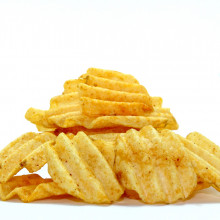
Why do crisp packets and sweet wrappers make so much noise?
Dave - Well, I think this is quite a complicated one. I think one of the things is they're big sheets so if you move them like this piece of paper any movements they make are very well connected to the air because they've got a large area. If they move a bit then the air has to move. The vibrations in them get transferred to air very easily. Also if you take a piece of paper of a crisp packet and crumple it, it doesn't just fold neatly and you get nice even folds. You tend to get complicated folds which actually become quite strong. When you break those you actually release a load of energy which vibrates everything and connects to the air. The air vibrates well and makes a lot of noise.
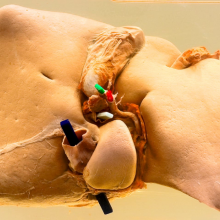
Can the liver re-grow?
Kat - It's true that the liver does grow back. It does this amazing regenerative potential. You can pretty much cut away half of someone's liver and it will grow back again. It does sound like a fantastic idea for transplant patients but sadly you will still have the problem of tissue rejection. You have to very, very carefully match it. Some people do offer to act as living donors. You can donate kidneys, you can donate livers to people you're very closely related to. You're likely to have a very similar tissue type but obviously trying to remove part of someone's liver is pretty major surgery and it's not something that you'd want to go into lightly. Really the problem of the thousands of people waiting for transplants is really to get more people to sign up for the organ donor register.
Chris - I think another problem with the liver is that if you do take away a big chunk of the liver, although the cells might have the capacity to replace lost cells and make up the cell numbers there won't be the architecture, the structure there for the cells to hang around or to be strung from in order to make a new liver. Although you could make the cells back you couldn't make the same shape and structure. It would be very difficult for it to repair itself like that so I think there's more to it than just -
Kat - It will grow back. The liver will actually grow back a couple of weeks after removing it. It's really phenomenal. In the case of cancer patients you can remove 50-60% of someone's liver and it will grow back.
Could viruses be engineered to attack cancer cells selectively?
Chris - They have been. This is a really hot area because viruses are very bad for cells. They basically turn cells into virus factories. They will go into the cell. They will grow very fast in the cell, turning it into a virus factory and kill the cell in the process. Researchers are thinking if we can exploit that then we might have a way of making the virus attack just a cancer and kill it. There have been a number of approaches to doing this. Up in Scotland Moira Brown who's been on this programme has been working on a strain of Herpes Simplex virus, the virus that causes cold sores, for example. She's found a mutant form of the virus which has damage to a gene called gamma 34.5 and this gene, if you switch it off, stops the virus growing in brain tissue. What this means is that if you have a brain tumour you could inject the cancer with this virus. Because the brain tumour is very fast growing cells the virus can still grow in those cells. It will replicate making more virus which will go into more cancer cells and kill those cells which will go into more cancer cells. The whole thing grows until it runs out of cancer cells. As soon as it hits the healthy tissue interface where the healthy brain tissue is again it switches off. This is viewed as a very powerful way to very selectively weed out the tumour cells that are growing invasively between the healthy tissue without actually having to do radical damage with a scalpel to someone's brain.
Dave - Would you have to have a different virus for each kind of cancer or would you be able to get one which would get the most?
Chris - Not necessarily but the likelihood is there's going to be horses for courses. Some viruses naturally have a tropism, a tendency to go into certain cells types. HIV for example, tends to home in on white blood cells. If you wanted to target a certain kind of disease of those white blood cells you might use a virus to start with which is very good at homing in on certain types of tissue. Other times it's been a case of modifying the virus so that the receptors or docking stations on the surface of the cell are slightly different so that they will then go onto certain types of cells. It's a work in progress, isn't it?
Kat - There's lots of research that's going on funded by Cancer Research UK. Ovarian cancer is a cancer that's really ripe for virus treatment because mostly ovarian cancer tends to stay inside the tummy, in the same place. You can kind of inject the virus in there and it will get rid of all the cancer cells. There's some clinical trials that are currently underway.
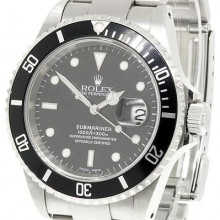
44:49 - Are glow-in-the-dark watches a radiation hazard?
Are glow-in-the-dark watches a radiation hazard?
Philip Clark, University of Edinburgh, Experimental Particle Physics Group...
It depends very much on the type of dial that you're considering. By far the most common watch that you come across that's glow in the dark is called a phosphorescent watch. Essentially the watch is coated in a paint which absorbs light and then re-emits it. These watches are completely harmless.
The second type of watch is called a tritium watch. The modern way to do this is you have the same phosphorescent paint but this time it's mixed with small tubes filled with tritium. Tritium is radioactive and emits beta particles. These have the same effect of exciting the phosphorescent paint. This time tritium has got a half-life of 12 years. The beta particles that are emitted are not very energetic so if anything they couldn't even penetrate the outermost skin layer.
The third watch I'd like to mention is a radium watch. They have very much the same design but this time instead of tritium they're mixed with radium. The half-life is sixteen hundred years. However, they may not seem to be as radioactive because the phosphor in the paint gets eaten up by the radium. I've got a small demonstration here so I've got an old watch that I'm going to hold a Geiger counter to.
If I turn the Geiger counter on you'll hear it clicking: That's when I hold it slightly close to the watch. If I hold it really close to the watch and the take it away from the watch, then the background count - you can hear the occasional count just now - is much lower than if you hold it closer to the watch.
These watches are extremely radioactive. However they're still not too harmful unless you were to break the watch and inhale it or somehow ingest the watch.
How quickly can a person exsanguinate from a cut artery?
Kat - I think you are. If you have an injury to a major artery you could be dead with a matter of minute from loss of blood. This obviously happens all the time in serious accidents. Very nasty stuff. Basically you just have this massive drop in blood pressure. You can't supply blood to your brain, you can't supply blood to your heart. You conk out pretty quickly. If it's in terms of getting all the blood out of you it probably wouldn't take that long either. It's probably good to get all the blood out of normal people anyway.
Chris - You've got a cardiac output of five litres a minute. In other words your aorta, your main blood vessel, has got 5 litres of blood running through it every minute. Your circulating volume, the amount of blood in your body is 5 litres. At most if you cut someone's aorta, if they had an aneurism that burst they could potentially lose all the blood in their body in one minute.
Kat - Yep, you'd be in trouble. Also bleeding over 36 hours is extremely unlikely unless you had some condition like haemophilia which meant you couldn't clot.
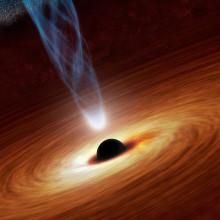
If light has no mass, how can a black hole capture it?
Dave - Light has no mass but it is affected by the shape of space. What Einstein worked out in general relativity was if you have a very large mass it distorts the shape of space. If you shine light across a curved piece of space it will get bent by it. A black hole is basically so heavy that it bends space so much that light will get bent a bit like a lens and come straight back into the black hole again.
Chris - That's why they look black, because there's no light coming back out.
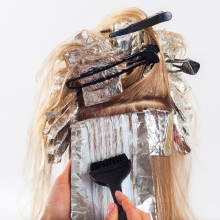
What makes our hair turn grey?
Chris - The reason that hair goes grey is naturally it's a white colour. That's the colour of the protein, keratin, that hair is made from. You have in the hair follicle which is a special ring of stem cells in the surface of your head, under your arms and other areas of your body cells called melanocytes. These make melanin, the same stuff that gives you a sun tan when you go out in the sun. Melanocytes add to the hair melanin. They add different chemical forms of melanin: pheomelanin and eumelanin. This is a dark colour. Depending on what ratios you put in and how much is in the hair the hair goes darker. If you have, for some reason, a loss of those melanocytes they stop making melanin and the hair goes back to its natural white colour. What happens is as we age the melanocytes burn out. They stop making this particular chemical and as a result you go grey. As to whether it goes grey overnight I think you looked into this, Kat, the answer was it's more likely that people's hair might fall out and then it comes back white because they were going to go grey anyway.
Kat - Exactly it's very unlikely to go white over such a short length of time.


Comments
Add a comment