Your Questions and the Science of Sword Swallowing
We get to the point of cutting edge Naked science this week, answering your science questions and exploring the science of sword swallowing. We find out how the amazon could become a carbon criminal, learn how to predict the extent of an avalanche, and celebrate the passing of DD45 - an object that floated past the Earth inside the orbit of the Moon. Plus, we find out if you can catch foot odour, if a bath full of vodka would get you drunk, and the delights of Liver a L'Orange! Meera Senthilingam takes a 'thinking Walk' with Sir David Attenborough to learn about Charles Darwin, and Dave seems to defy physics by making bubbles that sink!
In this episode
Rock the Amazon at your peril
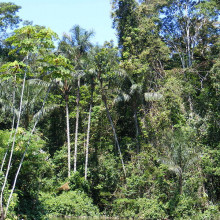
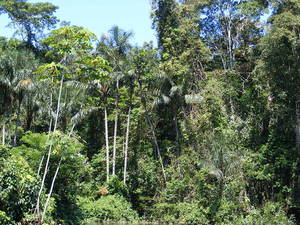
In a massive study scientists have shown that climate change could turn the Amazon rainforest from a carbon ally into a carbon criminal.
Writing in this week's Science Leeds University ecologist Professor Oliver Phillips, together with an international team of more than 60 collaborators, describes how he and his colleagues have studied 136 "plots" of rainforest to understand the impact of future climate change on the ability of the Amazon to soak up CO2. Specifically the team compared how the plots performed historically with the effect of a prolonged drought in 2005.
 "We measured trees and wood density to calculate how much biomass was present," says Phillips. The team found that in years leading up to 2005 the Amazon was a powerful carbon "sink", locking away more than a tonne of carbon per hectare per year.
But the drought led to the death of trees and growth arrest, turning what was a carbon sink into a carbon source with areas losing up to 2 tonnes of carbon (as carbon dioxide due to breakdown of the wood and foliage) per hectare per year.
The significance of this result is that the 2005 drought was provoked by warmer-than-normal north Atlantic water, which also triggered Hurricane Katrina and led to the flooding parts of New Orleans. But it had the reverse effect over the Amazon, and if global warming continues we might therefore see a drier Amazon more often. This would mean that the billions of tonnes of carbon locked away by the rainforest every year would cease to be removed from the atmosphere and at the same time the Amazon would become a net producer of carbon. The affect would be a dramatic acceleration of the greenhouse effect, with predictable global consequences.
"This should provoke a re-think of the political agenda," says Phillips.
Cig addiction could be in your genes
Tobacco causes around a quarter of all cancer deaths in the UK, as well as heart disease, lung disease and other heart problems. And it's a fiercely addictive drug, meaning that people find it hard to give up. But some people do manage to quit the cigs relatively easily, while other fight a life-long battle. And what makes some people become addicted after just a few puffs, while others can smoke a few cigarettes then just stop.
 Now researchers from across the US have used the latest DNA analysis techniques to hunt for genes linked to smoking behaviour, with the hope of shedding light on this conundrum.
The team looked at DNA from over 2,300 men and more than 2,200 women - a mixture of smokers and non-smokers - and looked at their smoking behaviour. This included the number of cigarettes smoked per day, age they started smoking, how long they had smoked for, and pack years (for example, one pack year is the equivalent of smoking one pack day for a year, or half a pack a day for two year). The scientists also looked at whether the people had ever smoked, or if they had managed to give up.
The researchers used so-called SNP ("snip") analysis to track down potential genes linked to specific smoking behaviours. In total, around 2,600 of the people in the study had ever smoked. Although they didn't find any new genes linked to smoking, the results provided more evidence to support the existence of an important gene on chromosome 15 linked to the number of cigarettes smoked per day.
The team also found evidence for variations in genes encoding nicotine receptors being involved in some smoking behaviours, as might be expected, including the number of cigs smoked per day, the number of pack years, and the age they started smoking. And they also found a link between variations in a gene region called MAOA on the X chromosome and whether people smoked more or less than 10 cigarettes per day.
This is an intriguing gene, as some studies have shown possible links with alcoholism and Parkinson's disease, so it needs more investigation. And another interesting result was a link between variations at alcohol dehydrogenase genes and whether a person had ever smoked, or never smoked. So perhaps these genes are linked to whether a person actually ever starts smoking.
But the main thing the team took from their study was that the links between any of these genes and specific smoking behaviours, although it has thrown up some interesting candidates that merit further research. But the true picture is likely to be very complex, involving social as well as genetic factors.
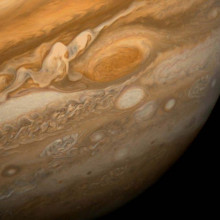
Hungry Jupiter
Scientists have spent a lot of time trying to simulate the birth of the solar system, partly to try and understand our solar system and partly to try and estimate how many other similar solar systems there are out there. But one thing that has confused them is Jupiter's moons - there aren't enough of them. According to all the simulations the moons of Jupiter should have made up about 10% of the total mass of Jupiter but they seem to only make up about 2%.
Robin Canup of the Southwest Research Institute, Colorado may have worked out where all those moons have gone. They have been eaten by Jupiter itself. Jupiter and its moons were formed out of a disk of gas and lumps of rock and ice orbiting itself. This then slowly collapsed under gravity as it lost energy to friction between the lumps of material. Moons which formed very early on in this process would have been surrounded by this disc which would have slowed them down causing them to fall lower and lower until they were swallowed up by Jupiter itself.
Jupiter could have swallowed up to 5 generations of moons, with those visible today being the last ones to form as the disk finally dissipated leaving them to continue orbiting for the intervening billions of years.
Spying on the sense of self
One of the most intriguing areas of neuroscience at the moment is the issue of the "sense of self" - basically, how we are aware of our own thoughts and personality. Previous research has shown that a few areas of the brain - the prefrontal cortex, the posterior cingulated cortex, and the parietal regions - are involved in self-reflection, and processing our sense of self.
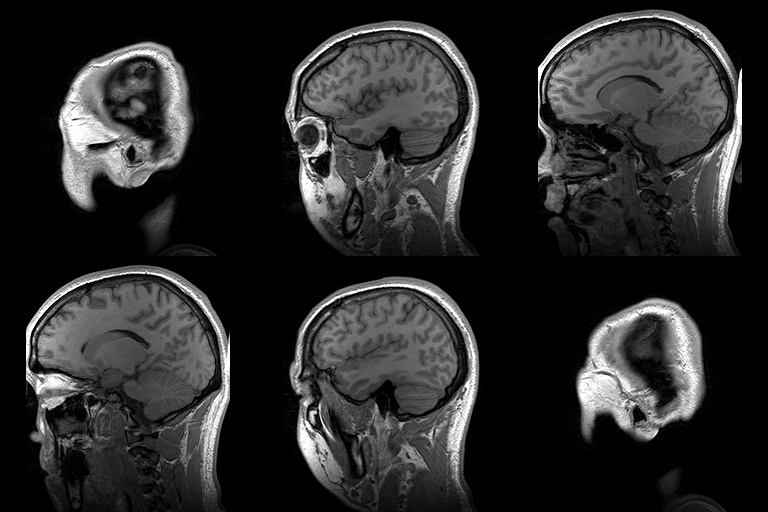 But can we draw a distinction between regions of the brain that are specifically involved in processing thoughts about our "self" from those that are involved in processing thoughts about people in general? New results from researchers in the Netherlands using functional MRI scanning have provided a clue - our sense of self may reside (at least partly) in a region called the anterior insula, deep in the forebrain, which is part of the brain linked to feelings and emotions.
The researchers used sixteen young male volunteers an put them in a functional MRI scanner, which looks at the activity levels of different regions of the brain. They were shown three different types of statements, and were asked to say whether they were true about them, like "I am a good friend", about someone they knew like a team-mate or classmate, like "So-and-so talks too much", or just a general knowledge fact like "a vertebra is a bone".
While asking the volunteers to carry out the task, the researchers monitored their brain activity. They found that when the volunteers were considering the statements about themselves, there was activity in the anterior insula, but this wasn't seen so much when they were thinking about the general knowledge statements. And, crucially, activity in the anterior insula wasn't seen when they were thinking about other people.
The team found activity in regions such as the medial prefrontal cortex and the posterior insula when the volunteers were thinking either about themselves or about another person. But the scientists only saw extra activity in the anterior insula when the volunteers thought about statements related to themselves.
These kind of studies are important, not only for scientific interest, but for psychiatrists. There are several illnesses in which a person's sense of self is disturbed, including schizophrenia. Understanding more about the parts of the brain that are involved could shed light on the roots of these complex diseases, if neuroscientists focus more on them.
14:39 - Near Earth Objects - DD45's Near Miss
Near Earth Objects - DD45's Near Miss
with Professor Alan Fitzsimmons, Queens University Belfast
Chris - If you have been watching the news this week then you might have noticed that the Earth had a brush with a near-Earth object. You might have been forgiven for letting it pass you by which is luckily what happened to the Earth this week. But we did have a close encounter with DD45. To tell us what DD45 was here's Professor Alan Fitzsimmons from Queens University in Belfast. Hello, Alan.
Alan - Hello there.

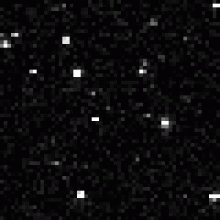
2004 FH is the centre dot being followed by the sequence; the object that flashes by near the end is an artificial satellite.
Images obtained by Stefano Sposetti, Switzerland on March 18, 2004. Animation made Raoul Behrend, Geneva Observatory, Switzerland. (c) NASA' alt='Timelapse of Asteroid 2004 FH's flyby (NASA/JPL Public Domain)' >Chris - Tell us about this object, what is it?
Alan - It's a small asteroid. It's about between 20-40m across. It was discovered only just over a week ago, on Friday 27th February. It passed our planet by at a distance of only 72,000km on Tuesday.
Chris - That's extremely close. That's, let's put that in perspective. Satellites orbit the Earth about 25,000 miles out. That's only twice as far away as a geostationary satellite.
Alan - That's right. Occasionally we do spot these small asteroids coming past us. Objects of that size hit the earth probably about once every 2-300 years. We're not quite sure how often they hit us at the moment but they hit us on time scales of centuries.
Chris - Had this thing not been seventy thousand kilometres away and it had actually landed on the Earth what sort of damage would it have done? How would it compare with, say, the object that wiped out the dinosaurs?
Alan - Well, it's much smaller than that. The object that wiped out the dinosaurs was about ten kilometres across and had global consequences. Those objects only hit us about once ever hundred million years. An object that can cause climate change can be as small as one kilometre across, however. Even they only hit us once every million years or so. Something this size may have been similar to the object that entered our atmosphere over Tunguska in Siberia in 1908. It may have exploded low down in the atmosphere if it had entered our atmosphere and perhaps about a few kilometres up. It would have wiped out several square thousand kilometres of ground.
Chris - That's city devastating sort of level. How did we miss this kind of object? I thought we had, I was reassured to learn we had systems in place to spot these things so we could take action.
 Alan - Well, it's because the systems we have in place are designed to spot the larger asteroids, the one kilometre guys and larger - the ones that would affect the entire planet. They're too small to effectively catalogue all the much smaller objects. At the moment the next generation of survey telescopes is in construction. There's something call Pan-STARRS which starts operating this year in Hawaii. Then sometime in the next decade, towards the end of the next decade something called the large synoptic survey telescope will get going in Chile. Even those telescopes won't be able to catalogue all the objects about the same size as DD45. We're just going to have to keep watching and surveying the sky.
Chris - Where did DD45 come from and given that it was so close this time round is it or is there any chance it might go round again and have another go?
Alan - The asteroid's in orbit around the sun just as everything else is in our solar system. It has an orbital period of just over 1.5 years. It's orbit just happens to have a point in it where it's very close to the Earth's orbit. Roughly once every March if the asteroid's there and the Earth is there it can come close to us. At the moment it can't hit us. The next time it will come close to us will actually be on the third of March in the year 2067 when even then it will pass by twice as far as it did this week. Over the coming centuries and thousands of years it's orbit will change slightly due to the gravitational tugs of the Earth and the other planets. It may well end up hitting us in a few thousand years' time. We don't know at the moment we haven't got enough data on it at the moment.
Chris - So unless you're Bruce Forsyth or someone who's going to live forever like that then you're probably in no danger.
Can you catch foot odour?
Kat - Foot odour is primarily due to the bacteria that live just around your feet. If you've got sweaty feet, if you don't keep them clean you're going to have a massive build-up of bacteria. Technically if you rubbed your feet you would transfer the bacteria but then they would need to have the right conditions like sweaty, dirty feet. One thing that can make your feet smell a bit is having athlete's foot. That is a fungal infection and you can catch that. You can pick it up in changing rooms, you can pick it up by rubbing your feet against someone's who's got it. That might make your feet a bit whiffy and you could catch that.
Dave - Would different bacteria smell different? Maybe you can catch a different set of smelly bacteria off someone else?
Kat - Different bacteria do have different smells. There's all kinds of bacteria in the world that have different properties and it's all about the gases that they produce that make you smell. They may react differently on your skin if you have different levels of things in your sweat. I don't want to talk about this any longer! Chris - A few foot-related facts. Your feet actually squirt a litre-and-a-half of sweat into your socks every 24 hours. You're shedding something like 40,000 skin cells every minute or so over a lifetime that adds up to one-and-a-half stone of dead skin. If you take the surface area of your body and feet are a proportion, that's a lot of dead skin just off your feet. If your feet are stewing in a nice sweaty pair of trainers that don't allow them to breathe what you've got is bacteria, warm, wet and food and that's what causes the bacterial banquet that makes the smelliness. Kat - Wash your feet, change your socks.
If I bathed in vodka would it get me drunk?
Kat - That's my idea of fun. I don't know because if you have a bath...
Chris - If you drink the bath water...My children do!
Kat - If you drank it, it might. I don't know if we absorb stuff through our skin. I thin kthe skin's barricaded for the blood stream.
Chris - The skin is pretty good but you do absorb alcohol at the sites of mucus membranes. That's why French people love putting suppositories in their bottoms, for example. There are some tablets you can put under your tongue. Where you have a mucus membrane the blood vessels are very close to the surface and the skin Is very thin. You can get things that dissolve well in fats to go through. Kat - Would a lady, as well - through her lady parts - could get drunk by sitting in a bath of vodka?
Chris - Yes, men as well. I think you probably could absorb small amounts that way. Also your eyes, you cold get some of the vapour going in through your eyes, up your nose because it would volatilise. Presumably you'd make it warm sitting in a bath. You'd probably want it warm. Kat - Maybe a cocktail umbrella.
Chris - Maybe some fruit to go with it. Dave - I guess it'd also dry you out very quickly because osmosis would suck al the water out from inside you. Chris - You'd be quite dessicated. You wouldn't want to drink the vodka probably, afterwards.
Is morning sickness inherited?
Chris - I can probably help you out there. Yes, morning sickness is because by definition it's genetic. When you're pregnant you've got someone else's DNA in you and as a result it makes you get sick. Everyone gets it, pretty much, once or twice in your lifetime - depending on how many times you get pregnant. Therefore you could say it is inherited. What actually is it? This is emesis gravidarum which is a fancy Latin expression which means 'puking of people who are pregnant.' Why this happens is we think it's down to a hormone called beta-hCG: human chorionic gonadotropin. This is a hormone which is produced by the early foetus, just as it's beginning to implant into the uterus. It puts this into the bloodstream to maintain the survival of a structure called the corpus luteum which is where the egg came from in the ovary. That structure makes progesterone. Progesterone keeps the uterus lush and well-supplied with blood so it can sustain a pregnancy. Until the placenta develops properly which is where the progesterone comes from afterwards you need that corpus luteum to stay alive. That's where you make beta-hCG. But it seems to mimic another hormone called TSH: thyroid stimulating hormone. When women are pregnant they seem to have a slightly higher metabolic rate. It might be that part of the symptoms are your metabolic rate going up because you have more active thyroxine, the body's own thermostatic hormone. As a result of that extra thyroxine level you are made to feel as if you are being sick more often. Usually though, it's not major problem., It comes on at 2 months of pregnancy, it peaks at 3 months and is gone by 3 or 4 months. There are some people who are very unfortunate and they have hyper-emesis and this can necessitate hospitalisation, unfortunately because it can be so severe. There is some evidence that can run in families but I think the numbers are so small there's not been any really strong, robust evidence to actually confirm that.
What happens when a bomb explodes underwater?
Dave - Well when any bomb explodes the first thing you're going to get is a lot of high-pressure gas because you've taken a load of solid and turned it into gas. It wants to expand. Water isn't going to move away nearly as quickly as air does. The pressure's going to remain very high, pushing water away. The fastest the water can move away is roughly the speed of sound in water. That's 1400m/s. You're going to form a bubble. As that water is pushed away very fast you're going to get a second powerful sound wave or pressure wave moving away from it. If the water doesn't compress that's going to have a very high pressure and do a lot of damage which is why depth charges can destroy strong things like submarines, even 10-20m away. Apparently it's way that there's a theory of how you might be able to blow up safes. If you fill a safe with water an drop a small charge in then because the pressure change is so much greater it might blow the door off.
Chris - That's because all the pressure is being exerted on the safe. If you were to just stack a load or dynamite at the front of the safe, some of it would hit the safe but a lot of that pressure would go out.
Dave - The gas that's produced, all that extra volume that's produced is pushed on the side of the safe. Normally you can just compress the air inside the room. Kat - It would be more explosive if you fart in the bath as well.
Is bad breath caused by bacteria?
Chris - Absolutely, the bacteria that live in our mouths and metabolise what we put into our mouths and their metabolites are smelly. They can also be helpful because scientists showed in the last six months that they also give certain wines that lovely, what's called, retro aroma. The taste of the wine coming on in your mouth after you've swallowed it. Scientists showed that the bacteria break down sulphur compounds that are previously flavourless. As soon as you put them in your mouth the bacteria break down the compounds into smelly, whiffy compounds and that gives you the extra taste and extra dimension to a fine wine.
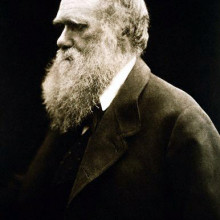
37:55 - Darwin's Science in Schools
Darwin's Science in Schools
with Angela MacFarlane, Kew Gardens; Sir David Attenborough
Meera - 2009 is Darwin year and it's 200 years since the birth of Charles Darwin. This week I'm at St Jude's primary school in Herne Hill, London for the launch of the Wellcome Trust's Darwin initiatives. These include resources such as the Tree of Life: a short film exploring evolution on Earth. Today sees the launch of the great plant hunt where a treasure chest filled with activities has just been delivered by Sir David Attenborough to the kids here at St Jude's to help them explore nature and science the way Darwin did. With me now is Angela MacFarlane, Director of Content and Learning at the Royal Botanic Gardens, Kew, who helped create this amazing treasure chests. Angela, tell me more about the great plant hunt.
Angela - The great plant hunt is a project to get every single primary school child in the country involved in some real outdoor hands-on science, following the steps of Darwin.
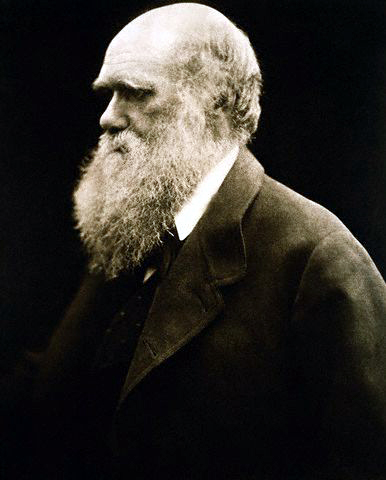 Meera - What kind of things are inside the chest?
Angela - There's a millennium seed bank, mini seed bank which is what our scientists use to preserve seed and to keep the seed viable over many years. They've got a plant press, they've got magnifiers, they've got seeds, a story book and then on the website they've got a space where they can share photographs of the work they've done with every other school in the country.
Meera - How can things contained in this kit help them understand more about Darwin's principle?
Angela - All of the activities start off with a thinking walk. The methods that Darwin used were actually pretty straight forward. He went out and made good observations. He made records. He made collections. The key thing is he did a lot of very high quality thinking. What we want to do is get the children thinking about what they're seeing. If they live in an inner city area and they can't get out into the countryside they can actually do a thinking walk just in the playground, looking at the things that are growing on the walls, coming up through the concrete. They start off by looking at what's growing around them, making collections, doing experiments and their thinking develops from that point onwards.
Meera - Why do you think it's important for children to know more and understand more about Darwin's theories and his science?
Angela - Well the thing about Darwin's science is it's actually very accessible. It's a really good introduction to science generally, collecting evidence, doing experiments. We need them to understand the importance of science and scientists to the everyday world around them. For example, the fact that we don't know all there is to know about the natural world is a really important message.
 Meera - Angela MacFarlane from the Royal Botanic Gardens at Kew. It looks like we're about to set off on one of these thinking walks now with the kids to explore the kid's nature garden. We've been wondering around the nature garden looking out for plant and, in particular, weeds to get them thinking about how they manage to grow in unusual places. With me are some members of the year two class in St Jude's. What have we all discovered about weeds today?
First Pupil - They grow in different places like in the walls and the trees and soil and even stones.
Second Pupil - I'm wondering, how do they come through if there's loads of stones all over the place?
Third Pupil - The seeds of one of the flowers must have made a weed grow through one of the stones.
Meera - What about Charles Darwin? Do you know much about him yet?
First Pupil - He went on the HMS Beagle and discovered al sorts of things.
Second Pupil - Well I know that he was born February 12th. He died when he was 200.
Third Pupil - He was idle at school, he wrote lots of pages about worms and he played with dogs. He was born 200 years ago.
Meera - He was indeed, born 200 years ago, rather than living for 200 years! Thanks to the Year 2s at St Jude's primary school. The great plant hunt was kicked off here today by Sir David Attenborough who's been walking around with the kids, exploring the garden himself. I caught up with him earlier to talk about why Darwin's theories have been so important to science today.
David - Well, it is the unifying theory of the life sciences and it continually throws up new problems and produces and suggests new answer. A precise detailed mechanism whereby variation can arise and why different varieties and different variations become selected. There's a lot of work to be done on that. It also threw up a number of problems. If it was true there are a number of difficulties which scientists at the time very properly said: 'We don't understand that. How could that be if Darwin was right?' In the hundred and fifty years since publication of the Origin of the Species every one of those major problems by scientists sometimes working in a quite different field. Suddenly you'll discover that they have found something which has validated Darwin's theory.
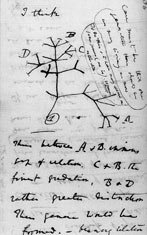 Meera - So one project you've been working on has been the tree of life project. What is this and how does it represent Darwin's thoughts?
David - Well, when Darwin in one of his early notebooks was speculating about how life might have developed he drew a tree. It looks like a trunk and then it branches into different branches and the branches then branch into small branches and so on. That was the way he thought life could develop. Everything that we've known since then has proved that is indeed the way that the tree of life has developed. In recent years we've discovered DNA. Darwin didn't know anything about DNA but DNA enables you to establish the relationships of and organism. Just as in our law courts DNA is used, DNA fingerprinting, to establish the paternity of a child. Now that kind of DNA fingerprinting can also establish the relationship between, say, a lion or a tiger or a chimpanzee and a gorilla and a man. An enormous amount of work has been done by DNA scientists now so that we can draw the diagram which is the tree of life with complete confidence.
Is evolution, natural selection still working in the human race in the present day?
Chris - I reckon the answer is probably yes. What do we think?
Kat - Yes. Evolution, natural selection is basically the response of organisms to changes in their environment. Our environment is changing. We are adapting. We've grown in size a lot due to better nutrition over the past 100,000 years. Chris - Yes, I think I'd probably add to that and say there are good examples of things like sickle cell anaemia where people have evolved this trait which makes your haemoglobin a funny shape which means it's not so good if you have two copies of that gene. If you have one copy you can't catch malaria. That's a good example of a mutation that benefits you in Europe. Lactose intolerance is absent but it's present in other populations in the world. We have evolved a gene in Europe which enables us to digest lactose, a major sugar in milk because people began to farm cows. There's another mutation that makes us healthier. Kat - They say the genes for very fair hair and red headed are dying out because of inbreeding. We are evolving that way. Chris - And also resistance to HIV, there's CCR5-delta-32. This is an alternative form of a gene in the immune system which happens to give you, if you're a carrier of that, resistance to HIV infection. This has only really surfaced as important since HIV came along. There's a couple of us gaining a new mutation. Dave - Although I guess in Western countries where pretty much everybody survives the only real survival of the fittest is to do with how many children you have. The direction in which the western population is evolving is towards the people who have the most children.
Kat - It's the breeders!
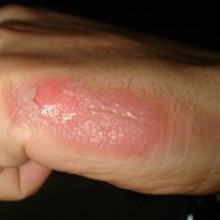
46:52 - Why do hot objects cause injury?
Why do hot objects cause injury?
We put this to Peter Djiewulski, Plastic and Reconstructive Surgeon, Director of Burns Centre at St Andrew's Centre for Burns.
What happens when somebody gets burned and their tissue is burned is that heat causes direct damage to cells. It denatures proteins within and without cells. It's that injury and the breakup of cells and the contents with in the cells, particularly some of the enzymes within the cells that will initially cause pain but secondarily bits of cells that break down cause local irritation. The cell wall breaks down and that leads to a number of breakdown products which are involved in inflammation and the inflammatory response. Most people have burnt themselves and therefore would be well-aware of the local effects that the burn and the body's reaction to the burn will cause. That is usually swelling, redness and tenderness. At a molecular level these events are mediated by the inflammatory mediators which have effects on, particularly, the tiny ittle blood vessels that go up to and into the skin to make them leaky. This allows fluid which is usually in the blood vessels to leak out and this gives rise to swelling.
Why hasn't arthritis evolved out?
Chris - It's a good question. Why haven't we evolved out of getting diseases like arthritis? Why hasn't that gone away, why hasn't evolution given us better cartilage. The answer is, Dave kind of hinted at this earlier. It's all down to having children. If something stops you ahving children then the genes that stop you having children will be removed from the population and genes that help you to have children and live long enough to have children will be enriched in the population. Since arthritis is really a disease of old age - it doesn't tend to come on until you're in your 60s. I think 100% of people aged 60 have some degree of arthritis. It's not till you're a bit older than that even that you tend to have occupational problems of joint damage already that you need major surgery. The reality is that because arthritis doesn't stop you have you children the genes that might make you have an increased risk of it don't get removed from the population. As a result we all have the same risk of arthritis. It's a bit like going bald. Because most people don't get bald until after they've had children as a result we haven't removed that gene from the population. There's lots of men who've got male pattern baldness.
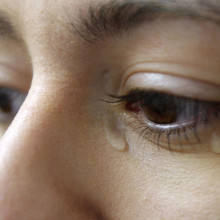
Why do my eyes water when I choke on food?
Chris Smith answered this question...
Chris - The reason for that is because you have various reflexes that are designed to protect your airway: there's a nerve supply, the internal laryngeal nerve, which is sensitive to everything touching your epiglottis inwards and down into your airway.
You need to defend your airway very carefully because if anything goes in there it could threaten your ability to breathe. There's a very profound choking reflex and that triggers a cough. It also triggers various secretions to happen, the idea being that it will lubricate your mouth and anything that's stuck will get free.
At the same time, the same secretory-motor system also makes your eyes water a bit. It makes tears come to your eyes and also what you're doing when you're coughing and choking, you're blowing air up your tear duct. Normally the tears that you've got in your eyes drain down little punctum which is a little plug hole in your lower eyelid towards the middle. They go down towards the naso-lacrymal duct and drip into your nose. If you raise the pressure in your nose by coughing, sneezing, blowing your nose the pressure is reversed. It pushes the tears back up your tear duct and into your eye.
So there's two things going on: one - you increase the secretions, and two, you probably jettison some tears back into your eyes!
How high is a pile of a trillion dollars?
Dave - We were looking it up - they were about 1/10th of a millimetre high. That would come to 100,000km high or a third of the way to the moon.







Comments
Add a comment