What if a Meteorite Destroyed the Moon?
How wide is the universe? What makes steak tough? Why does beetroot give me red urine? These tricky questions get stripped down in this Naked Scientists Question and Answer show. We'll be hearing about the camouflaged plant that doesn't need the Sun, a power plant that relies on osmosis and how the feeling of breath on your skin helps you to work out what sounds you're hearing. Also, in Kitchen Science, we use straws and a cup of water to show you how airbrushes and carburettors work!
In this episode

Plants hide too!
The animal kingdom is full of species that do their best to hide from predators by adopting all sorts of clever camouflage to help them blend with their surroundings and not get spotted. And now it seems that some plants might do something similar.
 Many plants are brightly coloured to attract pollinators or they take on the colour of the chlorophyll pigments they use to generate energy by the process of photosynthesis.
Matthew Klooster from Harvard University in US and colleagues have been studying an unusual plant called *Monotropsis odorata*, which doesn't have any chlorophyll because it gets all the food it needs from mycorrhizal fungus that live in close association with their roots.
Freed from the constraints of photosynthesis, this plant has the option of adopting different colouration to suit its needs.
As Klooster and the team discovered, it seems Monotropsis odorata does its best to hide from plant-munching herbivores by covering vulnerable purple flowers and stems in brown bracts that resemble dead, brown leaf litter.
By analysing the colour of light reflected by these bracts, the researchers found that they closely match the colour of dead leaf litter.
They also found that in the wild, plants with more intact brown bracts suffered around 20% less damage from herbivores compared to plants in which bracts had been experimentally removed. Plants with more intact bracts also produced between 7 and 20% more mature fruit over the two-year study than plants with no bracts, demonstrating the major advantage that this camouflage can have on individual plants.
The odd thing is that these plants don't want to disappear altogether, because they still rely on animals paying them a visit to disperse their pollen and seeds. Klooster and the team saw bumble bees successfully finding the flowers of these plants and think perhaps the bees are lured in by a sweet scent that doesn't attract herbivores - an idea for another study to work on.
So it seems that cunning camouflage is no-longer a unique characteristic of animals, but plants can do it too.
Osmotic power plant
Osmosis is a process that is vital to the whole of life. It is based on a partially permeable membrane which will allow water through but not allow salts or other dissolved substances. If you put salty water on one side and fresh water on the other water will move through the membrane from the fresh water side to the salty one. This drives lots of processes in living cells and is the reason that soaking lettuce in water will make it swell and become more crisp.
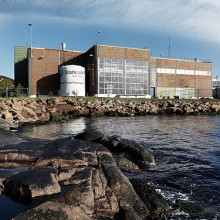
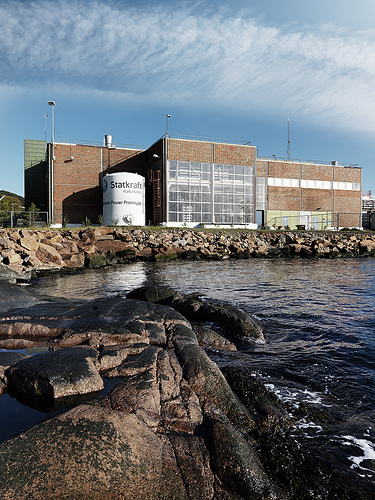 Now a Norwegian energy company, called Statkraft, have made use of this effect in the world's first osmosis-driven power station.
The principle is to put seawater on one side of a membrane and fresh water from a lake on the other. Water flows passively through the polymer membrane from the fresh to the salty side, increasing the pressure of the seawater. This pressure increase is then used to drive a turbine to generate electricity.
The current installation uses a 2000 square metre membrane capable of generating energy at the rate of 2-4 kW. This is a promising start but there are many challenges ahead including optimising the membranes so that they are not compromised by impurities in the water and in cutting costs, but Statkraft thinks that there is the potential to generate 10% of Norway's energy by osmosis, and potentially more across the rest of the world.
New gene-screen "knocks-out" pathogen targets
Scientists have discovered a quick way to flush out how pathogens like bacteria and viruses target our cells. The system could show researchers where to target their efforts in developing the next generation of antimicrobials.
 The research is presented in Science by Whitehead Institute-based scientist Jan Carette and his colleagues. The team use a human cell line called KBM7 which, unusually, contains just one copy of each chromosome (except for chromosome 8 which is present in the normal two copies). First the researchers infect these cells with viruses which insert themselves into the cells' genetic material in random places, adding a genetic marker and simultaneously inactivating the gene into which the insertion takes place.
Next the team expose the cells to a pathogen, such as influenza. Cells that are still vulnerable to infection will succumb, leaving behind just those cells in which genes that are essential for the pathogen to gain entry or to kill the cell have been deactivated. These genes can then be tracked down by looking for the genetic marker inserted into them previously. The team show that the method can be used effectively to identify genes essential for influenza infectivity as well as the cellular targets of a range of bacterial toxins.
At the moment, comprehensive identifications of molecular targets are excrutiatingly difficult because scientists have to painstakingly unpick the biochemical pathways involved. With this tool, however, researchers will be able to deploy the molecular equivalent of a drag-net to find everything at once, helping them to spot new targets for rational drug design.
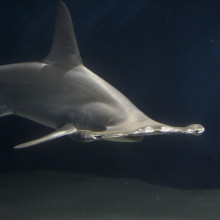
Why the strange head?
The peculiar shape of hammerhead sharks is a biological conundrum that has long puzzled scientists.
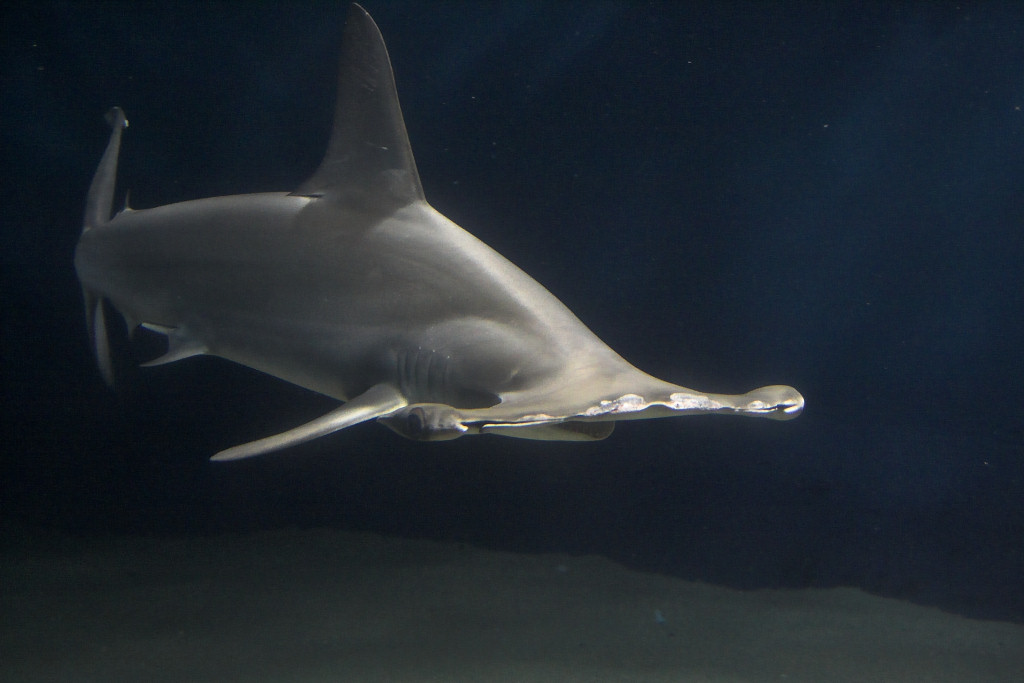 Now American scientists have uncovered some of the secrets of these odd hammer-shaped heads, showing that having eyes spaced far apart on their wide heads lets hammerhead sharks see better than more conventionally-shaped sharks. In particular hammerheads may have enhanced depth perception, a crucial skill for predators to judge how far away prey is before swooping in for the kill.
Various ideas have been put forward over the years to explain the hammerhead sharks' extraordinary compressed and laterally expanded head, known as a cephalofoil. Possibilities include greater sensitivity to smells or the weak electric signals given off by prey animals, greater lift and manoeuvrability in the water or maybe it helps in catching and manipulating prey. But until now, few studies have tested out any of these ideas.
The research team led by Michelle McComb from Atlantic Florida University set out to test another idea which has sparked a lot of controversy among shark biologists, namely, do hammerhead sharks see better than normal sharks.
To do this the researchers mapped out the 3D visual fields of various shark species, including three hammerheads (the bonnethead, scalloped and winghead hammerhead sharks), by anaesthetising each one and using an electrode they worked out if an electrical signal is generated in the retina when a narrow beam of light is shone into the eye from a range of angles.
Of all the sharks, the hammerheads had the most overlap of vision from their two eyes in front of them - and sharks with wider heads had even more visual overlap. The team also discovered that all the shark species tested had extraordinary 3600 vision in the vertical plane - they can see all the way above and below them.
One thing hammerheads seem to be bad at is seeing what's going on behind them. There are reports of prey fish hanging behind hammerheads, perhaps hoping not to be spied.
McComb and colleagues analysed videos of sharks swimming and found that to make up for having compromised vision behind them, hammerhead sharks swing their heads from side to side to see what's going all around them.
Of course, having better vision might not be the only thing that having a hammer-shaped head might be good for. But this study unveils one of the secrets behind the evolution of these amazing animals.
13:48 - Moved by the Power of Speech
Moved by the Power of Speech
with Dr Bryan Gick, University of British Columbia
Chris - We often hear that people can move you by their words that they use. Well, it turns out that that's actually physically true as well. Bryan Gick is a researcher of the University of British Columbia and he's published a paper this week showing that actually we respond to the sensation of the breath of a speaker on our skin which helps to reinforce meaning. He's with us now. Hello, Bryan.
Bryan - Hi.
Chris - Welcome to the Naked Scientists. Do tell us what have you been doing?
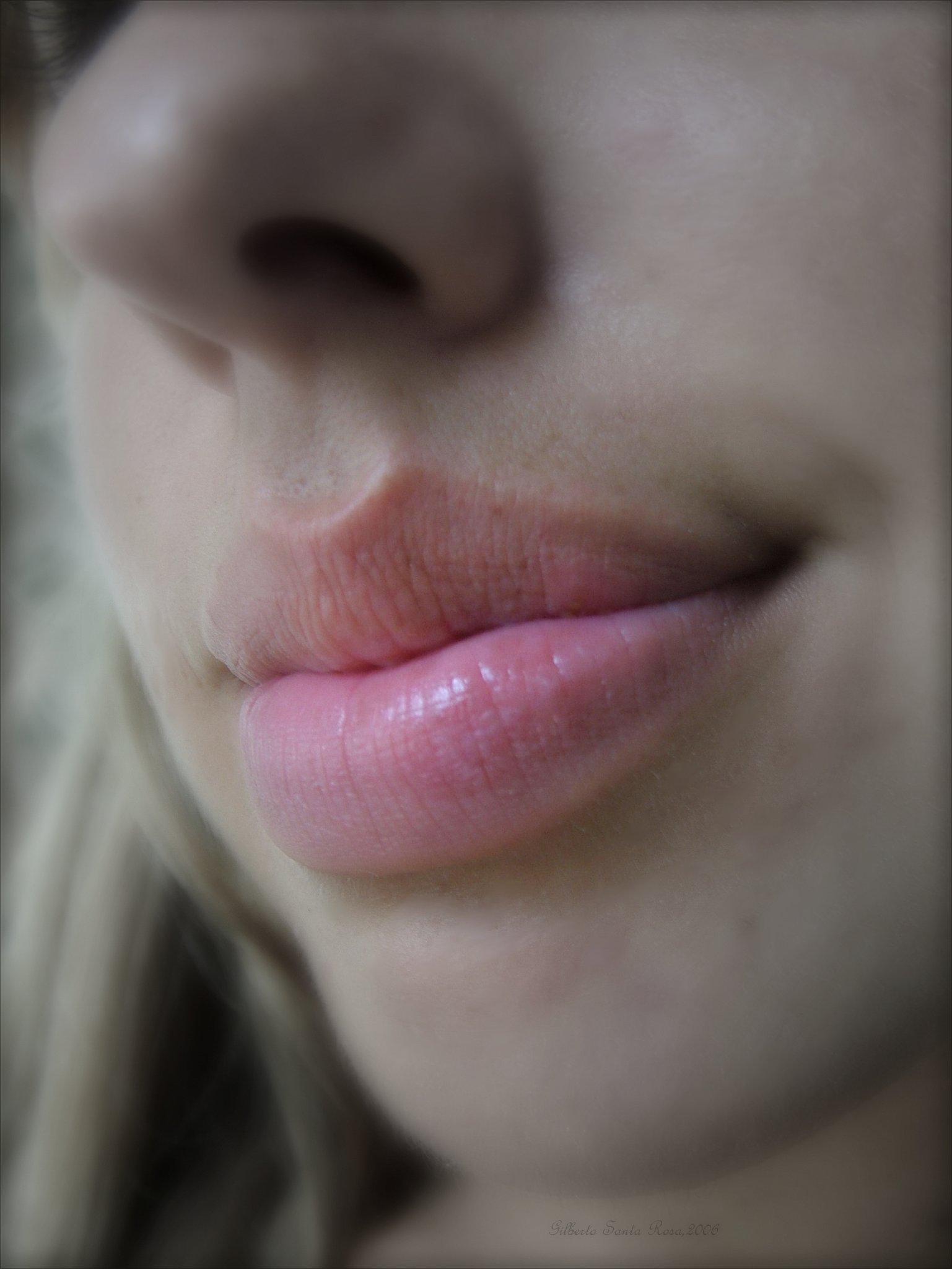 Bryan - Well, we've just been aiming puffs of air at people basically and seeing how that affects their speech perception.
Chris - So talk us through the experiment, what did you actually do?
Bryan - Well, initially, we thought that there are certain things that we can pick up in our environment that help us to perceive speech. And we haven't had so much insight into how the tactile sense works into this.
Chris - So, in another words, we know that we're comfortable with the fact that people lip read, for example, and so they help their comprehension of what someone is saying by following the movements of someone's lips. But there's an additional dimension to this which is the air coming out of their mouth.
Bryan - Exactly. And we aren't particularly fond of the air approach, it just happens that the air approach is the best way to get at what kind of information could somebody be conveying, that you can just sort of passively pick up from your environment.
Chris - So how did you do this?
Bryan - So we thought about these little puffs of air that people produce when you say a sound like "pah". If you put your hand in front of your face, if you're an English speaker, you can feel a little puff of air in your hand. And if you say "bah" you don't really feel a puff of air. So we took little tiny puffs of air and put them on different places on people's bodies, and at the same time we played sounds that they could hear through headphones.
We found that if you if you play the sound "bah" to someone and at the same time, somewhere on the body, they feel a little gentle puff of air that's inaudible to them, they'll experience the sense of having heard "pah".
Chris - Alright. So you can completely throw them off the scent and you can make them think they're hearing a different sound because you're pairing a puff of air which they would normally associate with hearing the "pah" sound and in fact you played them a "buh"sound.
Bryan - You're right. So, a B will sound like a P, a D will sound like a T and so on. And this is interesting to us, not just because it draws up your perception, but it suggests something, I think, bigger which is that we really seem to take all the information around us from whatever sense modality is available and we incorporate it into percepts of the world.
Chris - Does it matter where on the person's body you give the puff of air when doing this experiment?
Bryan - It doesn't seem to matter. In the Nature paper, we looked at puffs of air on the neck and the hand and in other studies that we haven't published yet, we looked at the ankle, for example, and we get the same effect anywhere.
Chris - So in other words, the brain is pretty clever in that it's integrating information coming in from all over the place to reinforce the information that would be coming in just from the spoken language?
Bryan - Exactly. And it sort of challenges this traditional idea that you see with your eyes and that gets processed by a particular part of your brain and you hear with your ears and that gets processed by another part of your brain. It looks like our brains just perceive things and take everything in.
Chris - And obviously, people who talk on the radio or listen to a podcast, TV programmes, they have no problem interpreting what people are saying. So when would the body want to use this additional dimension of comprehension?
Bryan - Well, the way I view it, we're biological parts of our environment and we, like everything, like the plants without chlorophyll, we use whatever we've got to get by. And in our particular case, if we happen to only have one sense modality available to us, we'll get by. If however we've got all of our senses and they can pick up information from our environment, we'll use it all and we'll do it seamlessly.
Chris - So I guess that puts a whole new spin on the meaning "breathing down in someone's neck," doesn't it?
Bryan - Yes, it does.
Chris - Bryan, thank you very much. That's Dr. Bryan Gick, who's a researcher at the University of British Columbia, paper in Nature this week, explaining how puffs of air can actually distort our perception of what people are saying.
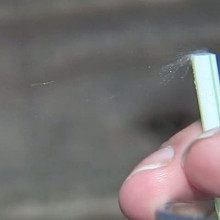
Build your own airbrush - Applying Bernoulli
What makes steak tough?
Helen - That's a great question and I don't actually indulge in steak myself. But I know many people who like them and specially a nice tender steak. So I had a bit of a look around to understand more about the meat-eating habits of you lot. And it seems it's quite an involved answer and there are various factors involved.These includes things like the breed of the animal, how old it was, and what I found really quite interesting was how you treat an animal just up to the point at which it's slaughtered has an awful lot to do with how tender its meat is. Now that was really quite surprising. I was also having a read around and it seems that how animals are transported, if they're herded with things like dogs that scare them and things like that can also really affect how good the meat turns out. And even if the breed of the meat is meant to be very good and very tender, if it's treated badly just before slaughter, this can really harm great meat; so that's something to bear in mind.In terms of toughness, a lot of it also comes down to the collagen because that's the main tough part of the meat; it's the connective tissue, and as an animal gets older it produces more collagen, which also becomes more interconnected (cross-linked) which makes it tougher; so, in general, older creatures are tougher to eat! Also, weight-bearing muscles tend to have more collagen in them as well, so they tend to be less tender.There is a measure of tenderness, which sounds nice! It's the "Warner-Bratzler Shear Force Test"...Chris - Bit of a mouthful, excuse the pun...Helen - It's the scientific (objective) way of measuring meat tenderness - it's the number of kilograms needed to shear, cut or pull apart a cubic centimetre of muscle.This measure varies from a tenderloin, really nice steak at about 2.6 through to a really tough cut of steak, which is more like five, five and a half.
Why does cutting hair make it stronger?
Chris - Actually, this is a myth. There is no evidence that cutting hair, shaving, doing anything like that actually makes hair grow more or adjust its strength or its length. Hair goes through three phases and its lifetime. The hair follicle has an anagen phase, when actually grows and makes hair and depending upon what sort of hair, where on the body surface you're looking, that phase last different lengths of time.On the head, for example, it lasts for several years, whereas on the face, it might last for weeks and an eyelash, for example, only grows for about three weeks before it goes into the next phase which is called the catagen phase when the hair falls out. And that's when the hair follicle stops for a while. Obviously, you can imagine if your eyelashes grew for three years that would be a bit disadvantageous because you'll be looking out through under these curtains, won't you? So, it's good that doesn't happen. Then the third phase is something called the telogen phase, when the follicle rests before it re-starts itself again. People often say when a person dies, their hair carries on growing after they die. Or, when you cut the hair it comes back far bushier. Both of those things are down to, in the case of someone dying, the skin dries and shrinks a bit around the hair coming out through the skin surface and this makes the hair look artificially a lot longer; and, when you cut hair, instead of having this tapered thin end, it's got a very abrupt, cut off, sharp end, so the hair looks thicker when it comes back. So, it's just sort of illusion; it's not really any fatter.
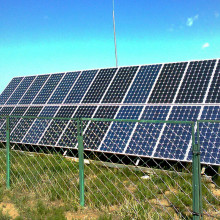
How do solar panels turn sunlight into electricity?
A solar panel is a semi-conductor device which will produce an electrical voltage and current if light falls on it.
It is actually a giant diode - a one way valve for electricity, and when light falls on it this gives some electrons enough energy to jump through the valve, and the only way they can get back is to flow around the circuit doing useful work.
What is going on in more detail? Normally each atom in the semi-conductor has 4 electrons and there are none free, but if you add a few atoms with 5 electrons there are some extra electrons which can move easily and carry a current (an N-type semi-conductor).
Similarly if you add some atoms with only 3 electrons and then you get some gaps which other electrons can move into (a P-type semi-conductor). The electrons can now move a bit like the tiles in a sliding tile puzzle, but it is easier to think of a positively charged hole moving through the semiconductor.
n-type has a few extra electrons to carry current; p-type semiconductors have a few electrons missing which can be thought of as positively charged 'holes' and can carry current.
A diode is made if you join a lump of p-type semi-conductor to a lump of n-type. When you do this there are lots of extra electrons in the n-type region which will tend to diffuse into the p-type region and holes from the p-type region will diffuse into the n-type.
So you end up with the p-type region being negatively-charged and the n-type region being positively charged. Electrons and holes diffuse over the border.
This means that if you connect the diode to a circuit this charge flows around the circuit very quickly. This charge will even out the voltage on the two sides and you will be left with a region in the centre with no charge carriers.
Light can hit this non-conducting region in the middle with no free electrons , and knock an electron off an atom. This creates a free electron and a hole. These can then flow through the circuit as electricity and do useful work. The more light which hits it the more current and therefore power it will produce.
Does a spoon in the neck prevent Champagne going flat?
Chris - There's no evidence, unfortunately, Gerry, that this actually works. The bottom line is - the reason there is fizz in the champagne is because the champagne was turned into wine, in other words, had alcohol in it because there was yeast, which converted sugars in the original grape juice into alcohol. When you ferment something, you grow yeast in the absence of air, the yeast produces alcohol as a by-product of survival and it also produces CO2 as the other by-product. And if you put a cork in the bottle and pressurise the liquid, the CO2 can't escape and therefore it dissolves in the liquid and you get a fizzy beverage. And to increase the "fizziness" of champagne what they will sometimes do is to add additional sugar after the primary fermentation and that encourages it to make even more fizz.If you take the cork off of a bottle of champagne or a fizzy drink, what you're now doing is exposing the gas which is dissolved in the liquid to atmospheric pressure; this means that there's now no pressure to hold the gas in solution and it would gently and progressively come out.And when you pour a glass of fizzy drink, you'll see the bubbles arising from one point to a number of points on the glass and they stream upwards. That's because there are irregularities or rough points on the surface of the glass.But there's no reason why a spoon in the neck of the bottle should make any difference because the bottle is open to the air and, therefore, the air above the liquid is at atmospheric pressure and, therefore, the gas will move from an area of high concentration in the liquid to the lower concentration, lower pressure in the air.Therefore, I think this is a myth and you'd have to do a proper experiment and take several bottles of champagne and open them and put no spoon in them and simultaneously do the same thing with bottles of champagne with spoons in the neck and then have some objective measure of how much "fizziness" was in there and I think you'd find it wouldn't make a difference. Would you agree, Dave?Dave - Yeah, I found actually on the internet, someone has done this experiment and the spoon makes no difference at all. The important thing is putting the drink in the fridge, which makes the liquid a lot colder. And the colder liquid is the more gas it can hold. So I think it will just lose its fizz a lot slower that you'd expect when it's in the fridge especially if it's in a very clean bottle.Chris - There you go, myth busted. Sorry about that, Gerry.Gerry - That's a disappointment.Chris - Never mind. But drink the champagne up. I mean that's the key thing, isn't it?Gerry - Oh, sure, we will next time. Oh, thanks very much for that!
What would a substance at absolute zero look like?
Dave - I see no particular reason why it would look any different to how it would appear at any other temperature (below melting point). If its staying at absolute zero, especially if you can look at it and you're shining light on it, then it's not absorbing very much energy, because as soon as you shine some light on it, and if any of the light was absorbed, then its going to get hotter than absolute zero. But I've seen very, very cold substances down to sort of minus 270-odd and they look pretty much like other substances.Chris - Wouldn't the pure act of looking at them, visualizing them, wouldn't that put some energy and so it couldn't be at absolute zero anyway?Dave - Yes. Essentially, if you're shining light on them, you're going to give them energy and you're going to heat them up. And that said, it could be transparent, so the only one thing you could look at and keep at absolute zero will be transparent but it's not to say that all things at absolute zero are transparent. Not that you can ever get there!
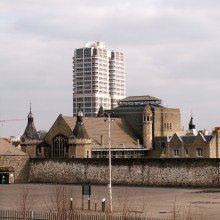
32:05 - Swindon goes Wireless!
Swindon goes Wireless!
with Chris Vallance
Helen - And now it's time to find out the latest from the world of technology. And this week Meera has been finding out how the Internet is transforming the town of Swindon.
Meera - Yes, it's time to find out what's been happening in the world of technology. So once again, I've come down to the BBC Television Centre in London to meet our resident techie Chris Vallance. Hello, Chris.
Chris - Hi, Meera.
Meera - Now Chris, what is this I hear about Swindon, the entire town of Swindon, becoming WiFi?
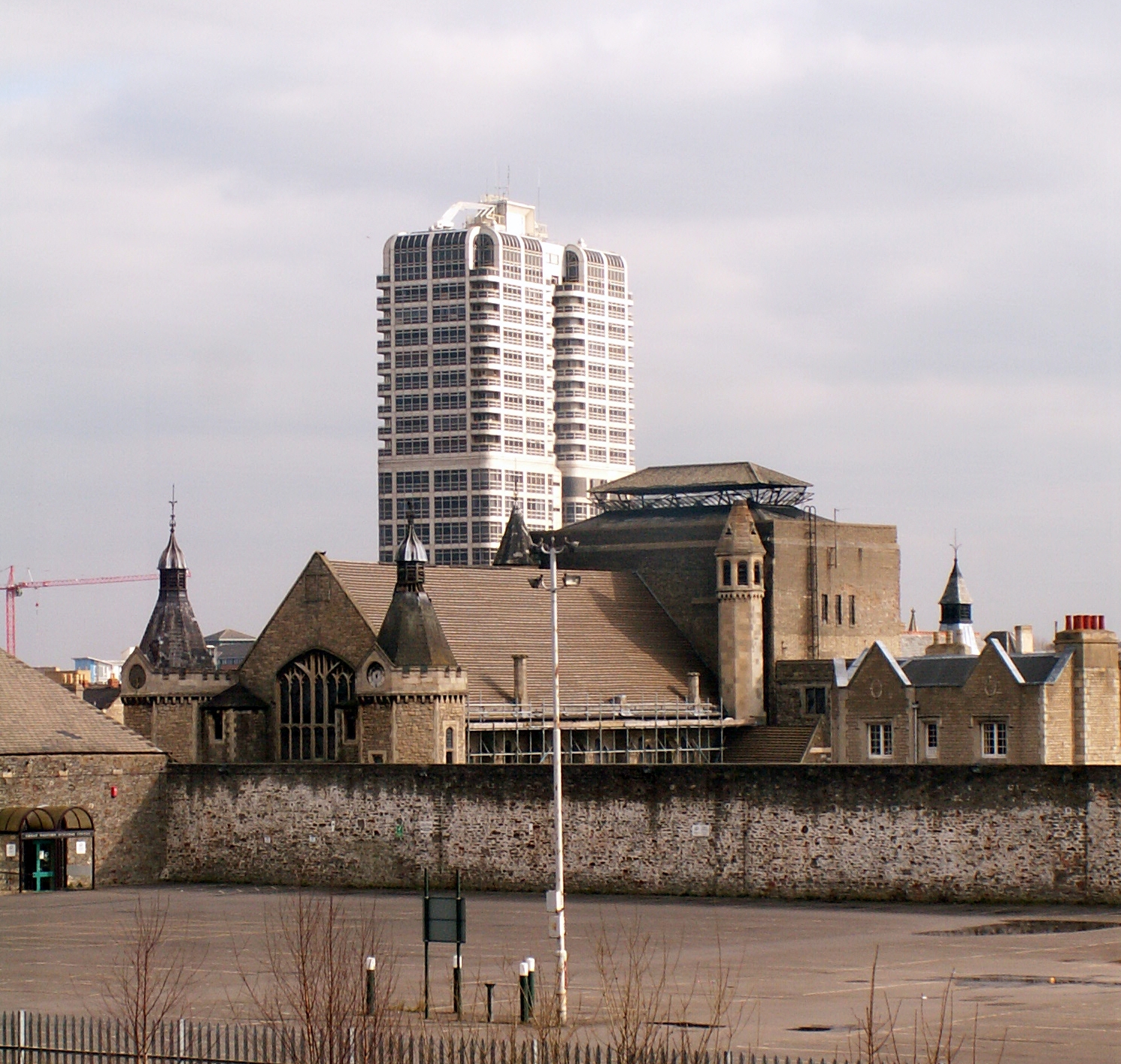 Chris - Well, there have been a lot of efforts to create municipal WiFi and Swindon certainly isn't the first place to do that. What I think is interesting about Swindon is they've got a very ambitious project, a partnership with the local council and private enterprise. The aim is that the whole of Swindon Borough Council, 186 thousand citizens will have access to free WiFi by April of next year.
Now, they're going to be offering a range of services, so the free service is going to be very limited, very basic and then there will be options to pay for services that are more like the regular kind of broadband service you might have at the moment at home.
Meera - So it's not as straightforward as the case if you just live in Swindon you are going to have great free WiFi then?
Chris - No. I think you're not going to have the same kind of experience you'd have with a paid package. The people behind this scheme, the council and Digital City UK limited their aim is that everybody in Swindon, whether in the borough of Swindon, where they live in a small village out lying in the town or in the town itself, will be able to get online.
What's interesting is the way they're doing this as well, I mean, they're starting in one village and then they're rolling it out. So it's not going to start like most schemes in the city centre where most users are. It's also going to be WiFi-based which again is interesting. It's not going to be a lot of digging up the roads. It's mostly going to be around from WiFi boxes that operate in a mesh that connect with each other. So again that's a different approach from approaches that have been tried before.
To get a little more information about this, I paid a visit to Swindon, and I spoke with Ricky Hunt who is the entrepreneur behind the scheme.
Ricky - This is a great opportunity to talk to people sending them information about its simple level when schools are going to be closed because of bad weather, updates on swine flu or traffic or whatever. So yes, we have a landing portal which will provide local information.
Chris - There is a problem acknowledged in the Digital Britain report, with access in outlying villages and rural communities. The main reason those places don't have a WiFi at the moment, this is not economically viable. Why does it make sense for you to supply WiFi to these places?
Ricky - If you look at them individually, it doesn't. But when you look at the whole, if we can put it together where we've got enough commercial services and fill in the some of the outline areas later, so it's quicker and a lot cheaper than cable and that's part of the key as well.
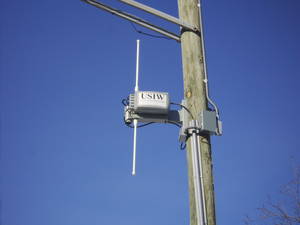 Chris - In fact we're standing under one of the key bits of infrastructure of your project a lamp post, what was their role in the whole scheme?
Ricky - Our transmitters will sit on lampposts. It gives us access to power and of course, lamp posts are where people are. So we'll use the lamp post as the power and it will create a mesh over the whole of the town.
Chris - One of the big costs with installing broadband is the simple infrastructure, digging up streets, laying cables, how does your system get around that problem?
Ricky - The boxes all connect to each other and at some point they'll be linked to an exchange, maybe in two or three units, a Wi-Max backbone and then they will just all talk to each other.
Chris - An important part of your business plan is once you've built the wireless network here in Swindon, the extra services you can sell. Tell me about some of your plans there.
Ricky - Well, we have a range of products. We have energy monitoring, for example, and we all know, these products have been around for a while but nobody has been able to utilize them properly because they haven't got connectivity. We'll be able to monitor electricity at the beginning, but actually remotely intervene so if I left the lights on at home I can actually see it on my phone and switch it off.
And that's quite unique. We will by, certainly in February, we'll have gas and water as well, being able to be monitored and intervened with. We'll have Medicare systems, where we can monitor people at home so, you know, when we talk about the hospitals trying to keep people in their home rather than in hospital, we have products that will facilitate that. CCTV, you know, we can monitor CCTV. You can have a look at it on your computer when you're away, or we can have it live monitored for you by local company.
Chris - The idea of people having individual numbers or a growth of sort of domestic CCTV, and some people would be listening to that and thinking great. Others will be listening to it and starting to think about George Orwell, obviously, data and data securities are very important.
Ricky - It's very secure. It uses the latest technology. It's very, very secure, secure as anything that exists, probably a little bit more because technology's moved on at the point becoming to the market. So, we're very comfortable with the security, that's not an issue, and there always people who don't want to access this sort of technology. And that's fine, they don't have to.
Chris - So that was Ricky Hunt, talking about Swindon's plans.
Meera - Now, of all of the towns in the UK, why Swindon? I mean nothing against Swindon, but why Swindon above everything else?
Chris - Ricky Hunt has very strong connections with the town. He's really been the driving force behind it. So it's purely the fact that he's primarily based there. I think what's interesting is that for them, it's more than about just having the infrastructure in places. It's about the extra services they can offer to people as well. So it's very much a commercial model. It's also a service that Ricky told me he feels could work in more places that just Swindon. And he's quite keen, if Swindon is a success, to take the idea out to other towns and cities across the UK. So, we'll see if that happens.
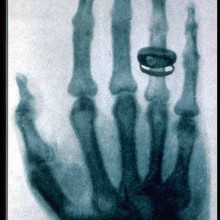
How does lead absorb radiation like x-rays and gamma rays?
Chris - Well, the reason that lead is a good choice is because it's a very dense substance, because dense substances can get in the way of the radiation and soak it up. And the denser something is the more atoms they have; in the case of things like x-rays and gamma rays, the more electrons there are to potentially interact with that ray as it goes through and stop it.
So, if you look at the density of lead; lead weighs something like 11 grams per centimetre cubed. Iron, on the other hand, is only seven. So in other words, you can get lots and lots of shielding with lead for much less space than if you use, say, iron or concrete, which doesn't have the same density, although both could soak up x-rays in the same way.
What happens is that the x-ray - which is effectively a light wave - when it goes through the material, it's interacting with the cloud of electrons around each of the atoms. And what could happen is the x-ray, when it does have this opportunity to interact with the electrons, can add some energy to an electron, and this can make the electron depart from the nucleus that it was originally orbiting. This can make an ion, for example, and the electron can then move away or be captured elsewhere.
So what that does is, basically, turn the energy in the x-ray or the gamma ray into other forms of energy inside the material; so it's basically a safe form of energy and a way of neutralising the effects of the radiation.
Lead is a good choice because it's very, very dense, so you can pack in more protection into a smaller area than you would otherwise. But lead is very, very heavy to wear for personal protection! I've worn lead aprons when doing x-rays medically in hospital, and it really is very, very heavy. So I wouldn't recommend it if you can avoid it!
Dave - The other effect is because lead has got a very, very positively-charged nucleus. The electrons around the middle of it can absorb a huge amount of energy before they get kicked off the atom. So an electron which is very near to the centre of the nucleus, can absorb a much more energetic gamma ray or x-ray than, say, a hydrogen atom, because, in a hydrogen atom, the electron can take just a small kick to remove it, and so it can't absorb any more energy...
Why do whales beach themselves?
Helen - That's a great question, but unfortunately part of the answer is, we actually don't know. In only around half of the whales stranded around the world is a cause found. And there are usually all sorts of things we know can cause whales to beach themselves, often fatally. These include things like diseases, trauma if they've been hit by a boat or something like that, or an anomaly in magnetic fields. We know a little about how whales use magnetic fields to navigate. If there's an anomaly that doesn't seem to make sense to them, or perhaps a change to a coastline, they might get confused, and that may lead them into an area that can't escape from and eventually end up on a beach.Also, things like underwater noise has been implicated including military sonar though there's very little evidence that is what's going on. We need a lot more studies to really understand if that is a problem because whales can be very sensitive to underwater noise. We know that they can hear each other so if humans are being very noisy, that can certainly is likely to confuse them and end up having these big problems.You also have to remember that these mass strandings, when lots and lots of whales and dolphins end up on a beach, has been going on for an awfully long time. Since Aristotle's time people have been seeing these mass strandings, so clearly a long time before we were making really big impact on the oceans. This means that there must be a natural element to it as well. There are reports of increased mass strandings at the moment, but there are also more people looking for them and more of us at the coast. So that might be one reason, and we should really be taking all these things into account when we're considering what's causing it, and whether we should be trying to do something to stop it.
What would happen if the moon was destroyed?
Dave - Okay. There are two questions there. If a meteor hit the moon and blew it in to thousands and thousands of pieces, what would happen to the Earth? The short answer is that we would have a nuclear winter. You would put huge amounts of rock into the atmosphere. It would block out the sun.Chris - It will actually reach us, would it?Dave - If it hit hard enough to blast the moon into millions of pieces, then there would be enough energy that a significant portion of the moon would land on our atmosphere. You'll get huge amounts of dusts in the atmosphere. All the plants would die.Chris - Because some people suggested that one way to mitigate against global warming is in fact to create a cloud of dust by mining the moon and ejecting material into orbit in the same orbit as the moon, therefore, creating a sort of buffer against solar influx, and this would cool down the Earth a bit.Dave - Yes. If you completely destroy the moon, it would be like that...Chris - In fact it would cool down a lot!Dave - A billion times over! And the Earth would be a pretty nasty place. The other question is if you just got the moon and took it away, and disappeared it somehow, what would happen? You'd immediately lose the tides because those are due to the moon's gravity. And also, on a longer term, there would be some subtle effects; the axis of the Earth is actually stabilised by the moon orbiting it. The moon's got huge amounts of angular momentum, so perturbations don't tend to have a very large effect on it and it tends to stabilise the direction of the Earth's axis over millions of years.So, if you then waited millions of years, the Earth's axis would rotate and that could have all sorts of complex effects on the weather and life in general and also not having tides could have all sorts of strange effects on weather because you're not mixing the oceans and the oceans move far more energy around the Earth than the atmosphere does.
Why are some hard boiled eggs hard to peel?
Chris - Well, I have one theory on this which is that, when you hard boil the egg, what you do is to create a potential vacuum because the proteins in the egg white denature and they form a solid in close apposition to the inside of the shell, squeezing out any air that was in there. And so what you basically get is the egg-equivalent of the thing that holds your tax disc to your car windscreen. - You've got a potential space there which if you have the egg shell's not separated, is being held squeezed on to the egg on both sides by atmosphere. And so you've basically got to create a bit of a vacuum before you can separate the two, and I think that's probably why it's so hard, in some cases, to peel it.Dave - It's also possible that, especially if you've got an older egg, the white tends to shrink a bit. So you get a nice big air sac at the top when you put that into hot water, and that air is going to expand, and it might squeeze its way around in between the membrane and the shell and that might be making it easier to peel the two apart.

Why isn’t beetroot dye broken down by digestion?
Chris - Well, in some people it is, but in some people it isn't.
The chemical that's in beetroot that makes them red and makes some people wee red and also pass red faeces, which is what can happen if you eat a lot of beetroot, is a chemical called betacyanin.
It's actually an anti-oxidant that the beetroot makes and it can be used a colour-change indicator too, but it doesn't necessarily break down in the intestines of all people.
The things that seem to make it breakdown more are acidity, so if you have very strong stomach acid then it breaks down more. If you have weaker stomach acid, then more can get through into the small intestine, and there, pancreatic juice is alkaline. So that can encourage it to pass through into the colon, which is actually where it's absorbed.
People have done experiments on patients who have had things called ileostomies, which is where you take the ileum, the terminal bowel, and you bring it to the surface of the skin. And you take the contents away into a bag, for example. If you feed these patients with the betacyanins in beetroot they don't ever get beeturia, in other words, the red dye getting into their urine. That shows that the absorption must take place in the large intestine.
The other things that seem to affect the absorption is a chemical called oxalate, oxalic acid, which you get from rhubarb and rhubarb leaves. That actually gets broken down by bacteria in the small intestine and in the large bowel. So it's possible that there's a combined effect whereby some people have a certain genetic makeup that makes them break this stuff down more than others because they have more acidity.
It's also possible that they have certain bacteria living in the intestine that breaks this stuff down more than others, and so that affects whether or not you see it appearing in the bloodstream.But in people who do get beeturia, what seems to happen is that the pigment comes through the wall of the bowel, doesn't get broken down, goes around in the bloodstream, and then it gets filtered out by the kidneys and goes into urine, and makes urine go red. But what's really interesting is that on its way to the kidneys, of course, it has to go through the blood.
I was rooting around on the Internet and I found this wonderful paper. It was published in the Christmas BMJ 2005 by two doctors, Julia Handysides and Stuart Handysides, who work in Essex... I'll read you this because it's hilarious:
"One Sunday evening in 2004, our 11-year old son went to bed after various delaying tactics, arguments about friends staying up later, forgetting to brush his teeth, forgetting to come down for a drink of water, and so on. But shortly afterwards, the dining door room opens, and in he comes, cupping a bleeding nose in one hand and gripping the bridge of his nose with the other. We led him to the kitchen sink and helped him to clean up and stem the bleeding, but oddly, the blood on his hands would not wash off. And it also looked brighter than usual. The poor child was interrogated. Is this some kind of ruse or lark to stay up later? The bleeding stopped, his hands, although stained pink, were now clean and dry. Upstairs, we found crimson stains on the bathroom carpet which proved impossible to shift and remain there over one year later. Our garden's harvest of beetroot was very good in 2004, and we had eaten some the day before the nosebleed. It dawned on us that on its way to staining urine, the pigment in beetroot might also stain blood as well."
So, that means potentially, all of your internal organs are getting stained bright red by beetroot, and if you bleed, the stuff can come out and stain your skin. I mean, that's just amazing!
How does temperature determine sex in some species?
Helen - That's a great question. It's a wonderful phenomenon that happens in lots of reptiles, and it also happens in some fish as well. Instead of having genes or chromosomes, that determine whether or not an embryo turns into a male or female, it depends on temperature. So for example, alligators: they will lay their eggs in a nest, and if it's incubated at around 30 degrees, they will all turn into females. If they're incubated at 33 degrees, they will all turn into males. And if you get temperatures in between those two, you get a varying mixture of males and females in a different ratio.So, clearly, the environment is telling the animal whether to turn into a male or a female. And it's a wonderful question to think about how this happens, and also why this happens. Why should an animal benefit from letting the environment determine whether or not its offspring turns into male or female? Some of these questions were answered by a study in Nature last year by Daniel Warner and Rick Shine from the University of Sydney. They were working with these wonderful creatures called Jacky Dragon Lizards from Australia and they look wonderful, and they sound wonderful. And they have this temperature-based sex determination.But another good thing about them is that they've got quite short life spans, because the big problem with studying this type of sex determination in things like crocodiles and turtles, which also do this, is that they live an awfully long time. So to really to get the grips of what's going on they're not an ideal subject. But these little lizards only live for about three or four years and what they've shown is that a key event in the sex determination of these lizards is the conversion of testosterone into oestradiol, a form of oestrogen. This is brought about by an enzyme called aromatase, happens at very low temperatures and tells the developing dragon to become a female.What they did in the paper was to override the enzyme, and by blocking it they could artificially turn males into females even if they were being incubated at a female temperature. What that showed was that over a number of breeding seasons males actually have more babies if they were hatched at a normal temperature than if they were hatched at a female temperature. So really what they're showing, and they've done this the other way around as well, is that if you're forced to be the wrong sex, you're not as good at having babies. So that reveals a bit about why this has evolved in the first place, and it gives us an idea of how it happens as well. But it doesn't really explain in nature why it should occur. There has to be a benefit. It has evolved. We see it in many different species. So there have to be reasons why, at different temperatures, males do better than females because that's what we see in all these different animals.This also leads us to think about maybe an ongoing problem we might have to face with climate change: that if in these animals their sex is being determined by a temperature and if that temperature is going up, especially of things like fish and the oceans, which we know may increase in temperature, it could start causing all sorts of trouble. So we will see. But it's all rather wonderful and fascinating.
How far apart are 2 gamma ray bursts on opposite sides of the Universe?
Dave - The concept of distance gets quite difficult when you start thinking on the scale of the universe above anything else, because Einstein's relativity work says that depending on how fast you're moving, distances can get compressed.
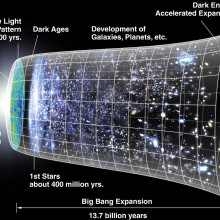
The first thing is, because the (13 billion light year) distant gamma ray burst is moving at a very different speed to us, the space in between is going to get distorted due to relativity. And if we're both moving at the same speed, then the burst would be about 30 light years away.
The universe is expanding all the time in every direction, and as far as we can tell this expansion looks the same wherever you are. If you can see an object which is 13 billion light years away you are looking at it 13 billion years ago, in that time it is going to have moved away a lot, it should now be about 46 billion light years away.
So in some senses, the two gamma ray bursts are now over 90 billion light years apart. However if the two gamma ray bursters could see one another then they wouldn't appear more than 13.7 billion light years away, as the only way one could see the other is right at the beginning of the universe when they were much much closer together.
Chris - So why would you end up with the potential light wave that had or looked like it was 90 billion light years away?Dave - Well, the light hasn't travelled 90 billion light years, the light has travelled 13 billion light years, but the object that emitted it has moved another 70-80 billion light years off in the other direction, so where it is now isn't where it was when it emitted the light.
Why not mount a telescope on the International Space Station?
Dave - The simple answer is that there are people on the Space Station, and they are doing things! For instance, if you pushed off the inside of the space station to move yourself down, the Space Station is going to move up a bit. Tiny movements like this, even though people are very small compared to the weight of the space station, are more than enough to ruin your pictures. So, if you want to make a good telescope, you want it to be as far away from anything else as possible. We don't actually really want it in low Earth orbit at all, although the Hubble space telescope is, because heat from the nearby Earth can affect things. But you definitely don't want any vibrations, so you want it away from any people, especially if they're moving around. That's why they built their own satellite for the Hubble, independent of the space station.

Can the medieval warm period and little Ice Age be used to explain or be explained in terms of current climate models?
Chris - We think that it was something called the Maunder minimum and it produced the mini ice age in the Middle Ages, probably about 300 or 400 years ago. Italy was amongst the countries affected and it may be one of the reasons why some of the most wonderful violins ever made came out of that period - because the trees grew more slowly and the wood was denser during the cold period, which may explain Stradivarius's success. But, we think that these weather conditions were down to, in that instance, a difference in solar activity; so people explain the Maunder minimum and the subsequent warming as an effect of differential solar activity, rather than the present climate change situation which is, we think, rising levels of CO2.
60:50 - How many medical x-rays are safe?
How many medical x-rays are safe?
We put this to Phil Clarke and Stuart Yates:Phil - Hi, I'm Phil Clark from the Particle Physics group in Edinburgh University. And first of all, when you're discussing radiation dosage, it often gets quite complex due to the different ways to measure radiation and there's often an abundance of different units like, rems, grays, sieverts, Röntgens, Becquerels, Curies and so on so that can confuse things so much. But the important unit of measurement is what known as the Gray (Gy) and that's the unit of absorbed dose.It corresponds to one joule of energy absorbed by a kilogram of material. Now the different types of radiation like alpha, beta and gamma decays, result in different biological effects. So what you do is you have to take the grey number and multiply it by what's often called the Q factor and an example would be for x-rays and electrons, the Q value would be one. So, if you multiply those two together, you get what's known as the dose equivalent and the scientific measurement for that is a sievert.And one sievert is actually quite a large value so you typically measure in millisieverts, so thousands of sieverts. Now a typical standard chest x-ray produces about 0.1 millisievert and the dosage that are recommended for people working at CERN or the maximum dose is about 6 millisieverts. And if you're a radiation worker it goes up to about 20, or if you're an airline staff member, the usual measurement is 5 millisieverts. So the amount of radiation you get from an x-ray is actually quite small.Diana - That's the physics of x-ray doses but what about the different types of x-ray scans?Stuart - My name's Stuart Yates and I'm a radiation protection advisor working at Addenbrookes Hospital. Well, you get a very wide range of different x-rays giving different amounts of radiation dose, but taking a typical example chest x-ray, its' very common lots of people might be referred to by the GP or hospital doctor.And a typical x-ray gives you about the same amount of radiation dosage you'd get in three or four days from natural sources of radiation in the environment and also natural radioactivity in food that we eat, for example, Brazil nuts contain radium and so they're slightly radioactive. And so typically, a chest x-ray is about the same as eating three or four bags of Brazil nuts in terms of radiation dose.The CT scans I think can give you more radiation dose or your equivalent perhaps to a few years of natural radiation but then the benefit is also that much greater because the doctors will get that much more information and so one of the key things in all x-rays is that, you will only get that x-ray if the benefit outweighs the risk.Because radiation comes naturally from cosmic rays from outer space we're actually quite well-protected at ground level from that radiation because of absorption in the atmosphere. But when we fly, we're less protected because we're higher up in the atmosphere and so typically you'd get the same amount of radiation dose from a chest x-ray as you would from say, a return flight to Southern Europe.Diana - So, a simple chest x-ray will give you 0.1 millisieverts. That's the 60th of the dose limit for someone at CERN. However, a CT scan can give you up to 20 millisieverts of radiation which is four years worth of background radiation and that's unless you live in some parts of Cornwall where it's only two years worth because the rocks there emit lots of lovely radioactive radon.
- Previous Camo Plants and Osmotic Power
- Next Jetlag and Body clocks








Comments
Add a comment