Life in inaccessible places - including in caves sealed off from the Sun and around deep-sea vents - is the subject of this week's Naked Scientists. In these intriguing environments, bacteria replace plants as the primary producers, extracting energy from the minerals around them to sustain a whole ecosystem. We also hear about the bone-eating worms that make a meal of whale carcasses that fall to the seafloor, an engineering trick for separating mined-metals from mud and, in the news, why the world's waves are getting bigger, how sperm can be grown in a dish and a gene that drives melanoma. Plus, the answer to the question where on Earth would you weigh the most...?
In this episode
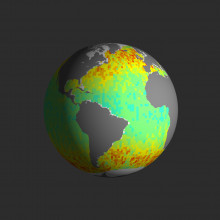
01:25 - Wind speeds across the seas are increasing
Wind speeds across the seas are increasing
Researchers have reported this week that wind speeds across the oceans have increased, on average, by at least 0.25 per cent each year for the past 23 years.
We don't know whether this is linked to climate change, but Ian Young from the University of Technology in Melbourne claims that it's an important but often overlooked variable in climate change studies.
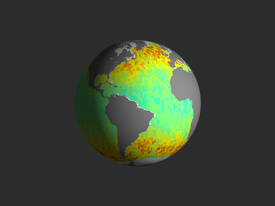
Publishing in the journal Science this week, the team used satellite data taken predominantly from GEOSAT altimeter readings, which they pieced together. They found that wind speeds are increasing more in the southern hemisphere than they are in the north and that the more extreme wind speeds are increasing by 0.75 per cent per year. Overall, a quarter of a percent each year doesn't sound like that much but it adds up to an increase, in the last 23 years, of between 5 and 10 per cent.
The effects of this could be bigger waves, but the team found no statistically significant growth in wave height over the past two decades. The heights of northern hemisphere waves seemed to be getting only very slightly smaller and the southern hemisphere waves were only getting slightly bigger. But neither of these changes were significant. And the researchers point out that this indicates wave height is determined by far more than just wind speeds, with other factors including swell and fetch.
On the other hand, the largest waves in higher latitudes do seem to be increasing in height. And the authors point out that, in more extreme conditions, this relationship between wind speed and wave height becomes more apparent. So you could argue that, if wind speeds across the oceans continue to increase, the largest waves would grow even bigger. This could potentially affect how humans are able to exploit the sea: affecting fishing and shipping. Or it could be a positive boon to our efforts in wind farming.
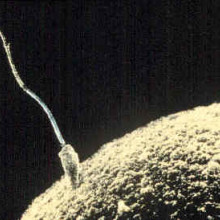
04:02 - How to Synthesise Sperm
How to Synthesise Sperm
For over 70 years scientists have been trying unsuccessfully to produce sperm in a petri dish. Now they've finally succeeded.
Writing in Nature, Takehiko Ogawa and his team at Yokohama City University reasoned that sperm probably depend for their development upon the complex three-dimensional environment provided by multiple nurturing cell types found within the testis. To recapitulate this sperm cell nursery, the team developed a system to culture small pieces of newborn mouse testicular tissue which they suspended in an agarose supporting gel and perfused with culture medium and a limited cocktail of growth factors.
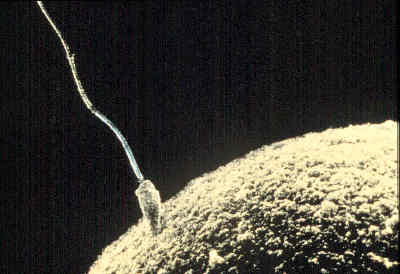 To make the job easier they also used tissue that had been genetically programmed to glow green when mature sperm cells were being produced. Using these tactics, and by carefully manipulating the chemical environment they eventually hit upon just the right conditions to persuade spermatogonial stem cells to turn first into spermatocytes, the first step in sperm maturation, and then to take the crucial step of halving their complement of genetic information and growing tails.
The ultimate proof, though, was when they were able to use these sperm to fertilise mouse eggs and produce viable - and fertile - offspring. This, they say, shows that testicular tissue can be triggered to produce mature, functional and fertile sperm under artificial conditions, which could have huge clinical implications for the treatment of infertility.
In particular, individuals facing chemotherapy for cancer could "bank" a sample of healthy testicular tissue prior to undergoing treatment. Kept in liquid nitrogen in the interim, this material could then be used to rear sperm for the patient at a later date, should the treatment render him infertile.
07:28 - Getting under the Skin of Melanoma
Getting under the Skin of Melanoma
with Dr Leonard Zon, Harvard University
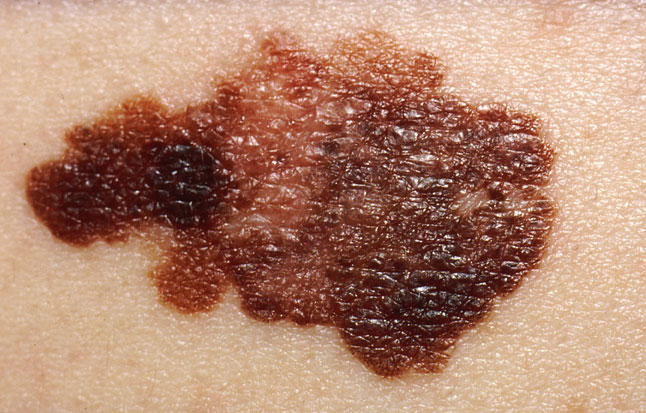
Diana - This week has also seen a breakthrough in the field of melanoma, a form of skin cancer that's becoming increasingly common; in fact, the incidence of the disease has doubled in the last ten years. But now there's some good news, because, with the help of a tankful of fish, scientists at Harvard University have discovered a key gene that drives the disease and therefore could hold the key to new ways to treat it. To explain more and talking to Chris, here's the author of the work, Leonard Zon.
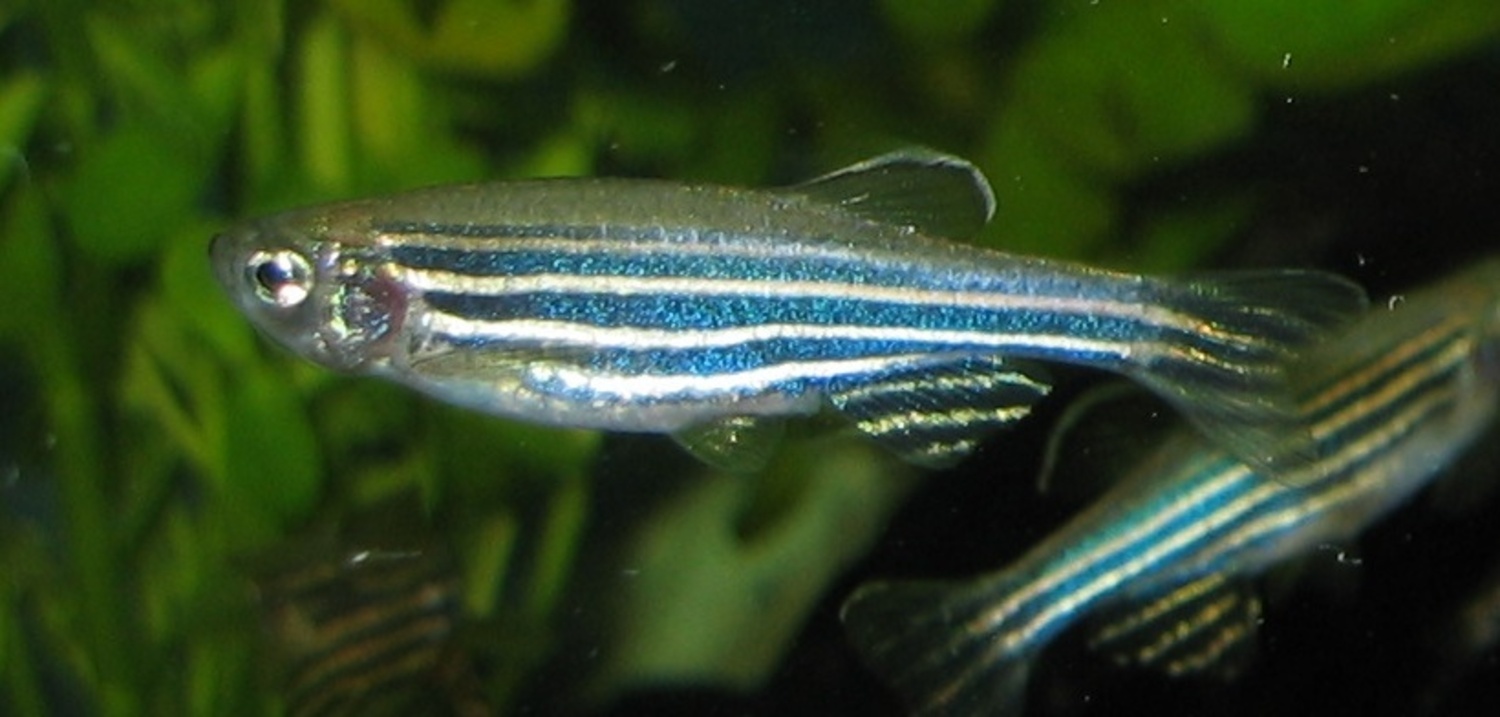 Leonard - Well, my laboratory has been focusing on melanoma which is a very deadly skin tumour and we had developed about 5 years ago a model of melanoma in the zebrafish. In this model, we took the human gene that's known to cause melanoma, a gene called BRAF and we over expressed it in the zebrafish, in combination with another gene, P53 which is the most common mutated form of a tumour suppressor gene in humans. That combination led to fish that develop melanoma. We were able to study those tumours and they really resemble very similar signatures of genes, to what you would see in a human tumour.
With that, we wanted to understand whether we could use this model to find new genes that cause cancer or find new therapies that might be used for the treatment of melanoma. We knew there was a region on human chromosome-1 that was amplified in about 30% of all human melanoma. We studied that region and found that there were 54 genes in that interval. We then looked at gene expression among 100 human melanomas and we found that 17 of those genes were expressed very highly. And so, we needed to figure out which was the driver gene, which was the most important to the cancer. And so, what we decided to do was to take each of these 17 genes and to inject them individually into our zebrafish embryos at the one cell stage, and then to grow up those fish and count how many fish developed a melanoma. What we found was that one of those genes, a gene called SETDB1, had the ability to greatly accelerate the melanoma, and this was likely to be the driver gene in this particular critical interval.
Chris - And is this representative of what you think goes on in humans? In other words, if you were to take human melanomas, real clinical tissue, do you see the same gene, this SETDB1 gene that you've now discovered to be involved also mutated in the human problem?
Leonard - Well that's right. So, 30 percent of human melanomas will have amplifications of SETDB1 and we went on to show in this paper that actually, 70 percent of melanomas will over express SETDB1. So it's something that's central to being a melanoma tumour is to over express this particular gene. So I think that over time, we'll be able to see that this gene also participates in other cancers too, and this region is also amplified in other tumours of humans such as lung tumours, and also breast tumours.
 Chris - We'll come on to what SETDB1 might be doing in a second, but first of all, if 70 percent have it, what about the 30 percent of human melanomas that don't? What's going on with them then?
Leonard - The way I think about this as an oncologist is, if I see a patient, I'll often describe their tumours as let's say, poorly differentiated or well-differentiated. What that means is that I can actually classify them by how the tumour looks under a microscope. We think that melanoma isn't a single disease, but there's actually different causes of melanoma. And so, there's different driver genes, depending on where the melanoma arises on your body and what types of exposures to carcinogens or light, sunlight is often thought as an instigator for the melanomas. So, with all these different options, the tumours could be heterogeneous and so, what we would say is that the 70 percent that over express SETDB1, that must be one category, and then the other 30 percent have a different classification and probably represent a different stage or a different location of those melanomas.
Chris - So what do you think SETDB1 is doing?
Leonard - Well, there's a new field that's blossomed over the past 5 years called epigenetics. Epigenetics deals with things that aren't inherited in a typical genetic manner. We're used to mutations, let's say, being inherited genetically, but in this particular case, DNA is actually wound around a spool and that spool is a set of proteins called histones. When DNA is wound too tightly, the genes are shut off. When DNA is wound loosely, the genes are on. This gene SETDB1 seems to wind the DNA a little bit too tightly and that shuts off particular types of genes that have an identity in the melanoma. So for instance, one class of genes that we found are a gene set called the hox genes which regulates the body plan normally of how embryos developed. But we think that somehow, this gene alteration in terms of expression leads to a change in the cell fate and that makes the tumours more invasive.
Chris - And does this in turn also give you new strategies for how to combat melanoma? The survival prospects for someone who's diagnosed with an advanced melanoma are really dismal at the moment, are we going to be able to do something about it with this discovery?
Leonard - So SETDB1 is an enzyme that actually methylates the histones and that regulates whether the DNA is tightly wound or not. And so, because it's an enzyme, it's possible to make inhibitors to this enzyme and so, we're in the process now of talking to drug companies to think about inhibiting this particular enzyme and we think this is a wonderful treatment for the patients, 70 percent of the patients who over expressed this gene who have melanoma.
Diana - Harvard Scientist Leonard Zon talking to Chris Smith there. He published that work he was discussing with me, this week in the journal Nature.
13:26 - How the lily blooms
How the lily blooms
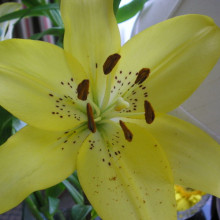
This week scientists from Harvard and The University of Science and Technology of China have worked out how the lily pops open when it blooms.
They looked at the Asiatic lily, otherwise known as Lilium casablanca. Researchers Liang and Mahadevan marked the bud with dots along the inner petals and outer sepals; those are usually the green leaf-like parts underneath the petals. They then set up camera to track the dots as it grew.
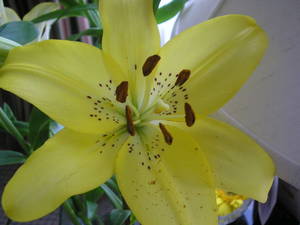 Publishing in PNAS, they found that the petal and sepal edges lengthened 40 per cent more than the midribs (these are the central veins in a petal or leaf). This disparity in growth created that characteristic wrinkling at the edge of the petal.
The authors say that this difference in growth causes stress to build up inside the bud and the forces eventually exceed those keeping the bud closed, causing the flower to burst open. Previous studies have argued that it is actually the midrib which causes the popping-open of the lily so, to test this, the researchers actually shaved it off the petal. Lo and behold, it still popped open as normal.
Why is this important? The authors argue that it can be mimicked in technology for designing thin film motors which would need blooming explosions on a small scale.

15:14 - Stem cells for Macular Degeneration
Stem cells for Macular Degeneration
Stem cells could hold the key to a future therapy for age-related macular degeneration (AMD), the leading cause of sight-loss among older adults.
The disease leads to the loss of retinal photoreceptor cells, the light-sensitive elements that convert light into nerve signals the brain can understand. This robs patients of their central, or macula, vision, the most acute part of the retina which is used to read, watch television or recognise peoples' faces.
| Vision without AMD: |
 |
| Vision with AMD: |
 |
Part of the pathology involves the degeneration of a tissue layer called the retinal pigment epithelium, a sheet of melanin-containing cells that nourish and maintain the photoreceptors. Replacing this lost tissue could therefore help to retard the progression of the condition.
To do this, Maria Kokkinaki and her colleagues at Georgetown University in Washington DC, writing in the journal Stem Cells, have developed a technique to transform mature skin cells into these specialised retinal cells. First the skin cells are "reprogrammed" by adding four genes (OCT4, SOX2, NANOG AND LIN28) which wipe the genetic slate of the cells and convert them into stem cells called hiPS cells (human induced pluripotential stem cells).
Grown under the correct culture environment, the team have found, these hiPS can be converted into retinal pigment epithelial cells that show identical morphology, gene activity, electrical, structural and biochemical behaviours to their naturally-encountered counterparts.
Crucially, once re-specialised, the cells showed no markers associated with still being stem cells, which is important from a safety perspective. This suggests that it should be possible to produce retinal spare-parts to tackle some of the commoner sight-loss syndromes using a similar technique.
However, the cells weren't perfect though. The telomeres, structures resembling end-caps on the chromosomes which shorten when cells divide, were shorter than they should have been, and the cells also showed other damage to their DNA which the team suspects might have been caused by the viruses used to deliver the reprogramming genes at the start of the procedure. This indicates that the technique, whilst an important proof of principle, has some way to go before it is ready for the clinic.
As study co-author Nady Golestaneh puts it, "This isn't ready for prime time though. We also identified some issues that need to be worked out before these cells are ready for transplantation but overall, this is a tremendous step forward in regenerative medicine."
Do Sperm Multiply?
That's absolutely right. Mature sperm can't multiply, but what they've been able to do is to make the cells that are the stem cells that make the sperm grow in the dish and then produce sperm in the dish, which is the thing that's eluded scientists for many, many years. That's why it's such big breakthrough.
Do changes in wind speed alter the gulf stream?
This question was asked in response to this news story...
Diana - Well that's a really interesting question and I think the answer is, we don't know! The researchers only really looked at wind speeds and wave heights, and the Gulf Stream and the Jet Stream systems are so complex, and have so many factors involved in them, that it's difficult to know how wind speeds might affect them. Perhaps the Gulf Stream, which can determine wind speeds because of the heat that comes off the ocean and so forth, that almost certainly will have some kind of interaction, but I've no idea what it might be.
Chris - And also factoring in the fact that if we're going to shed ice from the Arctic because of global warming, this will put cool water which is also fresh water into the sea, and this could affect the conveyor systems that carry that warm water around the globe anyway. So the whole thing could change, but for other reasons as well.
Diana - Exactly.
28:30 - Unique life in a Romanian Cave
Unique life in a Romanian Cave
with Rich Boden, Warwick University
Chris - We are looking at life that flourishes in the absence of input from the Sun, in other words, some of the most inaccessible places on the planet. One of them is Movile, a cave in Romania. This was discovered 25 years ago. It's got no natural entrance and we think it's been cut-off from the outside world for over 6 million years. Nevertheless it's home to a thriving ecosystem of complex life including water scorpions, worms and spiders, and they're all surviving in the absence of any energy input from the Sun. Fewer than 30 people have been in this cave to date, but last April, Warwick University microbiologist Rich Boden became the first British scientist to go in and in fact he's going back very soon to continue the work he started - but today, he's with us to tell us about this extraordinary place. Hello, Rich.
Rich - Hi.
Chris - So first of all, set the scene for us. This cave sounds fantastic.
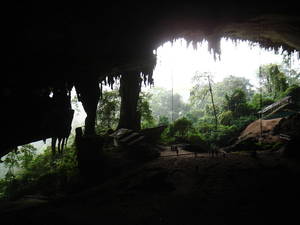 |
| Niah Caves © mailer_diablo |
Rich - Yeah. It was discovered accidentally as these things tend to be - 25 years ago as you say. It's located in the very site of Romania, near the border of Bulgaria, close to the city Mangalia, which is a very geothermally active area. There's a lot of sort of methane seeps and sulphidic mud. It's a spa town really. Near there is a sink hole known as Obanul Mare which is just outside the city, and 25 years ago, it was thought this might be a good place to build a geothermal power station. So a series of prospecting shafts were dug about 30 meters deep and one of them struck scientific gold really when it crashed into the tunnels of this cave which they then sent the cave scientists down and discovered it had no entrance at all, promptly sealed it up, plans for the power station were cancelled and it's been being studied ever since.
Chris - How did they know that there this extraordinary ecosystem in this cave?
Rich - Basically, they went in and had a look. Christian Lascu, who is now the editor of National Geographic in eastern Europe, went in and had a look. He's a very prominent cave scientist in Romania and had to crawl around, discovered a chamber about 15 minutes crawl into the cave, which is flooded. It contains a lake, we refer to it as the lake room, which was absolutely crawling with insects and amphipods, and spiders, and what have you, and immediately had the cave sealed off so it could be studied.
Chris - How do they know that this cave is completely divorced from the outside world, so in other words, there is no energy flow from the Sun going in there?
Rich - Well there's a number of reasons. One, we know there's no rainwater seeping down into it because of a very thick layer of hydrophobic clay located above the cave. There's no stalactites in the cave, no evidence of water coming in. 1986 when the cave was discovered, was also the year of the Chernobyl disaster and the surrounding soil in that area of Romania was covered in radio-isotopes, but the cave was not and still is not containing those isotopes. So we know from that extent, it's sealed off. It's also devoid of the bacteria that we would usually associate with faecal matter that would be found in the surrounding farmland, and from obviously, humans that go in. It's completely devoid of those and we've checked that recently, and there is still no contamination, even though people have been going in and out for 30 years nearly.
Chris - Now you're a microbiologist, so you're presumably very interested in - you mentioned microbes - in the microbial communities that are in there, aside from the big stuff. So, what are those microbes doing in this cave and how are they presumably sustaining all the other life that's in there?
Rich - That's absolutely right. The microbes basically are the trees of the cave. If you think of a standard ecosystem on the surface, trees fix carbon dioxide into sugars and higher molecules using photosynthesis - they use light to fix carbon dioxide. In the cave, on top of the surface of the water, we have floating mats of bacteria. It looks like wet tissue paper, but it is actually just entirely composed of bacteria and what they do is chemosynthesis which is, they fix carbon dioxide at the expense of things like sulphide and ammonia that are found in the geothermal waters. What happens then is the mat forms, and things like nematodes and small amphipods in the water come along and eat it, which then in turn get eaten by other things, and that goes up the food web.
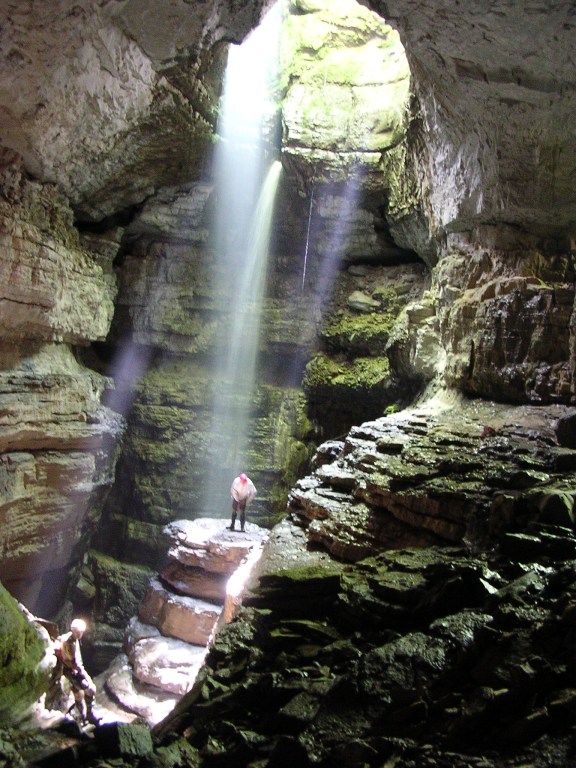 |
| A Cave in Alabama © Kymacpherson @ Wikipedia |
Chris - This is not dissimilar to other discoveries that have been made around the world in other places, albeit obviously, it's unique. I'm thinking of an example in South Africa a few years ago. A lady called Lisa Prat, we interviewed here on the Naked Scientists, she had a paper in Science where down a gold mine, 3 kilometres underground, they uncovered microbes that were surviving perhaps for 40 million years, cut-off from the outside world. They were living on isotopes or radioactivity in the rock because the radioactivity was splitting water molecules which was then attacking other minerals in the rock, releasing forms of sulphur that they could eat. So this is a sort of a correlate of that, isn't it?
Rich - It's similar. The bacteria that survive on radio isotopes are a different functional group really. The bugs that are found in Movile are actually found everywhere really. You find these sulphur oxidising bacteria in normal soils and lakes everywhere really. Also found in the Deep Sea hydrothermal vents that you already mentioned.
Chris - So, what will you actually be asking in terms of the questions that surround this cave? Is this actually how you got the community of microbes that are there and how they establish this food web or are there other questions about how they can inform various industries and economies on the surface now?
Rich - I guess our real question could be, an analogy really of the UK census that's going on today; it's sort of who lives where, what do they do, how do they relate to everything else, and how did that mat form, what else is in the mat part from chemosynthetic bacteria because it's actually far more complex than that. It's also full of bacteria that oxidise methane, for example. And methane and carbon dioxide are the two biggest greenhouse gases, so we're always very interested in things that can oxidise those, particularly in the absence of light. If you wanted to set up some kind of carbon dioxide stripping bioreactor for example that has been set up previously using algae, you wouldn't need to supply light for it, so it wouldn't be weather dependent if you used chemosynthetic bacteria for example.
Chris - What sorts of steps do you have to take to make sure that this pristine environment isn't spoiled by you going in and studying it?
Rich - The cave for a start is only accessible a certain number of times per year, only a certain amount of material is allowed to be removed, the scientists we work with at the Romanian Academy , and the Emil Racovita Institute of Cave Sciences in Bucharest are also very strict what can and can't be done on the cave. When we go in, there's obviously a 30-meter shaft that you have to descend on a rope. At the bottom of which is a trap door which keeps out outside matter, our boiler suits are as clean as they can be, our shoes are not in contact with outside soil. So obviously, we can't sterilise ourselves, but we do take the best steps we can, not to take anything in.
Chris - Rich, thank you and stay with us. That's Rich Boden from the University of Warwick. He's been to Movile Cave in Romania where he works on the microbial communities there.
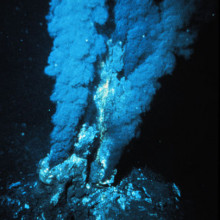
35:47 - Life at Hydrothermal Vents
Life at Hydrothermal Vents
with Professor Paul Tyler, Southampton University
Diana - It's not just rock that can block sunlight: water does too, and you need only descend a few hundred metres to enter the aphotic zone - where sunlight is too weak for plants to photosynthesise. But there are other sources of energy on the seabed, and among them are hydrothermal vents, which harbour ecosystems found nowhere else on Earth. Professor Paul Tyler is from Southampton University, and works on understanding these systems. Hello, Paul.
Paul - Hi there.
Diana - So, can you just describe what the conditions are like down there underwater around these vents?
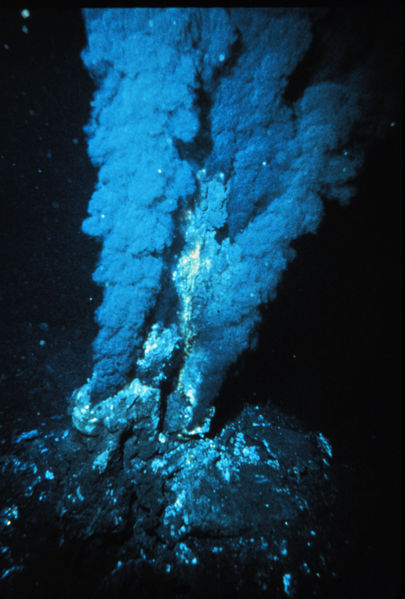 Paul - The vents were discovered because scientists could not calculate the heat loss from the Earth without bringing in a convective part of it. What American scientists did in 1977 was go down and look for convective heat loss along the mid-ocean ridge that runs past the Galapagos Islands. And they found the convective heat loss with this hot water coming out of the seabed in temperatures between 200 and 300 degrees centigrade. But what really astounded them was the very, very luxurious communities of animals found around the hydrothermal vents compared to literally a few tens of meters off into the adjacent deep sea where there was virtually nothing living at all.
Diana - So, what is the main source of energy for these life forms? What are they eating?
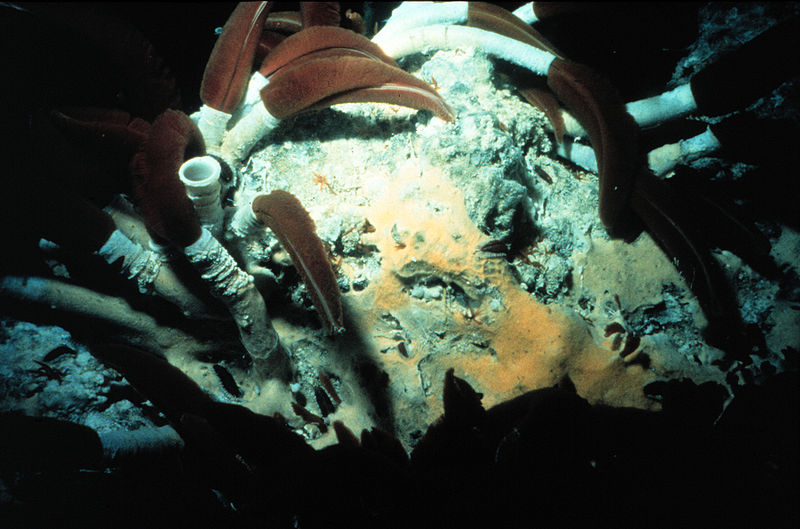
Paul - They're not really eating anything. The primary consumers are not eating anything. What's coming out of the hydrothermal vents besides hot water is a lot of hydrogen sulphide. Sea water, sulphate rich seawater percolates through the rocks of the seabed, it's heated by magma, comes out at a hydrothermal vent and that sulphate has been reduced to hydrogen sulphide. And it's the same process of chemosynthesis, that occurs in the caves of Romania, and we see this in the free-living bacteria surrounding the hydrothermal vents. But what was particularly clever at hydrothermal vents, there was a group of organisms called the tube worms and they had no gut - no mouth, no gut and no anus, but they contained a structure called the trophosome, the so-called eating body, which was packed full of bacteria, or should I say Archaea that underwent the process of chemosynthesis.
Diana - So how does this ecosystem come about in the first place? I mean, it sounds like there's a little bit of interdepency and how much of a system is it?
Paul - It's independent. You only find these systems at hydrothermal vents. There are related systems at areas called cold seeps, but what is so clever about some of the animals is the evolutionary process allows these tube worms to transport oxygen, carbon dioxide and hydrogen sulphide through their blood system, it's absorbed through their tentacles in the crown, to this trophosome where these bacteria are. Now, if you inject hydrogen sulphide into an animal, the chances are, you're going to kill it immediately, but there's an adaptation where the hydrogen sulphide is bound to a blood protein and stops it being toxic, and then it's taken through to the trophosome where the bacteria undergo the process of chemosynthesis internally within the animal and then they release organic matter. So, the animal itself is still a heterotroph. It is the bacteria that live within this trophosome within the animal that are autotrophic.
 Diana - I see. So they're making good use of their situation, but how different are these species to ones that we find, just every day, around the surface of the Earth?
Paul - Very different indeed. For a start, they're very specialised. The tube worms particularly are specialised, but there are a number of animal groups; you find large bivalves and there's a mussel that looks not unlike like the mussel you might find on the seashore around Britain. But it's a mussel that has these bacteria in its gill and so, it can take in hydrogen sulphide, CO2, and oxygen over the gill surface, and the bacteria produce this organic matter. So, that's just adapted to the hydrothermal vent. We find other bivalves do the same and if you come over into the Atlantic, there is a shrimp - I suppose you know when you eat shrimp in a restaurant, you tear off the head part and you eat the abdomen? Well, if you look at the main thorax of these shrimp in the Atlantic, they have bacteria growing underneath the carapace, the covering of the animal, and then they appear to take those bacteria off, and move them to the mouth for ingestion.
Diana - All right, so these bacteria are really getting around all of the species down there then, but why do we need to learn about these systems? Why are they important?
Paul - There's a number of reasons why they're interesting. Firstly, one of the interests has been, was this the cradle of life? Were these hydrothermal vents where the first molecules, shall we say, the first organic molecules were formed? That's an ongoing question that still remains a long way from being resolved of course. They might well have been refuges for life, if there was really a 'snowball earth' at one time. And also, they have some very interesting properties in terms of potential biotechnology. If these enzymes that are in these animals are working at slightly higher temperatures than normal, they might have some biotechnological use. But there's a lot of other scientific questions in terms of, these are relatively isolated spots along the midocean ridge. As a reproductive ecologist, I'm interested in how animals reproduce, disperse and colonise new hydrothermal vents, and that's been a really ongoing question about how these communities maintain themselves.
Diana - Almost like castaways. Well thanks, Paul. That was Paul Tyler from Southampton University.
41:48 - Planet Earth Online - Bone Eating Worms
Planet Earth Online - Bone Eating Worms
with Nick Higgs, University of Leeds
Diana - Another source of energy for deep sea species is the bodies of whales and other animals that fall to the sea bed. Nick Higgs, from the University of Leeds, researches whale fossils, which show tell-tale signs of a much smaller creature that could hold the key to why there's a gap in the evolutionary record of whales.
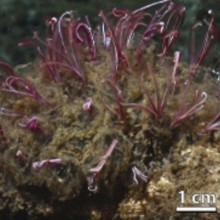
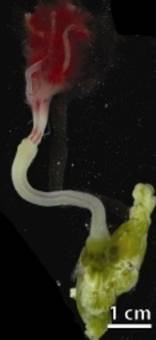
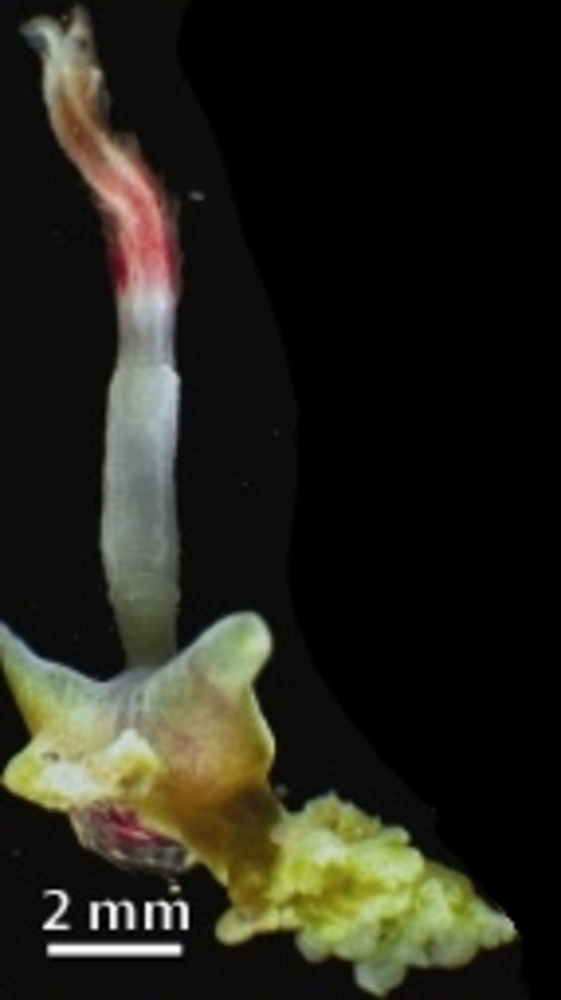 Nick - They're called Osedax worms which means "bone devour" in Latin. They range in size from about the size of your finger to maybe the size of one of your joints. They look more like little palm trees really. They have what we call roots that grow into the bone and dissolve it away, and eat the bone, and then they have this long trunk that sticks up out of the bone, and out of that trunk are four palps which are kind of like palm tree branches, but they're bright red to pink and those are the gills of animal. Those are how it gets oxygen out of the water.
Sue - They sound quite beautiful actually, but the way you describe them, they sound extremely destructive. Have you found evidence of these worms in whale fossils?
Nick - Some scientists have, yes, from fossils in Washington state in the USA and we're currently investigating some other fossils from Italy. There are some exciting signs, but it requires a bit more work.
Sue - When you went down to Kent, you got the call, you went to see the stranded sperm whale, what did you get out of it? What did you want from it?
Nick - Well we were going down to get some bones that we could put on the seabed to try and find some of these Osedax worms, and we came back successfully with a whole flipper which has got several nice bones in it that the worms like.
Sue - The flipper is currently at the Natural History Museum before being deployed, but inside Leeds University's Palaeontology Lab clean room, Nick can study other animal bone samples where Osedax worms were also found...
...Several jars here. The sort that you would expect to see a lot of chutney in, "sponge-like" in appearance...
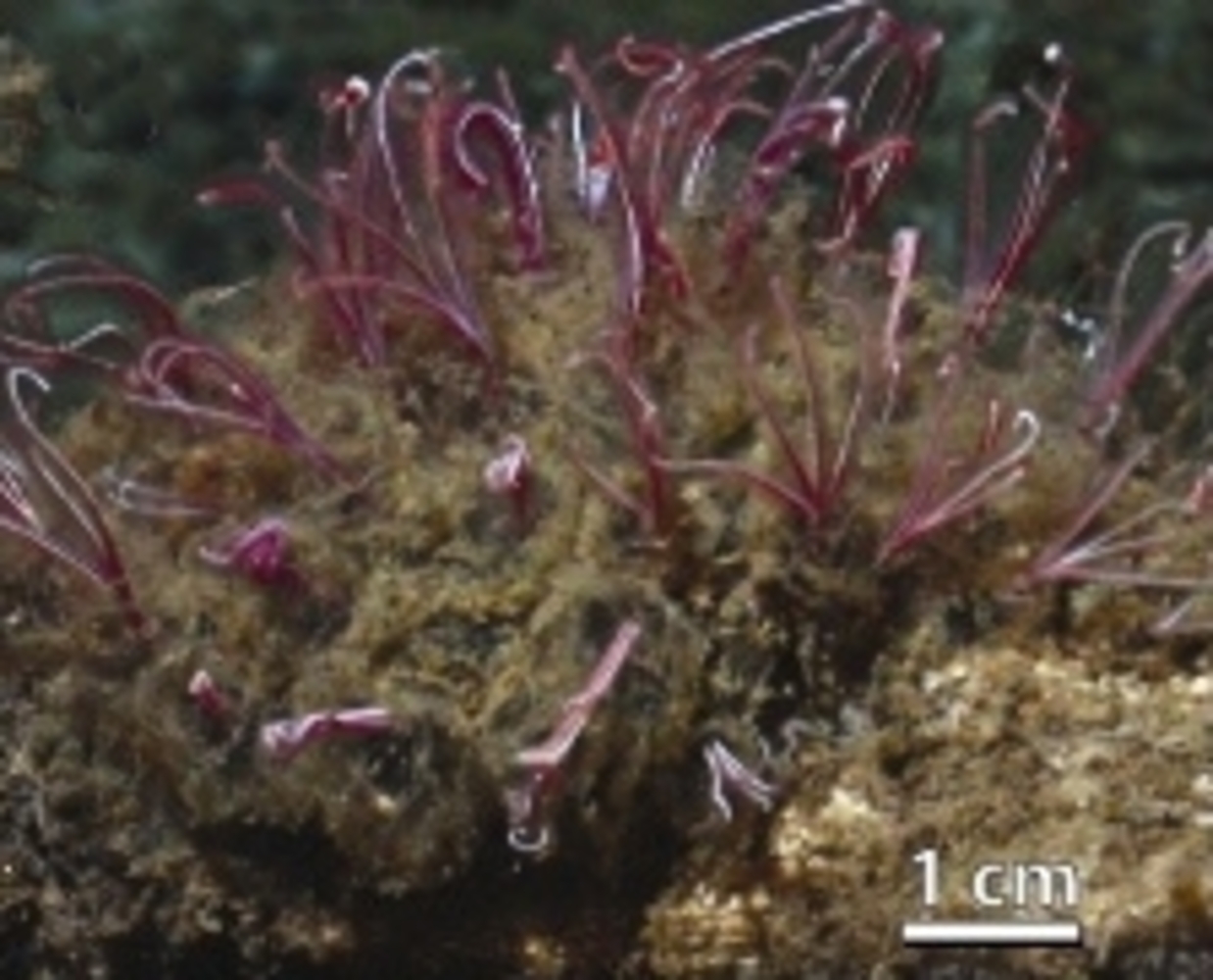 Nick - This was from an elephant seal carcass that was put down in the same area that they had previously sank the whale carcasses, to see if these worms would also like the bones of other animals as well. We're starting to think that they might have a much bigger impact on the fossil record of not just whales, but any marine vertebrate.
Sue - Well let's take a couple of these jars back in, out of the clean room, away from the noise of the fume cupboard, and into the lab. What am I looking for? I'm not going to see any worms in this am I?
Nick - No. You may just see some of their tubes hanging out of the bone because they tend to dry up in the alcohol. They don't quite look as magnificent as they do in real life, but can you see here this kind of parchment-like bits sticking out of the bone? Those are the tubes.
Sue - This tiny little tube. Almost look like sort of rolled up spider's webs.
Nick - Yeah. They've decomposed because they've been in the jar for so long. You can see there are several small holes on the bone and I don't know if you can just tell if I change the light slightly. There's a kind of mottled colour to the bone surface.
Sue - I can see that, yes.
 Nick - That's the extent of where they bored away the bone underneath the surface. So all that black area is where the bone has been eaten away.
Sue - Why is it so important to know the effect that your bone-eating worms have on a whale? Is it purely so that you know that you've got the correct age of a whale fossil or is it more basic than that? Do they have such an effect on it that you can't necessarily tell what the creature is or when it was from?
Nick - Exactly. Within 10 years, they may be able to eat away whole bones. So in which case, we'd have no record of that whale ever existing whereas in some whales, like the one I'm investigating in Italy, a lot of the bones were found and couldn't really be properly described because they were so mangled and partially destroyed by these worms. What I'm really interested in is figuring out whether the gaps in the fossil record of whales may be caused by these worms. There's a significant period in the evolution of whales when they become ocean going, when they move away from shallow habitats, and we get this gap in the record which is incredibly tantalising because at the next stage after this gap, you start to see what we know as the ancestors of modern whales, the toothed whales and the baleen whales. But there's this tantalising gap when they started moving out into open water which is exactly when the carcass would've started arriving in the Deep Sea.
Diana - Nick Higgs from the University of Leeds, who's hoping to discover whether Osedax worms are responsible for the gap in the fossil records of whales.
Can radiation-feeding bacteria eliminate radiation?
We posed this question to Rich Bowden from the University of Warwick...
Rich - As far as I know - it's not really my field - they don't actually break down the isotope. The isotope naturally decays and then the bacteria harness the energy from that rather than the bacteria forcing the decay to happen. It will still happen at its natural rate.
Chris - Although some people say that it's possible to use microbes to either sequester radio isotopes into insoluble forms which pose less threat, or to break down things which are in a radioactive form that's harder to clean up, into one that's easier to clean up.
Rich - Yeah. Mineralisation of radio isotopes, such as uranium compounds, can be done by thiobacilli for example, they will oxidise the uranium into an insoluble form which is much easier to remove from solution. It's been used in biomining.
How do we get samples from the deep sea?
We put this question to Paul Tyler, Southampton University...
Paul - The traditional methods have been to collect with trawls and things called box corers, but if you're working on something like hydrothermal vents, we go down in a submersible which dives for anything between 8 to 20 hours on the seabed. More recently over the last 10 years, there's been a massive development of what we called remote operated vehicles and these are vehicles, some the size of a large car, with a battery of cameras, connected to the mother ship via a fibre optic cable, so you get images in real time from the seabed, and you can collect samples with the manipulator arms and then everything's brought back to the surface.
Are animals at hydrothermal vents better in a warming climate?
We put this question to Paul Tyler, Southampton University...
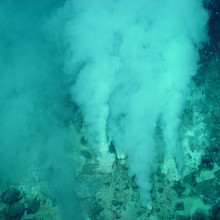
Paul - That's an interesting question because one of the great misconceptions is that animals living at hydrothermal vents are living at very high temperatures because the water coming out of the vents is up to 407 degrees Celsius. But most of the animals living at hydrothermal vents live at temperatures between 5 and 20 degrees Celsius, and that's the same sort of temperature that you would get in the waters around the southern part of Britain, from winter through to summer. So, in many ways, there's no special adaptation to the temperature per se. The clever adaptation really is to the use of hydrogen sulphide.
Can only basic species live on alternatives to oxygen?
We put this question to Rich Boden, Warwick University...
Rich - I suppose anything is possible, but many bacteria use things instead of oxygen such as nitrate or metals. I don't think it's been found in eukarya, so plants and animals yet, but bacteria and Archaea can certainly do it.
50:14 - Where is gravity the strongest?
Where is gravity the strongest?
We put this to Dominic Ford from the Department of Physics in Cambridge...
Dominic - The principle of physics that you need to work out the gravitational field around the distribution of matter is Newton's Law of Gravity. What that says is that every piece of matter in the universe attracts every other piece of matter in the universe with a force that decreases with the distance between the two masses, but it increases with the mass of those objects. So, when it comes to the whole Earth, you have to add up the forces from all of the little bits that make up the sphere of the Earth, to work out what the total net force is, and that's actually a mathematical problem that gave Newton quite a headache when he was formulating his Law of Gravity and it led him to pioneer a new mathematical technique that we call calculus to add up those little forces.
But even though the math itself is quite tricky, it's fairly easy to see roughly what the answer must look like because if you imagine that you burrow down into the Earth, you've then got some of the Earth above your head, and the rest of it below your feet whereas the before, the whole Earth was pulling you in one direction downwards. So when you burrow down into the Earth, the gravitational forces are cancelling out and that means there must be a weaker gravitational field down inside the Earth than there is on the surface.
Similarly, if you travel upwards into space or climb a high mountain, then the Earth is further away and that means its gravitational pull is weaker, and so, you will weigh less.
Diana - Standing at the top of Mt. Everest might make you feel a little bit lighter and that's in more than one way, I think! But what might make us feel a stronger pull?
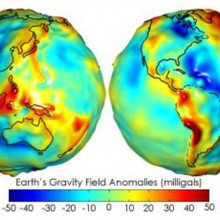
Dominic - There are variations in the gravitational field across the surface of the Earth and that's actually a way that people look at the geology and the rocks that the Earth is made of. So, if you're looking for a particular kind of rock, you can look for variations in the strength of gravity that tell you that you've got denser rocks or less dense rocks, and that might tell you about the rock composition below your feet.
The Earth does bulge out at its equator, but in fact, the amount by which it bulges out is exactly the right amount to cancel out the centrifugal force from the Earth's rotation. So, in terms of the downward force that you feel, it's the same all over in the surface of the Earth.
Diana - Certain rocks give certain areas of the earth's stronger gravitational pull and the bulge at the earth's equator counteracts the centrifugal force of the earth's rotation, sounds simple. On Facebook, Steven Duncan said that you should place your bathroom scales on the roof rather than in the basement. Shawn Hoskins said that the Naked Scientists ought to fund a field trip for listeners to travel the globe to find out!
How do things emit light by giving off photons?
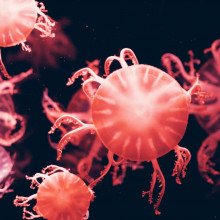
Chris - What they're doing is using a chemical reaction to excite a molecule. When you excite a molecule, you give some energy to the electrons that orbit around that molecule in the atoms. Those electrons get kicked up to a higher energy state temporarily, and they then lose the excess energy again by falling to their original starting position, and the energy that they lose, they give out as a photon of light. So that's how you then spit out light if you're an organism that glows underwater, like a jellyfish for example.
- Previous Successfully Synthesising Sperm
- Next Mining Minerals







Comments
Add a comment