Can a Mobile Phone Compromise your Sperm Count?
What's the point of earwax? Does WiFi damage the brain? Can a mobile phone in a trouser pocket dent a man's fertility? In this week's science Q and A show we also brush up on how they get the stripes in toothpaste, discover whether dropped food follows the 5 second rule and shed light on why some forms of EM radiation more damaging than others. Plus, news of a new microscopic MRI machine for molecules, how computer games can alleviate the symptoms of schizophrenia and why what a woman eats, even before becoming pregnant, can have a lifelong genetic legacy for her offspring...
In this episode
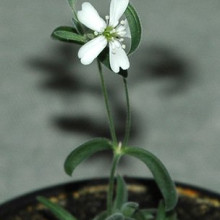
- Plant frozen for 30,000 years revived
Plant frozen for 30,000 years revived
A plant frozen in Siberia for over 30,000 years has been brought back to life by scientists in Russia.
Writing in PNAS, Russian Academy of Sciences researcher  Svetlana Yashina and her colleagues found seeds of the Silene stenophylla plant, a kind of campion, in ancient squirrel burrows under 38 metres of permafrost in northeastern Siberia.
Carbon dating of the seeds, which were part of an assemblage of more than half a million fruits, nuts and seeds sequested in the burrow, confirmed that they were 31,800 years old, give or take a few hundred years. Wedges of ice within the burrows also showed that the ground had remained solidly frozen at a steady-state -7°C throughout this time.
When the seeds were placed in a nutrient growth medium they showed signs of trying to germinate, albeit unsuccessfully. Encouraged by the apparent viability of the tissue, the team then explored the plant tissue connected to the seeds including a structure called the placenta, which links a parent plant to its developing seed. This was still in-situ around some of the recovered seeds and also showed signs of responding to warming and nutrients.
By culturing this placental tissue the researchers were able to trigger it to produce roots and shoots, and then new plants, which matured and produced flowers. Cross-pollinating these plants resulted in the formation of viable seeds from which further plants were grown.
Growing specimens of modern-day Silene stenophylla alongside their ancient relative revealed a number of subtle differences between the two, including the size and shapes of the flowers, with the ancient strain having narrower petals but more buds compared with the modern-day counterpart.
To resuscitate a species that hasn't grown on Earth for over 30,000 years is, by itself, an incredible achievement. But where the study is likely to prove particularly valuable is in informing strategies like the "Millennium Seedbank", which is a long-term storage initiative to safeguard seed specimens from plant specimens planet-wide. Knowing how to preserve seeds in a viable state, and perhaps re-kindle the life of the plant that made them, will be valuable information indeed.

Are primary colours in pigment and light different?
Dave - This is a lovely problem and it's one of my bugbears, primary colours.
The primary colours of light are pretty much red, green and blue. That's nothing to do with physics, it's all to do with biology.
In your eye, you've got three different types of cone cell, three different types of sensor: Ones which absorb reddish light, ones which detect greenish light, and ones which detect bluish light. Light is actually an incredible mixture of an infinite number of different colours, but your eyes approximate it to reddish, bluish and greenish.
So, if you mix red light and green light, you can actually confuse your eyes and make it look like it's yellow light. And so, by mixing red, green and blue light, you can make any colour of the rainbow. It's actually slightly more complicated but [you can convince your eyes that you're seeing] pretty much any colour of the rainbow. That's how TVs work, using red, green and blue.
But if you're dealing with printing or paints, you're doing something different. You're adding colours together. You're taking white light which has got all the colours of the rainbow in it and you're taking colours away. So, if you've got red, green and blue shining down on a red piece of paper, all that comes back is red light and you see red.
The primary colours in that sense aren't made by adding colours together, like with light, but actually subtracting, or taking colours away. So the primary colours with pigments are:
Taking red away; which actually emits a turquoise colour or cyanTaking green away, which is basically purple, andTaking blue away which is actually yellow.
So the primary colours of pigments are cyan, magenta, (purple) and yellow. Red, yellow and blue are not any kind of primary colours at all and it's just primary school teachers trying to confuse you.
Chris - It's quite intriguing isn't it, because it is literally down to what is going on on a surface in order to make a colour that you see. White light hits the surface, all the other wavelengths get absorbed apart from the one that you see coming back to you. Whereas, if I shine light at you, I'm making some coloured light that your eyes interpret as colour I shone at you.
Dave - Yes, it's to do with how you're getting those final colours which hit your eye.
Why is phone-echo so distracting?
Chris - I think we're very used to the fact that when we speak, you get sound coming at you from two different sources. One is the vibrations coming out of your mouth through the air and into your ears, the other is that when you speak, or sing, or make noises, the vibrations go into your bones, and then into your inner ear via that route.
So you have these two sources of sound coming at you and I think we learn to control our speech patterns and our speech loudness, and the cadence of our speech (we make ourselves sound interesting) by listening to ourselves in real time. You get used to that latency or the delay between you making the sound and then the stimulus coming back at you.
Obviously, when it's coming through those two routes out of your mouth and into your ears again, the latency is incredibly short. So the feedback route is optimised to work that way. When you start using electronic equipment and you try to apply the same latency, of course it's a much bigger delay so your brain gets confused because it's trying to feedback and control what you're saying, but it's listening out for information that it is receiving much later than it thought it would. This confuses the brain, gets its interest going, and it says, "Right, I'm now listening for the sound. It's not there. Oh, there it is!" And that delay confuses you and you get sidetracked. It's that sidetracking that we find distracting until you learn to suppress it or ignore it.
I think that's basically what's going on. I think if you spent your life living on video conferences, you probably find it a lot easier to cope with, but I wouldn't advise it.
Does wifi alter the brain?
Hannah - There is a paper that was published in 2010 by Martin Bootman at the Babraham Institute in Cambridge and they looked at rat hippocampal neurons, which are primary neurons that are quite susceptible to external environments while getting their neural circuitry together...
Chris - These are brain cells.
Hannah - These are brain cells in a Petri dish and they exposed these brain cells in a Petri dish to 900 megahertz electromagnetic radiation for 30 minutes.
Chris - Dave, where does that sit in the spectrum of wavelengths? A microwave oven will be around 2 Ã?,½ gigahertz. That will be about 2 Ã?,½ times higher frequency than that. So where is 900 MHz?
Dave - 900 megahertz, is still in the microwave region, but it's at the bottom end of the microwave region. Some mobile phones work on that, others are a bit higher.
Chris - So it's in the right sort of ballpark. What did they find, Hannah?
Hannah - Well they looked specifically at calcium signalling in these nerve cells and they looked by labelling, using a fluorescent dye to tag to calcium activity. Calcium signalling is very important because it's involved in neurotransmission and enzyme activity, and brain inflammation processing and transfer.
Chris - So you use the calcium signal as an index of what the cells are doing, asking if we zap the cells with microwaves or not, if there's a difference?
Hannah - Exactly.
Chris - What did they find?
Hannah - They didn't find any difference at all. They had a look at the baseline calcium levels after 30 minutes of 900 megahertz and they found no effect, no significant effect on the calcium signalling. They also provoked a calcium response by adding in an agonist that caused a large calcium response and they found that the electromagnetic radiation had no effect on these cells in a Petri dish.
Chris - And obviously, we're interpreting this within the constraints that this is a certain frequency, we're exposed to many others. I mean, what do you think, Dave? Are you happy with that piece of research or would there be other questions you'd like to ask?
Dave - It's not a kind of electromagnetic radiation which is likely to give you cancer directly. The wavelength from mobile phones is several centimetres so it's not going to interact strongly with anything which is a lot smaller than that. So, the only conceivable effect I could imagine would be some very large scale thing, but there hasn't been any big effect which people have noticed. People haven't suddenly all started keeling over and dying, so I'm not worried about it anyway.
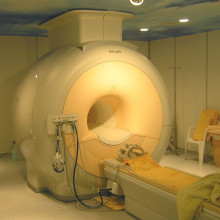
Micro MRI
By measuring how atoms oscillate in a magnetic field we have learnt a huge amount of chemistry using nuclear magnetic resonance machines, and they have been adapted to form Magnetic Resonance Imaging machines which are the MRI machines that allow doctors to study the soft parts of the body by using the way atoms oscillate to measure the magnetic field they are sitting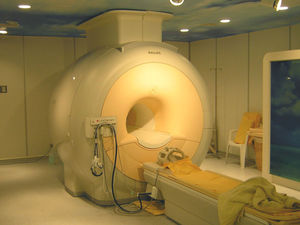 in. These are incredibly useful because the electrons around the atom and even the electrons in the neighbouring atoms can affect this. This information is very useful, but the smallest object you can distinguish is about a mm.
Shimon Kolkowitz from Harvard, and colleagues are aiming for something better. Rather than using at atom as a magnetic resonator, to measure the magnetic field, they have used a mechanical resonator - effectively a microscopic tuning fork - with a tiny magnet on the end. they mounted it on a magnetic force microscope, which scans the resonator across a surface with a sub-atomic precision.
The local magnetic field will affect the vibration of the resonator which can be measured and if it comes near an atom which is vibrating at a similar frequency the interaction gets even stronger. They have used this machine to measure magnetic interactions with a single nitrogen atom in diamond, and they have even used the mechanical oscillator to affect the state of the atom and alter how it interacts with light.
This is still a very experimental machine, but they suggest it could be developed into a way of measuring and writing the state of a single quantum mechanical system, which would be useful for quantum computing, or possibly even into an MRI which would be able to see individual atoms on the outside of a molecule, and tell you what they were, and what state they are in.
How can you blow hot and cold?
Dave - This is a really interesting one. We did this as a Kitchen Science a couple of years ago. If you blow with very pursed lips very quickly, it feels cold and then if you blow with an open mouth slowly on your hand, it feels warm. This is all to do with what's happening with the the air. If you're blowing through very narrow pursed lips, the air is going very quickly and it tends to mix in very strongly with the air around it. So, what's hitting your hand is mostly air from the room, it's moving quite quickly and quick moving air tends to feel cold because it moves heat away from your hand quicker. So mostly, what's hitting your hand is air from the room. Whereas if you breathe slowly with your mouth open, that's a much smoother jet of air, so it's a much wider jet of air, it doesn't mix in nearly as quickly. So what hits your hand is mostly air from your lungs which is warm.
You can actually get the warm effect from the fast moving air by putting your finger right up close to your mouth when you blow, it still feels quite warm and it also gets quite damp. That's because it doesn't have time to mix in with the air around it, so it's still warm and you can feel it.
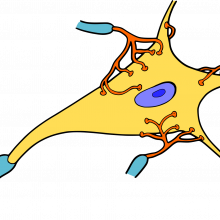
Why does calcium indicate nerve cell health?
Hannah - [In the Study I referred to earlier] they were specifically looking at calcium because calcium is such an important ion involved in signalling between nerve cells. It's important for building circuits and allowing passage of information from one nerve cell to another. And it's particularly important for developing brains and brain activity. So they were using calcium as an indicator for the primary hippocampal cell health.
How long does something need to be in contact with the floor to pick up germs?
Chris - Let's poll the panel here. Dave, would you pick up and eat something off the floor if it's been there for fewer than 5 seconds?
Dave - I'm not sure if 5 seconds is important. It rather depends on the floor. If it's a very clean floor then I would think it's safe.
Chris - Hannah, your view?
Hannah - I think I'm a bit of a grotbag. Mine is the 30-second rule.
Chris - Oh, you go for as long as 30 seconds! Well, Paul Dawson, who is a researcher at Clemson University has a very nice paper on this in the journal of Applied Microbiology. He recruited his own students to do the experiment. They tested things like Salmonella being placed on a surface to look at how long the Salmonella will remain viable after a surface is contaminated. The answer is for 4 weeks. So basically, if there's contamination on the surface, it remains viable for a long time so if you drop something on it, you could pick something up.
Then they did the experiment with food items being dropped on to a surface and removed within a certain threshold length of time, and the answer was that 99% of the bacteria that got transferred at any time all transferred instantaneously. So, there is no 5-second, 2-second, 30-second rule even for grotbags like you Hannah, as you call yourself. The answer is that instantaneous contact will transfer microorganisms and if there are pathogens there which can survive for a long time, they will end up on the food and depending upon how pathogenic they are and whether or not you then re-sterilise the food, perhaps with temperature for instance, then you could get something from it. So, if in doubt, throw it out - I think is the bottom line.

17:13 - Gaming away the symptoms of Schizophrenia
Gaming away the symptoms of Schizophrenia
Using certain computer games can improve the symptoms of schizophrenia and produce long-lasting benefits for patients, a new study has revealed this week.
Schizophrenia affects 1% of the population, or 70 million sufferers worldwide.
People with the condition develop hallucinations, hearing sounds and voices that aren't really there and seeing things that don't exist in reality. They also develop delusions - which are false ideas - to help them come to terms with these strange experiences. Together these effects can destroy a person's quality of life, and their relationships with others.
But now a team at the University of California, San Francisco led by Karuna Subramaniam have found 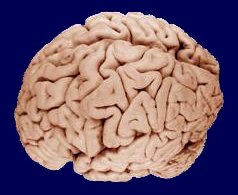 that using specially-written computer games that rely heavily on memory and also require players to intensively process auditory and visual information, including interpreting facial expressions, can produce significant improvements in the player's symptoms.
The researchers compared a group of 31 schizophrenics and 16 healthy "control" individuals over a 16 week period. After a baseline brain scan of all the individuals, the schizophrenics were split randomly into two roughly equal groups, one of which played commercial computer games and the other spent the same amount of time - 80 hours - using the brain-training software built by the researchers.
At the end of study, the participants were re-assessed using a range of behavioural and scanning-based methods.
Compared with the individuals who played the commercial computer games, those that received the brain-training treatment showed a significant improvement in their accuracy of information recall. This was mirrored by improved social functioning and an increase in activity in a brain region called the medial pre-frontal cortex, which is concerned with planning and decision making.
I spoke to study co-author Sophia Vinogradov about the implications of their findings...
These findings may have far-reaching implications for improving the quality of life for patients suffering from neuropsychiatric illness, not just from schizophrenia but also other disorders defined by cognitive deficits including autism and obsessive control disorder".
Sophia Vinogradov, who published that study this week in the journal Neuron.

How do you get distinct lines in toothpaste?
Dave - Essentially, it's by clever engineering. If you look carefully at the toothpaste, instead of making those beautiful swooshes of toothpaste which they always show on adverts, if you chop the toothpaste straight across, you'll see that the colours are only just on the surface. In the middle, it's all just normal white toothpaste. So, what they're actually doing is, in the nozzle, very close to nozzle which squirts the toothpaste out, there are other little nozzles attached to bags of colour - often several different nozzles attached to bags of colour. So when you squeeze a tube of toothpaste, it squeezes both the main toothpaste bit and those little bags. And so, as the main toothpaste comes out, the extra coloured bits get squeezed out on the outside and you end up with a white tube with little coloured bits around the outside.
Chris - If you don't believe us, cut a tube up and you'll see this marvellous bit of engineering for yourself. It was patented in America, I think, in the 1960s or the late '50s. They actually introduced that as a major selling point. I think Signal was one of the first brands to use it in this country.
Dave - Probably, I think it's based on a similar system for making icing. So you can get coloured icing outside and the boring white icing inside.

24:08 - Eating and Epigenetics - How maternal nutrition alters gene expression
Eating and Epigenetics - How maternal nutrition alters gene expression
with Professor Nabeel Affara, Cambridge University
Chris - It's well known that what you eat, drink or smoke during pregnancy can have long term consequences on the developing foetus. But now, researchers at Cambridge University have identified how a mother's diet before she becomes pregnant can lead to genetic changes that last well beyond birth. To find out more, we're joined by Professor Nabeel Affara...
Nabeel - This study is really a collaboration between us in the Department of Pathology and Professor David Dunger in the Department of Paediatrics, together with Professor Andrew Prentice at the London School of Hygiene and Tropical Medicine who heads up the MRC International Nutrition Unit. It's a study that's based in the Gambia where, in rural Gambia, there is a chronic shortage of food. Superimposed upon that, you've got a seasonal variation in the food supply because the food that they eat is grown in the wet season, that is called the hungry season, and that then is harvested in the dry season, and that's when food is plentiful.
Chris - So you've got this nice natural variation in people being relatively well fed and relatively less well fed.
Nabeel - That's right.
Chris - So, you can compare the two.
Nabeel - Exactly.
Chris - And so, what did you actually do with those people?
Nabeel - What has been observed here is that with this seasonality, there is an impact on the incidents of infectious disease and mortality amongst young adults. Those born in the wet season die much more at a much younger age and have a much higher burden of infectious disease. So we wanted to ask the question whether exposures early in pregnancy or even at what we call the peri-conceptional period, that is before a woman becomes pregnant until 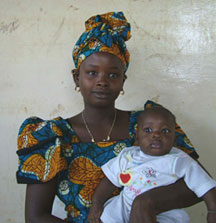 the time that pregnancy is confirmed, whether supplementation of the diet, particularly for known deficiencies in micronutrients, has an impact on this disease burden.
Chris - So there could be two effects going on, one could a genetic effect because of the woman becoming deficient in something before or around the time she gets pregnant and that could have a genetic legacy effect on the baby. The other is that the baby could just be exposed to an environment in which it's eating a relatively impoverished diet, and that makes it more prone to getting things down the line.
Nabeel - That's correct. So, what we wanted to ask is whether the offspring of women who received the supplementation compared to women who received a placebo - that is exactly the same pill but without the cocktail of minerals and micronutrients - whether when we examined the DNA of the offspring of these women, there was any difference in the epigenetic state. What's important to understand here is that we're not actually looking for changes in the DNA sequence, but actually changes, modifications to the DNA that affect the activity of genes.
Chris - This is where you get chemical markers, methyl groups, stuck onto the sides of genes that affect how well they get turned on or off. They're like a dimmer switch for genes, aren't they?
Nabeel - Exactly. And methylation, as the process is called, is adding a methyl group onto cytosine, one of the DNA bases. This can affect the activity of the gene, but it's one of many epigenetic changes that can take place that modulate the activity of genes. What appears to be the case is that once a state is set, this can be a long term state that may last for the life of the individual.
Chris - So you got these groups of women, recruited them into the study, randomized them to get either the placebo or the vitamin pills. How did you then follow up the offspring?
Nabeel - We took blood at two stages, one at birth from cord blood - therefore, that is blood from the baby at term - and extracted DNA from that. We then followed that up with peripheral blood from some of the same children at 9 months of age. We then ran an assay that measures the state of methylation of all genes across the human genome. We were be able to do this on a DNA chip called a methylation chip. Essentially, it allows you to compare the two states and ask whether there's a difference between the offspring whose mothers receive the supplementation and those whose mothers did not receive the supplementation.
Chris - And what did you find?
Nabeel - What we found was that the supplementation given over an 8-week period, right at the beginning of the pregnancy and before their pregnancy, had an impact at term and that there was a difference in a relatively small number of genes in the newborn. Then, at 9 months, we found many more changes as well. So, in a sense, there's a sort of programming going on early on and early exposure is programming the genome to have a certain pattern of activity.
 Chris - At this stage you only know that those genes changed their pattern. You don't know how that affects the expression, the amount of the genes that get made.
Nabeel - Exactly.
Chris - But, those genes presumably will give you enormous insights. There's a lot of avenues to follow now to ask, well, what do they do and how do they affect the health outcomes for these children?
Nabeel - You've hit the button there in that this work has identified candidates that might be influencing important aspects of their physiology and may give us insights into the pathology that these individuals suffer from. We need to go on and investigate precisely what those changes mean in terms of the activity of these genes.
Chris - To finish up, this is in individuals who are relatively impoverished in terms of their dietary intakes...
Nabeel - Yes.
Chris - What are the implications for people who are eating a relatively good diet? Does this nonetheless say, "Well, be careful because if you have micronutrient deficiencies, there may be implications even if you think you're eating a good diet."
Nabeel - This is highly relevant to our own society where food security is more assured, but overeating, exposures to, for example, excessive carbohydrate, we know can bring about similar epigenetic changes and may also impact on health at a later stage in life. Diabetes, for example, is a very good case in point. At the present time, we're suffering an epidemic of diabetes. So, it is important even in societies where there is an abundant food supply. The appropriate balance of nutrients is the key thing here for normal development.
31:07 - Meat in the Lab, Not-so-speedy Neutrinos, Tracking Toxins and Fearful Fish!
Meat in the Lab, Not-so-speedy Neutrinos, Tracking Toxins and Fearful Fish!
with Mark Post, Maastricht University; Alfons Weber, RAL; Rongsheng Jin, Sanford-Burnham Medical Research Institute; Suresh Jesuthasan, National University of Singapore
Man-Made Meat
The first lab grown meat is being cooked up by scientists at Maastricht University.
Presenting at the AAAS science meeting in Vancouver this week, Mark Post used stem cells from cows to grow strips of muscle tissue 2cm in length. By combining 3000 of these with strips of fat tissue also from stem cells he hopes make enough minced meet to make a quarter pound hamburger.
If proven to be feasible, the technique could alleviate the environmental burdens of current meat farming practices.
Mark - The way meat is produced today has lots of problems. Livestock emits lots of greenhouse gases. They of course use lots of land and lots of food. One of the biggest problems is that, in the coming 30 years, we will not have enough meat to feed the world population. So the idea here is that in the lab, you have much more variables under control and you can make this process more efficient and therefore, using the same resources, you can make much more meat.
---
Neutrinos may not have been Faster than Light
Recent claims of neutrinos travelling faster than the speed of light as part of the
OPERA experiment may have been due to problems with equipment.
In September neutrinos were observed to be travelling 0.0025% faster than the speed of light between the CERN facility in Geneva and Gran Sasso Laboratory, 732 km away in Italy.
The team behind the experiment have since been checking how these potentially revolutionary results could have occurred and have now identified some flaws, as Alfons Weber from the Rutherford Appleton Laboratory comments.
Alfons - They found two effects. One of them is that there was a loose optical connection that carries the GPS timing signal underground and then there was another effect where one of the clocks they were using, or frequency counters, somehow their correction was different from what they originally saw. One of these effects could make the apparent travel time of the neutrinos longer and the other one shorter and it's not clear which effect would dominate but they will affect the measurement. This newest information puts very much in doubt that they're the real effect.
---
Watching Toxins Travel
The tricks used by
botulinum neurotoxins to protect themselves as they move through the human body have been revealed by scientists at the Sanford-Burnham Medical Research Institute.
Although commonly used as a cosmetic due its ability to paralyse muscle, this poisonous toxin can cause severe illness and paralysis if inhaled or ingested. Using X-Ray crystallography , Rongsheng Jin identified the presence of a bodyguard protein which binds to and protects the toxin as it passes through the harsh environment of the gut, then breaks free allowing the toxin to enter the bloodstream.
Rongsheng - We now want to develop small molecules which can mimic the signal which trigger the disassociation of the toxin and its bodyguard. They will break up this toxin-bodyguard complex in stomach. Then we can use our own defence system in a stomach, like low pH and digestive proteins, to kill the toxin before it could even penetrate the intestine. And by doing so, we will have a new strategy to fight these toxins.
---
The Sweet Smell of Fear
And finally, it seems the smell of fear is sweet - well for fish anyway.
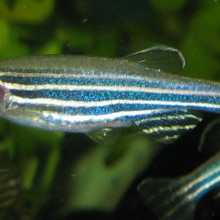
When fish such as zebrafish are injured, they're known to release chemicals signalling for th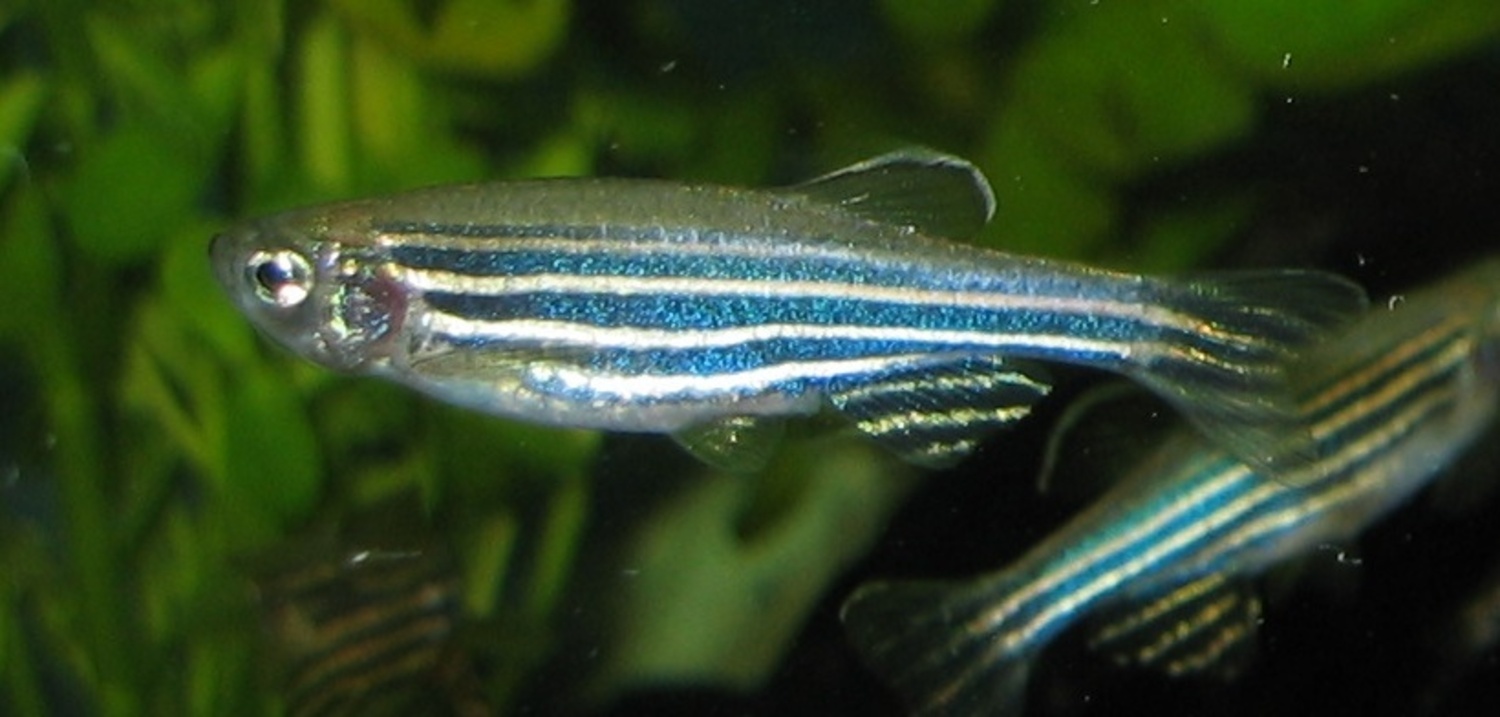 e rest of their shoal to escape in fear.
Suresh Jesuthasan and colleagues from the National University of Singapore have now found the crucial component of this signal to be the sugar, chondroitin sulphate, found in fish skin. It's thought the sugar is broken down by enzymes activated during injury releasing the sugar fragments into the surrounding environment...
Suresh - When the chondroitin sulphate fragments are released, they bind to the olfactory sensory neurons in the other fish which then triggers a signal to the olfactory bulb and this subsequently activates various fear centres within the brain. There's one very curious aspect about the alarm response which is that it's concentration dependent. So if you have a little bit of it you have a mild fear response and if we have a lot, you have a strong fear response. This is very unusual for any odorant, so this is a good way to see how you can induce different fear states.
The paper is published this week in the journal Current Biology.
35:57 - Scanning the Sea from Space
Scanning the Sea from Space
with Hugh Mortimer, RAL Space
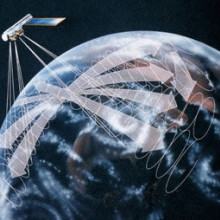
Chris - Building an instrument to fly on board a satellite is a feat of precision engineering. It's got to be robust enough to withstand the launch, sophisticated enough to produce new science and - since you can't easily call out a repairman - very reliable.
Since a huge amount of environmental science now takes place onboard satellites, Planet Earth Podcast presenter Sue Nelson visited RAL Space at the Rutherford Appleton Laboratory in Oxfordshire. There she met Earth observation scientist Hugh Mortimer to find out how they ensure their space-based equipment is accurate...
Hugh - The Rutherford Appleton Laboratory has been sending instruments into space to measure sea surface temperature since the early '80s. That gives us a continual data record of temperatures which we can then use to identify trends within the climate and we can use then look at different aspects such as climate change and how the sea is warming up.
Sue - Now you're involved in an instrument that's going to fly on board a satellite for this.
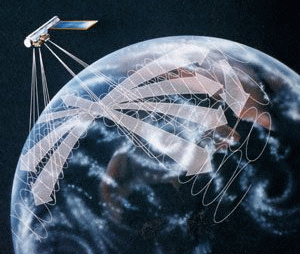 Hugh - The instrument that we are calibrating is a large European Space Agency project. Within the next few years, it will be launched and operational and it will be providing data for the scientific community both for operational purposes, so for the Met Office for providing weather forecasts, because essentially, the temperature of the ocean really drives the weather that we get in Europe.
The other thing that we're trying to do is then use this data to look at climate change and climate records. So the instruments that we're developing and building here, we're then calibrating before it gets launched into space and therefore, we know precisely how accurate that instrument is at measuring sea surface [temperature]. We've just walked into the molecular spectroscopy facility and within this facility we have the ways and means of calibrating ground based instrumentation. We use spectrometers primarily to look at the differences in how light interacts with materials around us, both solid, liquids and gases. What we're doing is then using that information to give us, essentially, data on how much gas is present or the equalities of that particular gas. Here, in this laboratory we also have something called the SISTeR instrument, which is the Scanning Infrared Sea Surface Temperature Radiometer.
Sue - And SISTeR actually goes on board a ship doesn't it, the Queen Mary II.
Hugh - We're very privileged to have this collaboration with Cunard where we're able to put our instruments on the side of these really prestigious beautiful ships, where we can measure sea surface temperature in exactly the same way that the satellites measure sea surface temperature. From this we can then take the instrument that we know very well, that we've calibrated at the labs and then cross compare the sea surface temperatures as the satellite passes overhead of the Queen Mary II.
Sue - And how accurate have they been?
Hugh - About 10 milli Kelvin which is pretty accurate.
Sue - So, where do we go to see your instrument?
Hugh - Okay, we can go through to this laboratory over here.
Sue - Through another door here.
Hugh - And now we're in the heart of the spectroscopy facility itself. So, what we're looking at are two very high resolution spectrometers, one is used for measuring solid phase materials; aerosols, dust and the other one - a much higher resolution spectrometer - is about half a tonne of equipment, that's used to measure gases. We look at pure concentrations of materials such as methane, carbon dioxide, water vapour and then we can look at how the light interacts with those materials, those gases, to actually change the light as it passes through. So, the instrument in space looks at specific wavelengths of light. The spectrometers can break down those bands even further. Essentially they can look at different wave lengths across the spectrum. The wavelengths that the radiometer will be looking at, both the radiometer in space and the radiometer on SISTeR, they will be looking at very specific wavelengths while these instruments are able to measure different components, not only temperature but also how that radiation is affected by the gases and the materials it interacts with.
Sue - And the spectrometer is sort of like - I always think of it as like the work horse for space science and astronomy...
Hugh - Yeah, that's right. They really underpin a lot of the knowledge that we have about the world around us. It allows us to see in depth where our eyes can't view, essentially. They allow us to probe the interaction between radiation and the gases that you can't see with your eyes. Because these instruments work in the infra red, they get to understand the impact of how light absorbs thermal radiation and then how it emits thermal radiation. So essentially looking at the climate change effect, the climate greenhouse gases and how that thermal radiation is actually stored and then emitted in different wave lengths.
Chris - Hugh Mortimer from RAL Space. And you can hear a longer version of that report from Sue Nelson on the Planet Earth podcast. Follow the link on our website or find it at Planet Earth Online.

Why do we have earwax?
Earwax is made in the outer canal of your ear. Your outer ear is basically the bit that you can see. It's the bit that funnels all of the pressure - the sound wave pressure - into your middle ear and your inner ear, which then converts those sound wave pressures into electrical energy which you can then use to hear.
Earwax, or cerumen, basically acts as a lubricant to help the sound waves to travel through, and it also protects against nasty bugs sitting in your ear and multiplying there and causing infections. So, perhaps counter-intuitively, it's actually quite a cleansing thing to have as long as you don't have too much of it.
If there's too much of it then it can cause a blockage and prevent the sound waves from passing through into your middle ear and therefore cause impairments or problems with your hearing.
Do we recieve less microwave radiation when using a wired headset?
Dave - It depends on the hands free system. The problem that can happen, as someone discovered in a study a couple of years back, was that some of them were actually receiving the transmission which the mobile phone was making and funnelling them up the wires into your ears.
Chris - Because the microwaves are making electrical current flow up and down the wires?
Dave - Yes, that is exactly right. Essentially you have a funnel into your ear which could actually cause similar, or if not higher, doses around your ears than you would get otherwise.
Chris - How does is turn from electric current back into a microwave in your ear then?
Dave - Any rapidly changing electrical current will produce electromagnetic radiation and therefore, it will be transmitting microwaves all the way up. It should be electronically quite easy to stop that. You just put in a filter which blocks the high frequency radiation, but not all headphones apparently had them. So, it depends is the answer.
Chris - He goes on to say, "Is a microwave oven which is shielded - it has all this protection to stop the microwaves coming out - therefore, less dangerous than a mobile phone?"
Dave - That entirely depends on whether you're in the oven or not. If you're actually in the oven... The biggest problem you get from microwaves is heating. The reason why a microwave oven could cause you damage, and how it cooks meat, is that it produces a huge amount of heat in there. The amounts of heat which should be outside the microwave oven, or that coming from a mobile phone aren't large enough to significantly change the temperature of your body.
Chris - A microwave is running at say, a kilowatt whereas your phone is running at milliwatts, so the heating effect of your phone on the tissue that it's irradiating, ie your brain, is going to be tiny in comparison.
How does EM radiation damage change with frequency?
The answer is that as the wavelength of radiation, light - EM radiation, gets shorter, in other words the frequency increases, then it packs a more energetic punch. At long wavelengths like radio waves and microwaves, we regard this radiation as non-ionising. In other words, when it impacts on something, it does not have enough energy to physically disrupt the bonds that connect atoms together. For that reason, it means that when you are hit by this radiation, it will warm up your tissue because it will make the particles vibrate more and get hotter, but it will not physically break the bonds between them, so it should not trigger, for instance, mutations in DNA that could cause cancer. As you go into shorter and shorter wavelengths of radiation, so you go beyond UV and you're into x-rays and then gamma rays, this is light with a very high frequency, very short wavelength where the light has sufficient energy to physically disrupt chemical bonds. It literally breaks the bonds between atoms. This means you can introduce changes to your DNA, you can introduce damage to material in cells which can put stress on cells, damage tissue, and it can also introduce cancer causing mutations. That's why we worry about ionising short wavelength radiation. We're less concerned about holding a mobile phone to our head because that's microwaves which are not said to be ionising.
How thick would the crust need to be in order to walk on the Sun?
Dave - The interesting thing about this question is that it doesn't particularly matter what the crust is made out of. What's really important is how much power is coming out of the Earth every second. The Earth is essentially a body sitting in a vacuum and there's an equation which relates the temperature of that body to the amount of power it can lose per square metre. The Earth is losing actually only about 0.1 watts per square metre from geothermal sources over the whole of the surface and this means that if it was just sitting in the middle of space with no Sun anywhere near it, you can work out the temperature it should be and it should be at about - 239Ã?,ºC, but it's not. That's because the Sun is shining on it and heating it up all the time.
Now you also asked how big the Sun would have to be, how thick a layer of crust it have to be over the Sun in order to get it down to the temperature we could walk on. I used the same equations. I said that you'd probably be able to walk on something at about 60Ã?,ºC. It might hurt but it's just about possible. A body at about 60Ã?,ºC can lose about 664 watts per square metre in one direction. If you work out the size the Sun would have to be to be losing heat about that rate, it's about 213 million kilometres radius.
Chris - That's way bigger in Sun is at the moment. That's outside well beyond the orbit of us!
Dave - Yes, so the Sun would have to be enormous and actually, it doesn't matter what insulation you put in there. If you leave the Sun for long enough, it would be pumping out that heat all the time and that'll get to the surface. In fact, if you insulated the Sun, it would probably increase the rate of reaction and will get even hotter and increase the power released, so it will actually probably be even hotter and need to be even bigger. So, yes rather inplausible I think!
Chris - In Star Trek, they talk about a Dyson sphere where people create a structure around a star in order to capture all of the energy coming out of the star and do various nefarious things with it. But that would mean you'd basically end up having to contain something that would be 200 million kilometres across then if you allowed it to expand? You'd need something huge!
Dave - Yes. This was, I think invented by Freeman Dyson who was looking at if you took the limit of technology and you were staying in one solar system, what would you do to it? How could you extract all the energy out of the star? If you want to collect all that heat, you then have to get rid of it at a sensible temperature so you would need something out at about the orbit of Mars, radiating outwards. It would be absolutely immense, and an incredible technology needed to do it.
Chris - I wonder how much material you would need to make a sphere as big as that in the first place.
Dave - Immense amounts and just the physical strength of a hollow sphere that size is, I think completely implausible.

What can accelerate your body’s metabolism?
Well the best thing is thyroxin, the hormone that comes from your thyroid gland in your neck. This binds to your DNA in different cells in the body and it turns on various genes to up your metabolic rate. If you have too little thyroxin, you become hypothyroid and you get very cold, you tend to put on lots of weight, you can get your muscles feeling very weak, it's hard to think straight, and have no energy. Pretty much the reverse happens if you have too much thyroxin, hyperthyroidism.
What causes build up of earwax?
Earwax production and characteristics vary genetically. People who come from East Asia tend to have very dry earwax whereas people who come from the west tend to have genes that cause them to have wetter earwax. You tend to increase the production of earwax if it's got a job to do. So if you're in a very dusty, dirty environment or if you have infections locally, you make more earwax in order to soak up the dirt and prevent the bugs from creating more of an ingress. The downside is that the cerumen, the thick wax, can build up and block your ear canal. You sometimes have to soften it with something like olive oil so you can get it out easily.
Will having my mobile phone in my trouser pocket affect my sperm count?
Chris - [Researchers have done] studies on laptops. They did a study looking at men's sperm counts and trouser temperatures and found that if you put your laptop on your lap, as nature intended you to use it, or at least the manufacturers intended you to use it, the elevation in temperature in the trouser area is of the order of several degrees. This was sufficient to cause a decrement in sperm count because sperm gets made most optimally at a lower temperature, maybe 1 degree lower than other areas.
So, mobile phones do cause a heating effect because of the microwaves don't they?
Dave - But probably much less than a laptop. Probably least a 10th as much, so I'd thought you'd have difficulty heating that particular region from your side pocket unless you have a very strange pocket.
Chris - And also, the intensity must be lower. The actual heating intensity of the microwaves coming out probably wouldn't be enough to put the temperature up.
Dave - The microwaves, even when it's running and you're actually talking on the phone, are only a couple of watts whereas a laptop, just the heat which is coming straight out could be up to 100 watts which is far, far larger.
![Flock of [[sheep]]. These particular sheep belong to a research flock at the US Sheep Experiment Station near [[Dubois, Idaho|Dubois]], [[Idaho]], [[United States|USA]] Image taken from http://www.ars.usda.gov/is/graphics/photos/ (Image Number...](https://www.thenakedscientists.com/sites/default/files/styles/medium/public/media/Flock_of_sheep.jpg?itok=WFw1eqL6 "Sheep")
55:22 - Can modern genetic techniques make new species?
Can modern genetic techniques make new species?
We put this to Professor Martin Bobrow from Cambridge University and Veronica van Heyningen, Professor of Genetics at Edinburgh University...
Martin - I think it's mind blowing that one can take a gene which performs a certain function in yeast and put it into a human cell and it still works. However, does that mean that we can make new species? I think the answer to that probably at the moment is not by quite a long shot.
Veronica - Combining eggs and sperm from different species very rarely works except for closely related species like horse and donkey which can mate together and form a novel hybrid animal known as a mule. Mules can develop to birth and survive to adulthood, but they are not fertile. The mixed horse and donkey chromosomes can't produce viable eggs and sperm.
A sheep cannot be crossed to the kangaroo because even if we had sperm and eggs available, we would not succeed in making hybrid animals by in vitro fertilisation or IVF because development requires two sets of similar parental genes. The genes from sheep cannot work with genes from a kangaroo to drive development producing hybrid "sheegaroos" and "kangareeps".
Hannah - Veronica and Martin discussed other ways that we can combine and tweak genes, including transferring one or two genes from humans into another species, and a line of goats have recently been created in this way to help patients who can't produce their own anti-coagulant. There are also chimeras where stem cells from different species are mixed. For example, there's a mouse with human liver cells and we hope that we can use this mouse to help evaluate the safety of drugs as the liver plays such an important role in drug metabolism. But Martin emphasises...
Martin - There are lots of examples of that sort, but all of those mice look like mice and all of those goats look like goats, and none of them produce what you'd need for it to be a new species. That is, something which has a distinctive appearance and which can continue breeding in a way that you have created something that propagates itself. Even the natural species mixtures, such as mules, there are zebra-horse crosses, and lion-tiger crosses, but they're sterile. They do look pretty intermediate, but they don't breed. So we haven't gotten to the point of creating new species yet.









Comments
Add a comment