Later this month, the 2012 Olympics kicks off in London. With hundreds of thousands of people expected from overseas, is this the perfect trigger for a pandemic? This week we're looking at the public health implications of events like London 2012. We discover why an understanding of crowd psychology can avert disasters, and how mathematical models can predict and prevent jams in human traffic. Plus, a new technique to communicate with "locked in" patients, the evidence for warm blooded dinosaurs, and does ice really help to treat an injury?
In this episode
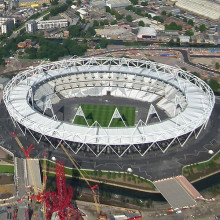
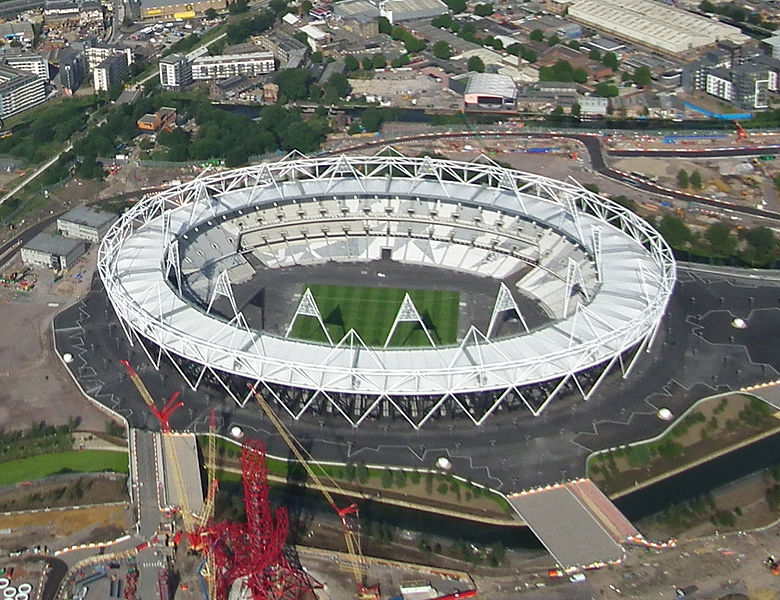
01:29 - Protecting Health at the Olympics
Protecting Health at the Olympics
with Dr Chris Williams, Health Protection Agency
Chris - One of the things we have to think about when we gather a large number of people into a small space is the risk of spreading diseases. We've seen in the past how outbreaks of diarrheal illnesses like norovirus can spread rapidly through hospitals, care homes, and even cruise ships. The UK's Health Protection Agency, HPA, is charged with making sure that we're prepared for such an eventuality and to tell us more is Consultant in Communicable Disease Control and also the Olympics Lead for the HPA in the East of England, and that's Dr. Chris Williams. Chris, hello.
Chris W. - Good evening.
Chris - Chris, first of all, are we on the sort of verge of a pandemic with the Olympics or is this not going to happen?
Chris W. - There are a lot of people coming and we've looked at some statistics on this: 204 countries are involved, around a million overnight visitors and possibly another 5.5 million - what they call 'day trippers' coming to London and increased numbers of people in the hotel rooms. But we also must remember that this isn't the first ever international sporting event and at each event that's happened in the past, infectious disease specialists and similar organisations through the Health Protection Agency have done surveillance, watched out for threats and managed them. So really, we're not expecting the next pandemic to happen here. In fact, the Health Protection Agency looked at this in 2011 and found no significant risk of that happening from this kind of event.
Chris - Oh, well you can go home now! Thanks for that reassurance. But the thing I'm getting at is, if we look back in history, we know that mass movements of people do bring with them various things and people coming back from World War 1 is said to have, at least, played a part in the distribution of Spanish flu. So if we do have lots of people moving and that's a lot of people movement - the numbers you've cited - then there must be a risk.
 Chris W. - It's fair to cite incidents like the first World War, there were obviously mass movements of people all around the world, but then you have to look that their living circumstances and the durations of the time that they were moving is a lot different to the Olympics. With something like the Olympics, you're looking at essentially a lot of young, relatively prosperous, given the travel costs etc., people coming to an international city that's used to having vast amounts of visitors every year. And looking in the media, it's not clear how many extra visitors there will actually be because London is used to getting lots of people. Even commuting every morning is a large movement in and out of people.
Chris - London Transport says it's 3 million a day at least, isn't it?
Chris W. - It's comparable in terms of the numbers moving - obviously the tubes and transport system will be more full because of the Olympics, but you know, we don't worry about a pandemic happening in Hertfordshire every morning because of the commuting. We do have to prepare. We do have to look out to make sure that nothing is happening, and the Health Protection Agency are doing a lot of what we usually do, which is looking out for, preparing for and responding to cases or outbreaks of disease. But also, some additional surveillance, counting not just cases of known infection, but doing some things called 'syndromic surveillance' where if you phone up NHS Direct and say, "I've got vomiting" or "my child has got a cough" or whatever, this gets counted. We'll be monitoring those figures which normally come out weekly, actually, coming out daily from these sites in the country. Also, they've included GP out-of-hour services and some action and emergency departments. So, we're doing what we do every day, but we just extended it a bit further.
Chris - That sort of thing means that you should be able to spot if there is an emerging outbreak of something early so you would go in and nip it in the bud. What will you do if someone says, "Right, we seem to be picking up an outbreak of something - let's say, measles or something - in this area." What will you do? How do you manage that?
Chris W. - You'd start out by trying to work out if there really was a problem. Sometimes there's an artefact in the figures or there might be a lot of laboratory reports coming at one time. So you make sure that you've got a problem and then you try and see how big the problem is. So, are there any other cases associated? You might need to communicate with the people to find out further cases often by going to the venue, asking other people. And then you start to bring together information about all the cases and describe it. Are these old people, young people, what have they been doing, are there any characteristics that bring them together? This is called descriptive epidemiology. Out of that, you can generate a hypothesis as to what has happened and how we can control and prevent it. Obviously, you might get a good idea on the first day; if it's diarrhoea and vomiting, we tell everyone to wash their hands and not prepare food, etc. So, we have control measures that go all the way through, but you can then do further statistical investigations to work out sources of outbreaks and incidents. I was looking out on the way up at quite an interesting one in Germany where there was a triathlon competition. Out of the athletes, they had one case of quite a rare disease called leptospirosis which you may have heard of.
Chris - Weil's disease, isn't it?
Chris W. - Yes, Weil's disease which occasionally, people talk about contracting it from the Cam etc. Obviously in the triathlon, people are in non-swimming pool water. So, having found one case, they wrote to all of the 200 or so athletes to see if there were any other cases. Actually, there were around 600 and they managed to get about 140 blood specimens from them. Out of that, they only found five cases in total. So again, quite a rare illness, but they found there was a statistical association with having cuts or abrasions on the skin, and that's how the bug gets in through the dirty water. So, that was a good example of a rare disease picked up through surveillance and then investigated.
Chris - What about something much more in nefarious? There's also a concern that Al Qaeda could for example seed an event with an infectious agent or send the infectious equivalent of a suicide bomber to an event spread something? Have you got plans for that?
Chris W. - Obviously, the everyday surveillance that we do is continually looking at not just for the usual things, but for rare items. Some of the laboratories that are involved are doing more rapid testing of infectious agents to turn around things more quickly. And we're also doing surveillance for undiagnosed severe infections. So if someone did come up with something particularly unusual, and they were people in intensive care units trying to work out what was wrong with them, there's a surveillance system for picking up those sorts of rare events and then investigating them.
Chris - Some people are saying that if you get an outbreak, by the time you discover it's an outbreak, it's too late because the thing is already spreading.
Chris W. - Obviously, it depends what sort of infection you're talking about and the circumstances. We do, in fact, usually learn about outbreaks after there've been a few cases. The classic one we have is at a wedding where the meal has been served to a hundred people and one of the items sometimes, the chicken liver parfait is one of the current bugbears, has become contaminated with something or has been improperly prepared. And so, what you get is, a number of people have been ill. But the wedding has happened and there's not much you can do to take that away from them, but you can try to prevent the caterer using the same techniques in other weddings, and you can also prevent people passing it onto each other having become ill. So, that's a fairly every day - well not quite every day, but every month perhaps.
Chris - Been there, done that, got the t-shirt, or t-shirt without the 'r' actually! It wasn't liver parfait. It was vol au vents in my case, I think. What do you think, just to finish off, about the claim earlier this year, it was one of the medical advisers to the Olympic team and he was saying, "Don't shake hands with these receiving lines of other athletes because this will transmit diseases." Sounds like a load of tosh.
Chris W. - The Health Protection Agency would emphasise good hygiene and all the sensible things that you should do and particularly, if you've got some kind of diarrhoeal illness then washing your hands before shaking hands with anyone, or if you've got a cold or cough is always a good idea. But I don't think that shaking hands in general should be prohibited and would seem to be against the Olympic spirit.
Chris - It would, and also the fact that yes, you can avoid shaking hands, but you can't avoid touching a door handle and all these other things that we have to do to go about our daily lives. And if other people are insalubrious, have something and have touched all those same surfaces, they're going to pick it up.
Chris W. - That does happen. You mentioned earlier norovirus in care homes and cruise ships; that happens all over the place unfortunately because these things are often very difficult to clean off. But you have to remember that most of our experience is that most people go through their daily lives without coming down with these infections. And that most mass events nothing largely of note has happened. Touch wood, but there's been no major instance at international sporting events, and we just hope that that's the health and sporting aspects that could dominate rather than any infections.
Chris - Very assuring words. Thank you very much, Chris Williams from the Health Protection Agency.
09:51 - Crowd Psychology in an Emergency
Crowd Psychology in an Emergency
with Dr. Clifford Stott, Crowd and Conflict Management
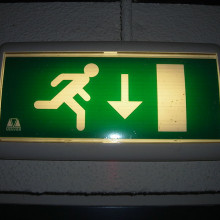
Louise - Every large building or venue has an evacuation procedure to ensure that everyone stays safe. Most offices and schools provide lots of information and will have regular fire drills to make sure everyone knows what to do in the event of an emergency. But this isn't the case in many public places and obviously, simply isn't an option in preparation for the Olympics. Now, with that in mind, we need other means of understanding crowd behaviour and guiding people to safety. To find out more, we're joined by psychologist, Dr. Clifford Stott who currently works for Crowd and Conflict Management. Dr. Stott, how did you end up doing that?
Clifford - Studying crowds? I came to it from a personal interest really. I spent a lot of times on demonstrations when I was younger and was fascinated by crowd dynamics. Coming across the work of a guy called Steve Reicher, I started to read that when I was studying for a psychology degree, I found that stuff fascinating and kind of got sucked into the world of crowd psychology. Quite an obscure world, unusual, but very, very interesting, very, very stimulating ideas, and a great field to work in.
Louise - When we're talking about studying about crowd psychology and learning about how crowds interact and how they work, what can we actually do to learn about that?
 Clifford - First and foremost, you have to make sure that you look at them in the right way theoretically. The trouble with our understanding a crowd psychology is that we're polluted, if you like, by outdated ideas. The thing about crowd psychology is that crowd psychology is a bit political. It has a political implications; the way that we understand the riots in the summer for example, has profound political implications in terms of governmental responsibility for things that sparked the riots, policing, all those kinds of things. So, we have this way of looking at the crowd that treats the crowd as if it's a bit irrational, as if it's a thing of primitive psychology. And where we study crowds, what we do is to treat them meaningfully and in order to study them, we go to crowd events, we take part in crowd events, we interview people who are in crowd events, and use that kind of data to build our understanding of how crowds work. So, we look at how they behave and then we relate what we understand about the psychology, which we're getting through analysing what people say, to make a model of how psychological processes can help us to account for what crowds do, why they do what they do, and more importantly, when they're going to do things. It's that predictive dimension that's the most important thing when we come to trying to understand crowds.
Louise - Obviously, there are different sorts of crowds. You mentioned the riots, but the crowds at the Olympics, I'm assuming those are going to be somewhat different. Is there anything special about them?
Clifford - Well, I think the first thing to do is to recognise that we need to draw a distinction between what we call physical aggregates of people and psychological crowds. Just because people are together in the same physical location like they will be in the Olympic village doesn't mean to say that they're a psychological crowd. They're just a physical aggregate. Really, what we do is to try and understand that psychological component to crowd behaviour. And when we look at it, we're looking at collective action. Not lots of individuals behaving individually in terms of their own individuality in the same place at the same time, but that moment within a physical crowd where everybody starts to do the same thing - where a goal goes in and there's a cheer or a gold medallist scored and there's a cheer. That kind of collective action is what we're trying to actually explain in crowds. Not just simply the idea that when people get together in crowds, they become a single psychological crowd because that's quite simply not the case.
Louise - Sure, so obviously, with the Olympics, we're going to be looking more at small groups of people who will be going along with say, a group of their friends or their family, and it's when something big happens that they all join together and think of themselves as part of the much larger group.
Clifford - Yes, absolutely. I think the best example is to think of it in terms of national identity. People will go in to the Olympic village and a large number of them is going to be British in terms of their identity. When they come to the village, they're not going to see themselves so much in terms of that Britishness. But certainly, when we score some of those gold medal victories and people start to cheer and to see themselves and to celebrate their British identity, they become part of a psychological crowd that's defined in terms of that single social identity. It's that transition from the individual to the social identity that underpins the basis for why people can behave collectively when they do.
Louise - How can that help us if there's an emergency? We know from the July 7/7 bombings a few years ago that people will group together and help each other out in emergency situation. Is there a way we can help that to happen?
Clifford - When we are thinking about mass emergencies, I think that when we look at Olympic crowds, we don't really have a thought in our minds about a disorderly crowd, a kind of conflictual crowd. We think much more in terms of safety and security of large numbers of people in the Olympics venue. We've already had a discussion today on this programme about some of the potential threats there, this notion of some kind of biological or chemical contaminant, some kind of terrorist incident. Clearly, a very unpleasant set of ideas to be discussing, but if something like that were to happen, there are some very profound things that we need to understand about what happens to people psychologically in those kinds of physical aggregates.
And usually, what we do is to look at that psychology in terms of our common sense assumptions. And of course, when one thinks about common sense assumptions of crowds and mass emergency, the first thing that comes to mind is the notion of panic. We think crowds panic. And when we think about why people get injured or indeed unfortunately die in these kinds of mass emergencies, say for example a nightclub fire or some kind of other stadium disaster, we tend to think that they die because they all rush for the exit at the same time, that somehow, the crowd psychology takes us over. We all become selfish and emotional, and irrational, and while we might be able to normally orderly get through this door, because we all rush to it at the same time in this mad, mass panic, we all can't get through it and therefore, that's what kills us, as if the crowd psychology is what kills us.
Actually, the evidence doesn't bare that out. What we see is a very, very different phenomena. That people in the context of mass emergencies are very orderly. They're very rational. They're very helpful and what we see there is a situation of trying to promote collective psychology rather than undermine it. We shouldn't see the crowd as a problem in mass emergencies. We see actually the crowd as a solution.
Louise - So really, we just need to let the crowd do what it's going to do and not panic, and just let people know if there's an emergency and we need to get them out.
Clifford - Well, I think this is part of what we need to understand about how to handle mass evacuations - because we need to give people practical information. We need to try and promote a collective psychology in a physical aggregate. They might not actually have a crowd psychology and it's that absence of crowd psychology that's part of the problem. Where we have a sense of collective identity, we tend to see ourselves as similar to those people around us. And we tend to help more, we tend to cooperate, we tend to be more orderly, and more ordered about how we go about an evacuation. If people trip over we're more likely to help them up, and help the flow of the traffic through a particular location.
So it's all these things that flow from a collective identity, but perhaps one of the most important is what we might call validation. If you think about yourself in a situation where you're at work and you hear a fire alarm go off, what do you do? You tend to think, "Okay, not again. Another fire drill." And how do you know that that's a fire drill and not an actual emergency? And what we know is that one of the biggest predictors of whether people survive mass emergencies or not is recognising the problem in the first place. And really, when we're looking in a situation where an alarm goes off, what we tend to do is to look to other people, look to their responses, and once we get to a point where everybody is beginning to recognise, "Hang on a minute. Maybe this is a problem. Perhaps we got to get out of here." That's when we go. So, promoting that sense of collective cooperation, that sense of identity creates an environment where we're much more capable of talking to each other, validating the situation, and actually getting to grips with what the nature of the problem is, in order that we can start to respond to it. So that process of collective psychology is incredibly helpful and indeed is the root to what we call in this environment, 'resilience'.
Louise - Fabulous! And that's exactly what we need. Thank you very much, Clifford. That's Crowd and Conflict Management's Dr. Clifford Stott.
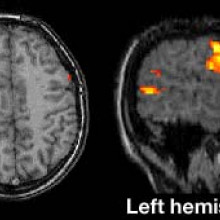
18:20 - Silent Speech: Communicating with "Locked In" Patients
Silent Speech: Communicating with "Locked In" Patients
How can you communicate if you can't move a muscle? This is the situation for people with 'locked-in syndrome' - but a new study may have a solution.
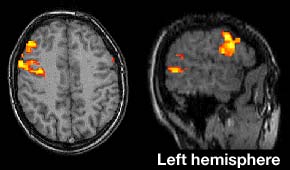 For some years, scientists in the field have been working on 'brain-computer interfaces', trying to translate people's thoughts into speech. In the past, this has relied on electroencephalography, using electrodes on the scalp to detect electrical activity in the brain, but a group from the Netherlands has now run a proof-of-concept study using functional magnetic resonance imaging (fMRI).
In their study, each letter of the alphabet was assigned a 'mental task' - motor imagery, mental calculation, or inner speech. By varying both the delay before starting the task, and the length of time for which they completed the mental task, the volunteers could encode 26 letters and a space.
By looking at the active areas of the brain during this time, the computer could choose the three most likely letters the participant was trying to communicate - and in this small trial, it chose the correct letter first 82% of the time. This allowed the experimenters to have a two-way conversation with the volunteers in real-time, within a single scanning session - something that would not be possible with previous technologies.
Even more importantly, it required less than fifteen minutes' training to get the program working for each new volunteer, and can be adapted for those who cannot voluntarily move their eyes - making it suitable for people suffering complete paralysis. This group has been unable to use EEG-based communication systems in the past.
If this can be shown to be successful in patients - rather than healthy volunteers - this could allow the vast majority of locked-in patients the opportunity to communicate with healthcare professionals and their loved ones. It could also make distinguishing between locked-in syndrome and a person in a vegetative state much easier: a single coherent answer using this system would confirm the patient is conscious and aware.
22:08 - Why one heart attack begets another
Why one heart attack begets another
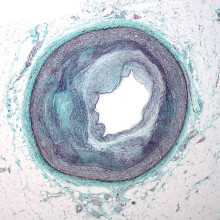
Heart attacks and strokes are much more common in people who have already suffered a previous vascular event. Now scientists know why: inflammation caused by the first heart attack accelerates 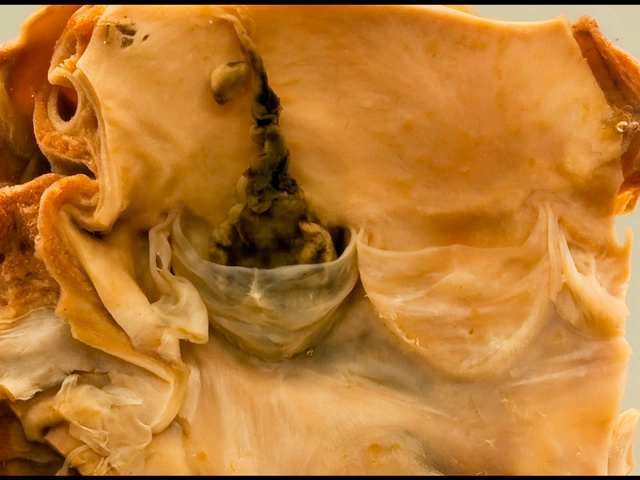 the underlying arterial disease process, significantly increasing the risk of a subsequent episode.
Previous studies have shown that nearly one in five patients suffer repeat myocardial infarcts (heart attacks) within one year of the first being diagnosed. Doctors had thought that this merely reflected progression of the already-established disease process.
But a new study, published this week in Nature by Harvard scientist Ralph Weissleder and his colleagues, shows that heart attacks and strokes trigger the production from the bone marrow of inflammatory cells called monocytes.
These, the team found, penetrate other patches of arterial disease where they secrete enzymes that break down connective tissue and weaken the vessel wall, making the diseased region more prone to rupture and blockage, provoking a heart attack or stroke.
The researchers made the discovery by working with a strain of mice that lack a gene called ApoE, making them prone to arterial disease. Inducing heart attacks in these animals, the team found, led over the following 3 weeks to a surge in monocyte levels in the walls of the animals' arteries.
These cells are released initially in an immature form from the bone marrow in response to stress signals from the sympathetic nervous system. After maturing in the spleen, they then move through the blood to the blood vessel walls.
Encouragingly, certain beta-blocker drugs can prevent the process by stopping the signals from the sympathetic nerves from triggering the release of the stem cells from the bone marrow in the first place.
According to the researchers, "Our study suggests that patients with an ischaemic complication of atherosclerosis [arterial disease] experience a particularly vulnerable disease phase, and that interventions aimed at progenitors of innate immune cells could affect long-term outcomes."
24:20 - Tracking Olympic Swimmers Under Water
Tracking Olympic Swimmers Under Water
with Prof Paul Conway and Mike Caine, Loughborough University
Chris - It's not only the athletes taking part in London 2012 who are feeling under pressure at the moment. What about their coaches? For a sport like swimming, the process of coaching is very tricky because you have to assess an athlete's technique with the added complication of rather a lot of water getting in the way. But team GB swimmers have been getting a bit of extra help lately with some cutting edge technology as Jane Reck explains...
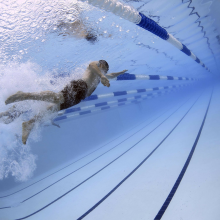
Jane - Tumble turns, dives, glides, and stroke technique. Every aspect of movement is crucial for elite swimmers. For their coaches, training athletes for a sport where most of the activity takes place in water is obviously a challenge. However, a pioneer in Wireless Tracking System developed by UK researchers has been helping some of team GB's swimmers prepare for London 2012. It brings existing sensing and motion tracking technologies together into one system. Crucially, the researchers have also developed revolutionary technology that enables data to be transmitted wirelessly through water. The research has been taking place at Loughborough University led by Paul Conway, Professor of Manufacturing Processes...
 Paul - This came about really from a challenge from British Swimming who had tried a number of times in the past to understand a bit more about how their swimmers performed and how they might measure how they perform. Because a swimming pool is quite a challenging environment - there's lots of water. The human body is mostly water so it makes tracking things wirelessly very, very difficult. And doing things like measuring in real time, things like speed, number of strokes they're taking, how they move in the water and how they turn, how they start is very difficult because there's a lot of water. And that's a noisy environment in terms of the signal noise and the amount of interference you have.
Jane - Professor Mike Caine is Director of Loughborough's world leading sports technology institute. Along with Paul Conway, he explained more about the new system.
Mike - It's a small box of electronics that's worn on the small of the back, it sends wireless signals that are picked up by a laptop receiver on the poolside, and that laptop then displays the various measures that are of interest to the athlete and the coach.
Paul - And then on each end of the pool, we have a pressure mat essentially stuck to the wall, It's a very thin pressure mat which is a large area when you touch it, you can measure pressure, essentially the force. Also, we've got some underwater high speed video cameras and also on the swimmer we have some LED markers which are quite unique - these are waterproof markers that they wear on their hip.
Mike - The idea was that we would utilise technology. Things like accelerometers, gyroscopes, motion tracking techniques that we'd either directly developed ourselves, within the research group, or we were taking those technologies as they were emerging elsewhere and integrating them into a package that would support the swimmers and their coaches. Effectively, an accelerometer allows you to derive speed, velocity. Of course, you can also derive acceleration, so the rate of change in velocity, and that can be just as interesting. A gyroscope is important because the swimmer turns at the end of each length and so, you're able to characterise the position through the tumble turn, and you can then analyse the technique. We start to look at the biomechanics or the kinematics, the human motion relative to their position in 3D space. And it's important to understand the orientation of the athlete so that you can make some meaningful analysis from those data.
Jane - Innovative projects underway at the institute's research labs range from the development of new materials for sports footwear to tailor-made handle grips for rackets. Paul and Mike say a significant aspect of this research has been developing a way of transmitting wireless signals underwater.
Paul - Wireless technologies are part of our everyday life now, but you'll appreciate that the vast majority of transmissions are through air. There are very, very few everyday applications that require transmission through water and so it's not surprising that the transmission of wireless information through water has received less attention. And that really meant that all of the everyday commercially available protocols just didn't work in that environment.
Mike - We've optimised frequencies of our transmission, the antenna design on the swimmer and also on the base station on beside of the pool. The arrangement of the equipment on the swimmer and beside the pool, also the software, putting intelligence in it so it knows what's happening and can interpret if a signal drops out, what to do and how you can account for that. Building redundancy as well, so, we can still get the data if we lose it for a few seconds. Putting that together with other things around the pool such as video, force sensors in starting blocks, pressure pads at each end of the pool for measuring the turn; and putting them altogether into one integrated system is the unique thing. You can actually watch it on high-speed video and also see what's happening with the inertial sensors showing in real time so that each frame of the video is synchronised with what's happening on all the other sensors. And that's probably the key step, bring it altogether, integrating the various sensor modes.
Paul - So, we were having to genuinely invent new ways to transmit data that would be successful whilst in the pool environment. I can't describe exactly how we have done that because it is subject to a patent - it is an inventive step and it is one that has commercial value. If you think about water as a medium and air as a medium, they're so different that you need a radically different approach to the same problem.
Jane - The new system enables coaches to give much quicker feedback to the swimmers.
Paul - They will see simultaneously on the computer screen: the video as well as the data that's coming off the node, synchronised. They'll see also from the turn, they'll see the data we're getting from the pressure mat, presented in a way that it's understandable. A nice colour map of when the feet touch the wall, how hard they touch the wall, how long they're on the wall, some will bend their legs a bit longer so they're pushing longer on the wall. They'll see also some of the measurements we get from the node they wear on their back. We can pick up stroke rate, the velocity, how quickly they turn, how quickly they tumble, and they get that almost real time.
Jane - Beyond swimming at London 2012, the system is already being looked at by industry to track components and factories for instance where there are wet and noisy environments. The project is supported by the Engineering and Physical Sciences Research Council, other partners are British Swimming, UK Sport, Imperial College London, and Queen Mary University of London.
Chris - Well, we'll find out within a month or so whether it's had any effect, but what a wonderful breakthrough. Jane Reck there, reporting on a new wireless underwater tracking system that's being used in the training session for team GB's swimmers.

31:16 - Dinosaurs were warm-blooded
Dinosaurs were warm-blooded
Make no bones about it, dinosaurs were warm-blooded, new research has revealed.
Palaeontologists have claimed for many years that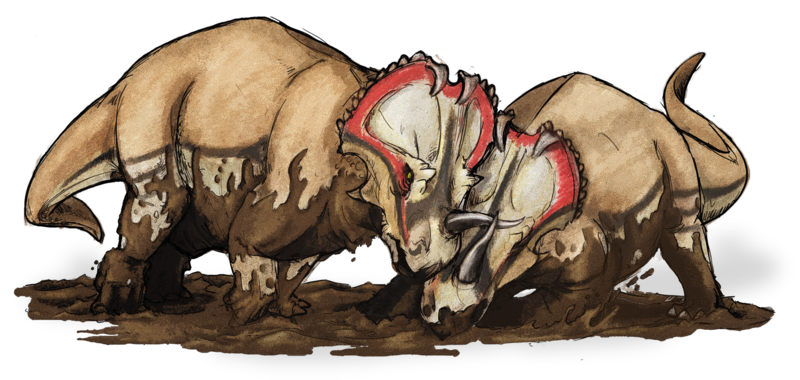 dinosaurs, like their modern-day reptile decendents, were cold-blooded. Part of their argument stems from features called 'lines of arrested growth', or LAGs, which are found in both dinosaur fossils and modern reptiles and, like tree-rings, chart the rates of bone growth in the animal.
In modern reptiles and amphibians, these LAGs correspond to periods of low temperature, such as winter, when metabolic rate falls and growth slows. Conversely, it had been widely accepted that, because they are warm-blooded and therefore maintain a high metabolic rate all year round, mammals don't develop LAGs.
But, more recently, the LAGs described in dinosaur bones appear to be subtley different to the modern reptilian form, and examples of LAG-like structures have also been reported for some mammals.
"This prompted opposing hypotheses and conjectures," says Universitat Autonoma de Barcelona scientist Meike Kohler and her colleagues in a paper in Nature this week. "However, much of the debate stems from a lack of detailed, methodical study on extant endotherms [modern-day warm-blooded animals] on which to base inferences regarding extinct vertebrates."
So Kohler and her colleagues have assembled data including bone analyses as well as climate records and metabolic activity logs from over 100 ruminant animals ranging from 3-kilogram-antelopes to one-tonne-elands that are native to 36 African and European locations. Crucially, the animals inhabit a broad range of latitudes enabling the effects of climate extremes on the animals' bones to be studied.
"LAGs are universally present in all climatic regimes, from high and cold to low and hot latitudes," the team report. "They form annually in the fast-growing highly-vascularised fibrolamellar bone tissue of ruminants of all body sizes resulting in a bone tissue pattern typically found in all dinosaurs..."
Then how do we account for them? The answer lies in looking at how the animals' physiological responses to changes in climate. At times of stress, when it is very dry and or cold, the animals compensate by altering their metabolic rates, including lowering body temperature, to conserve energy. "Growth arrest," the resereachers suggest, "forms part of this strategy."
The fact that modern-day ruminants show the same cyclical patterns of bone growth as dinosaurs once did suggests that this is part of an ancient process that still operates today. But, even more intriguing, it also proves that, just because dinosaurs' bones contain LAGs, they weren't necessarily cold blooded.
This resonates with previous studies that have modelled metabolic rate and dinosaur locomotion to argue that T. rex et al. weren't all just cold-blooded killers. Killers, yes. Cold-blooded, probably not.
34:20 - Daddy's Damaged DNA and Tornadoes Heating up the Sun
Daddy's Damaged DNA and Tornadoes Heating up the Sun
with Diane Anderson, University of Bradford; Sven Wedemeyer-Bohm, University of Oslo; Amanda Henry, Max Planck Institute for Evolutionary Anthropology
Smoking Away Mutations
Fathers who smoke at the time of their baby's conception risk passing on damaged DNA to their 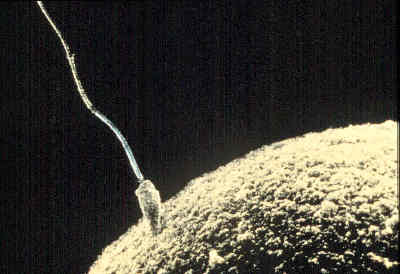 children.
Using biomarkers to measure breaks in DNA in paternal blood and semen at the time of conception as well as maternal and umbilical cord blood at birth, and accounting for environmental factors that could damage DNA such as smoking,
Diane Anderson from the University of Bradfordfound a correlation between the DNA damaged in the sperm of smokers and their newborn children.
The inheritance of damaged DNA could cause the development of childhood diseases such as cancer.
---
Magnetically heating the Sun's Atmosphere
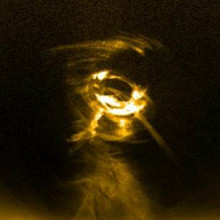
Magnetic tornadoes on the surface of the Sun transports heat into its atmosphere, helping create the significantly hotter temperatures found in this outer atmosphere, known as the corona.
Swirling magnetic structures, similar to super-tornadoes were detected stretching from the Sun's surface upto 2000km into the corona by Sven Wedemeyer-Bohm from the University of Oslo. Using 3D numerical models his team showed in the journal
Naturethat these swirls convect heat away from the surface and transfer the energy needed to reach these high temperatures, the causes of which were unknown until now.
---
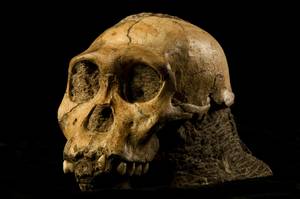 Eating like Sediba
And finally, the early hominin species Australopithecus sediba, which lived 2 million years ago, lived on a diet of leaves, fruit and bark, according to work published in
Nature.
By analysing carbon isotopes in tooth enamel, patterns of dental wear and scratches and plant remains in the plaque of teeth from 2 skeletons of these early humans, Amanda Henry from the Max Planck Institute for Evolutionary Anthropology in Germany identified their diet to consist predominantly of bark and woody tissues, varying greatly from other African hominins of that time.

37:46 - Power to the Pollinators - Planet Earth Online
Power to the Pollinators - Planet Earth Online
with Prof. Simon Potts & Duncan Costan, University of Reading
Chris - On a farm in Berkshire, not far from Reading, you'll find a rather unusual looking campsite. There are around 40 structures, about 4 metres square, but with white gauze instead of canvas. And inside these 'pollinator flight cages' are crop plants and buzzing bees.
Planet Earth podcast presenter Sue Nelson went to the experimental farm to meet Simon Potts - Professor of Biodiversity and Ecosystem Services at the University of Reading and also deputy director of the Centre for Food Security...
Simon - Well, what we've got here is a set of experimental cages where we can actually manipulate the types of pollinators we have inside them and then we can actually expose different plants, they can be wild flowers or they can be crops, and we can actually test what the impact of the different pollinators are on the pollination success.
Sue - What types of pollinators, is it strictly bees?
Simon - Well there's lot of different insects that pollinate but probably bees are THE most important, certainly in Europe. What we have here - we have honey bees which most people will know about but we have also managed bumble bees, and we also have some solitary bees. One particular sort is called the mason bees, because they nest in small tubes, and we also have some hoverflies as well.
Sue - Duncan Costan is with us, he's a research technician at the university. Could you explain the sort of crops that we've got? I think I can vaguely recognise the flower of one of those, possibly broad bean?
Duncan - Well, here it's a field bean.
Sue - That's why it's so much taller than a broad bean!
 Duncan - Yeah, and they're grown quite often for things like cattle feed but here we're using them because we can use them as quite a nice indicator with our various different pollinator species. So, we've got them here in individual plant pots so we can move individual plants to expose them to our various pollinator species and then we can keep them in another cage, keep them excluded from all pollinators so we know the only thing that has pollinated that is the species that we've exposed it to.
Sue - So, let's just wander across here, because you've got the field beans there which is, as I say, new to me. And then in the one next to it there, that's very recognisable, the yellow flower...
Duncan - Yep, in this cage and in a lot of our other cages are full of oil seed rape, which is another one of the main crops we're using for the crops project.
Sue - Simon, last year you discovered that wild bumble bees play a much more important role in crop pollination than was previously thought.
Simon - I would say a very widely held belief was that honey bees basically did most of the pollination of crops in the UK and actually that was true back in the 70s and 80s, but since then we've had really catastrophic declines in the number of hives and it turns out that currently only about 10 or 15% of the work is actually done by honey bees, so the real heroes of our crop pollination turn out to be these wild bees. We have 267 species in the UK, including a number of bumbles bees, solitary bees and other small bees as well. So it's really important if we want to sustainably grow food and make sure we've got good pollination we need to know who does the work, and if it's the wild bees doing the work then we really need to think about how to manage the landscape to help them.
Sue - So do we know who does most of the work when it comes to crop pollination?
Simon - We're getting there!
Sue - So we still don't know.
Simon - Well it's amazing. People have known about pollination for decades but actually that really fundamental question, who actually does the work, we don't know for all crops. We're just starting to pick it apart. So quite often it's a combination, it's really good to have a diversity of pollinators because that provides insurance. So, for instance, bumble bees are really good in cold weather and they can fly in those sorts of temperatures. But when it's really hot they don't like it so much and maybe the more solitary bees come in and do the pollination. So as we've got climate change and environment change one of the big questions is how can we manage the landscape to make sure we have the right set of pollinators, not just a single one but a whole set of them so we can always have good pollination.
Sue - So this is partly why you've got these controlled conditions in our little bee flight cage camp site here so you know what crops you've got, as Duncan was saying, you know what pollinators you've got and then you're looking at the mix to see which one works best.
Simon - Yeah, so, the first question is on their own how well do they do? And the second question is; if we add them together do we actually get a greater benefit of having a different combination of pollinators? And what we do finally is then we cross check this by actually going out into the fields, into real farms, and looking at what's actually visiting the flowers. Not every flower is a pollinator, so there are some very crafty bumble bees out there, and they go to the flowers but if you watch very carefully they go to the base and they pinch a hole and in fact they are nectar robbers; they do nothing for the field beans at all, they just take the nectar away. So we've got to know a lot about their individual behaviour as well as which species are out there.
Sue - What about the research that has come out recently? There were two papers that cited neo-nicotinoid insecticides and the extremely negative impact that they have had on wild bees.
Simon - Well I think these studies are really important because we're just starting to see now not just the direct lethal effects of pesticides but also these sub-lethal effects where it may be changes in how reproductive they can be, or it may be changes in honey bees the way they forage and their homing behaviour. I think it's just a really clear warning that we don't know enough and actually as we look more and more we are finding these negative impacts and we should think more carefully about the types of pesticides we use and how we use them...
43:05 - Mathematically Designed to Move People
Mathematically Designed to Move People
with Professor Steven Bishop, University College London
With tens of thousands of people visiting the Olympic park during the games and with them all attending at the same time, venues inside the grounds need to be able to handle large crowds safely and efficiently. The risk of congestion is quite high and this can cause both distress and discomfort for the individuals who have to queue.
But now, scientists are using mathematical models to visualise how large crowds move in certain spaces in order to predict where problems might arise, and this means, architects can overcome these issues before the designs have even left the drawing board. This new technology is now being used in a wide range of public spaces including the recently refurbished King's Cross station in London.
Meera Senthilingham went along to the station to meet Steven Bishop, the Professor of Dynamics at University College London to find out how these models can keep crowds on the move.
Meera - We're here at King's Cross Station in London where a new concourse opened back in March earlier this year. This station serves over 14 million people passing through every year, nearly 110,000 people every day. So when designing such a station, the movements and mentalities of crowds and how they move needs to be accounted for. So Steve, this is what you look in to, the mathematical modelling of people as they move through a space such as this...
Steve - Yes, modelling crowd movements in major structures is an important 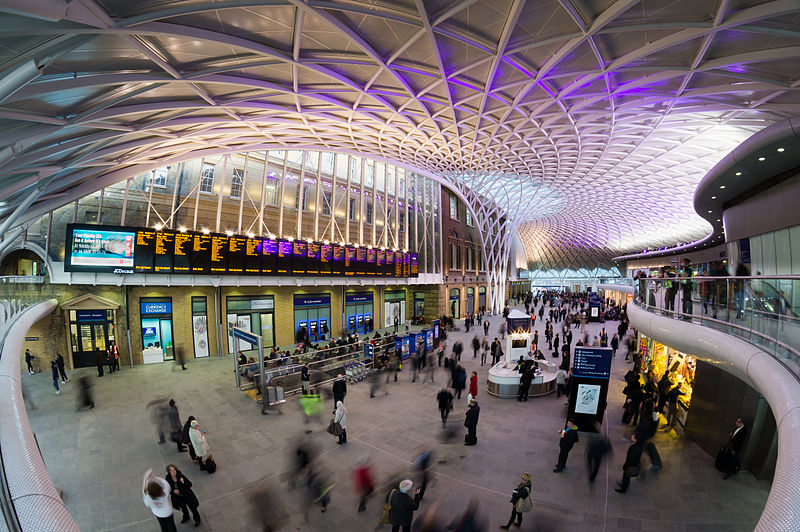 aspect of all design nowadays for large structures. This one is pretty magnificent actually. It looks very stadiumlike on the inside and certainly, a lot of modelling would have had to have been done in the design process.
Meera - So, how do you actually model people and the movement of people mathematically? What's taken into account?
Steve - Well, there are three factors really: There's the individual person themselves, the second is the crowd movement as an object, but there's also the environment within which they're moving. So, those three aspects all need to come into play.
Meera - What do you actually do to see how those factors would come together to get hundreds of thousands of people moving through a station like this every day?
Steve - Well firstly, an understanding of flows, like fluid flows, are very useful to give an overview of what's happening, to understand how those flows move through an object, through a space. But it's also important then to think about how individuals behave, because we're not robots and we don't always act as flows. We often go against the flow, so we have to understand how individuals behave, which is sometimes irrational.
Meera - What would you say are the main ways that models can be combined with design in order to make a space "crowd friendly"?
Steve - The important thing is, with mathematics, you can actually do modelling on the computer so you can do experiments on a computer in silico, saving you the hassle of having to build a structure and find out there's a problem later on. The idea is that you can run through different scenarios very quickly on a computer so that we can really understand how the form and the function interrelate.
Meera - Let's take King's Cross Station here for example. What kinds of things are around us that you can see have been thought about to model people moving through? Just below us here, there are at least hundreds of people passing every minute, and there's no congestion, it's all very free-flowing...
Steve - It's a fascinating thing to watch actually, especially if you watch it and speed it up. But of course, where the columns are to support the roof are really important parts of what's going on, and in particular, where are they positioned in relation to exits and entrances.
Meera - But it's also got very high ceilings and it's very light in here, and generally quite a pleasant environment. Is this quite important for crowds?
Steve - Of course, it's aesthetically pleasing but also, makes people feel a bit happier if they can see lights and have space above them as well as around them. So they've learned quite a lot of lessons. Don't forget there was a fire not 100 yards from here, the King's Cross underground fire that there was a major disaster in 1987, so we have learned something from that.
Meera - That's touching on the fact that there have been various failures in the past where large crowds have been involved. What do we need to know about what happens in a case of an emergency where large numbers of people are involved?
Steve - So when we look at past failures, we often find there are many contributing factors. There's not just a single entity. So firstly, when large groups of people get together, there's often a stop/go in their flow. So that when they stop, they begin to panic and worry about what's going on. Then if you get inflows and outflows coming together or cross flows that becomes really problematic. More importantly, in new buildings where you don't know where you are, you're not sure where the exits are. So this is a critical factor in getting people to know really what the alternative ways out are. And that's where training new staff comes in helpful.
Meera - Is that the kind of thing that's accommodated now, the extra level of information for people to know where to go?
Steve - The information and monitoring. So firstly, King's Cross here is monitored probably more than any station in the world, but secondly, information can be given back to the people via announcements that we can hear almost every few minutes. So, information to be gained and information given out is really critical in the time of stress.
Meera - Does this tap in to human psychology and human behaviour in the fact that people like to know what's going on?
Steve - It does, absolutely, and that's where mathematicians like myself would have to work with psychologists. Everybody is different, so it's quite important to understand how people behave. We can learn a lot from studying other animals too, but people that have this particular thing that they have real choice. They can make decisions much, much quicker and so, we really need to understand those to get the right results.
Meera - What about the actual design of the structure? What else can you see here that perhaps would've been thought about to keep crowds moving? For example, there is a one-way system in place here. Does that make quite a huge difference?
Steve - That's a huge difference here. The arrivals and departures being separated makes a lot of difference particularly if, for the arrivals, you have lots of people waiting to meet other people, so these are very stationary objects, and this can create problems.
Meera - And how do you account for the different types of disaster that could happen? There could be a fire or there could be a bomb scare in a station like this. Do these all need to be thought about differently?
Steve - Yes, those and more actually. Even somebody fainting or a fight occurring. People have to sit down and think outside of the box about what could possibly go wrong and then we try and then prevent that failure. Once we know what they possibly are, we can design against it.
Meera - And what about the context of the actual building and its purpose? This is a large station with people moving through it each day but for something like the Olympics, a stadium, people will be stationery, only moving at very specific times.
Steve - Yes, it's quite critical in a stadium because although people may arrive slightly staggered, they all pretty much leave at the same time. The important thing to remember there is that if everybody is leaving all at once at the final whistle, the exits need to be large enough to account for that. You also have to have signage and make sure that people don't stop immediately outside the door, another critical thing. We often see that in fire evacuations; people will stand immediately outside the door and just block the exit for everybody else.
Meera - So it's keeping people moving again.
Steve - It's always the case. If people are moving, they're generally happy. When they're stationery, they tend to get a bit edgy.
Meera - In summary, what position would you say we're in today using these models and designing buildings for large numbers of people?
Steve - We're certainly in a much better position, Meera, because we have the experience of what's gone before and the technology to actually predict what might happen in certain scenario events. So, we have an understanding of people's behaviour together with information technology as well as bright area designs. On top of that, we can add scenario setting from mathematical modelling to actually help us really understand the whole picture. So we're understanding how it all comes together.
Louise - And that was Steven Bishop from University College London talking to Meera Senthilingham on how modelling the movement of people can help keep crowds moving at the Olympic games this summer.
Can we use virtual worlds to study crowds?
Clifford - Certainly. We've heard from Steven Bishop there about the mathematical modelling of crowd behaviour. That's a big industry in the study of crowds, looking at crowd flows and so on, but I think there is a need to start thinking in a more sophisticated way about the way in which we can mimic crowd environments.
There certainly are some people doing work about that. John Drury for example has done some very good work looking at creating simulations, exercises, or experiments of underground stations with crowds and put people into what we might call a virtual environment. Steve Reicher as well at St. Andrews University has got what we call an immersion lab where there are screens on each side and you put an individual in there to replicate the environment of a crowd. But the extent to which we've got computers that can model crowd behaviour and mimic crowds and what they're going to do is very, very limited.
Part of the reason for that is because the mathematical models that are used to underpin these formula haven't really taken into account properly this collective psychology that we've been developing over the last few decades.
Chris - Chris is waving his hands. World of Warcraft are you saying Chris?
Chris W. - Of course, this has nothing to do with Health Protection Agency's response to the Olympics, but from my time in Germany, a colleague Florian Burkhardt who's still there pointed out in World of Warcraft, they introduced an infection into it in one small part of this large online world.
Chris - That really is a computer virus, isn't it?
Chris W. - It is, yes. And the idea was it was only supposed to stay in this one particular part but because people could teleport from one bit to the other, it soon spread to the rest of the world. My understanding is, I think they had to reset the whole of the game because it spreads so widely! But more practically, certainly, the HPA has done lots of modelling in terms of large groups of people and infectious diseases. And a lot of that informs the debate on what you do in terms of influenza pandemic. Is it worth closing schools and is it worth closing airports, that kind of thing.
Why don't we quarantine people?
Chris W. - That's an interesting question. We should explain the difference between quarantine, which is rarely done now with humans, and isolation. Occasionally, if someone's got something quite serious that needs not to be transmitted to other people, for example some of the viral or haemorrhagic fevers, we put them in isolation and make sure that nobody can catch what they've got through measures of hand washing and barrier nursing, etc. Quarantine is a broader thing in that you're waiting to see if someone is actually going to develop an illness. So, if say, 10 people are exposed to someone with measles, you could quarantine all of those people by keeping them - although they're well - away from everybody else. But as you can imagine, that can multiply quite quickly and you would have to quarantine an awfully large number of people. In general, we have found that travel restrictions aren't really very helpful in controlling a communicable disease. Horses are a different matter; I wouldn't comment on a veterinary matter, but that's certainly more expensive than a lot of things!
Chris - But the origin of quarantine is interesting, isn't it? Wasn't it the Venetians who came up with this? Originally, they used 20 days and then they went to 40 days. Hence the name "quarantine". This was the time they stopped people getting off ships coming in and they reasoned that if they were going to get something, would get it within that 20 days, or then subsequently 40 days.
Chris W. - And that would cover, as you know, the incubation periods of most common illnesses. That would cover most of the infections that you would be concerned about.
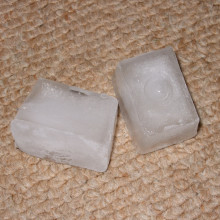
54:53 - Does ice really reduce swelling and speed up healing?
Does ice really reduce swelling and speed up healing?
We posed this question to Dr Jonathan Leeder, Physiologist at the English Institute of Sport.
Jonathan - Soft tissue injuries such a contusions, strains and sprains are frequent in multiple human endeavours and ice is commonly applied as part of the PRICE principle which stands for Protection, Rest, Ice, Compression, and Elevation. Ice is generally applied immediately post injury to reduce tissue metabolism thereby limiting secondary hypoxic damage and reduce the degree of oedema and muscle damage. Although this holds credited scientific rationale there is very little empirical evidence to support the use of ice at this stage.
Hannah - So, ice cools injured tissue down, lowers its metabolism and it's thought that this decreases the chance that the swollen tissue becomes starved of oxygen, and further damaged. Anything else?
Jonathan - The second common use of ice is in the rehabilitation stage - primarily due to the analgesic properties of ice application. The efficacy of ice application for analgesia, largely due to reductions in nerve conduction velocity is well-documented and supported by reasonable evidence base.
Although ice may be capable of reducing the painful symptom associated with soft tissue injury, there's limited evidence to suggest that the application of ice enhances the recovery rate of injury rehabilitation. It may just alleviate soreness during your recovery process.
Conversely, there's probably a growing evidence that suggested, it might actually be detrimental to attempt to reduce the inflammatory response through ice application because inflammation is a critical part of the repair process.
In summary, due to the proven analgesic properties of ice application, it does have a place in acute soft tissue management but due to lack of evidence in high quality research optimal protocols are not known.
Hannah - So, ice is known to be useful at stopping pain and it does this by lowering the speed that nerve cells send their electrical signal. Decreasing tissue temperature with the ice may also slow down the rate of production of inflammatory factors. And this will include some noxious pro-inflammatory metabolites that will sensitise nerve endings to pain. So cutting down the inflammation will cut down pain this way too. But the downside of this is that ice may also be slowing down your body's immune system and therefore, preventing your body from repairing itself.
Subscribe for free
Support Us!
Forum discussions
QotW - 24.05.03 - Could we make mosquitoes find us disgusting?
why do a lot of people confuse between interference and diffraction?
Is there any plausible mechanism for solar flares affecting health?
QotW - 24.04.26 - What are the chances of a random act being repeated exactly?









Comments
Add a comment