Get festive with the Naked Scientists at the Cambridge Science Festival! We sniff out the sizzling science of our food, explore the workings of a mobile phone and hear the songs of the Cavendish Society for the first time since the 1930s. Plus, insights into the neurological basis of dyslexia, toxic airborne copper dust and paint that heals its own scratches. Dr Ben Goldacre joins us to explain why abuse of statistics could make you a suspected terrorist or falsely suggest you have HIV. In Kitchen Science, Dave plugs a pickled gherkin into the national grid!
In this episode
Unravelling the cognitive roots of sydelxia
With the aid of brain scans scientists have shown clear cognitive differences in way people with dyslexia process information compared with non-dyslexics.
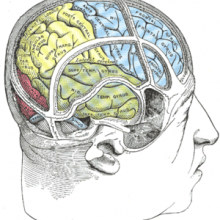
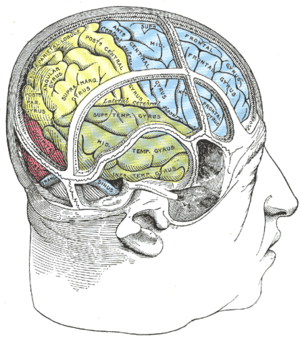 Writing in this week's Current Biology, Maastricht University researcher Vera Blau and her colleagues describe how they scanned 26 volunteers, half of whom were dyslexic. The study participants were presented with letters, speech sounds or combinations of the two that were either matching (congruous) or non-matching (incongruous); for example, in a non-congruous pairing, subjects might see the letter A and yet hear the sound "B". It's this integration of sounds with basic written units of language that dyslexics find difficult.
What the team were looking for were differences in the brain activity patterns between the dyslexic and non-dyslexic participants since this would indicate which brain regions might be responsible for the deficit. Quite quickly they struck gold. Normal readers showed stronger activation in a part of the brain called the superior temporal gyrus whenever congruent word-sound combinations were presented, but no such bias was seen amongst the dyslexics.
This, say the team, suggests that in dyslexics there is a deficit in letter-speech integration and they point to this as a fundamental mechanism that might distinguish strong from poor readers.
"The results show that the way their [dyslexics] brain integrates letters and speech sounds is very different from normal readers. It's quite astonishing," Blau said.
The team are now extending their studies to children that are learning to read in order to identify whether the difficulty in integrating letters and speech sounds begins in early school years and whether it comes before or after deficits in processing the sounds of language. This, together with the present results, could be used to track the benefits of interventions designed to help dyslexics.
"Our findings may offer a way to validate intervention strategies and narrow down the best training approaches," said Blau.
Toxic dust could be killing phytoplankton
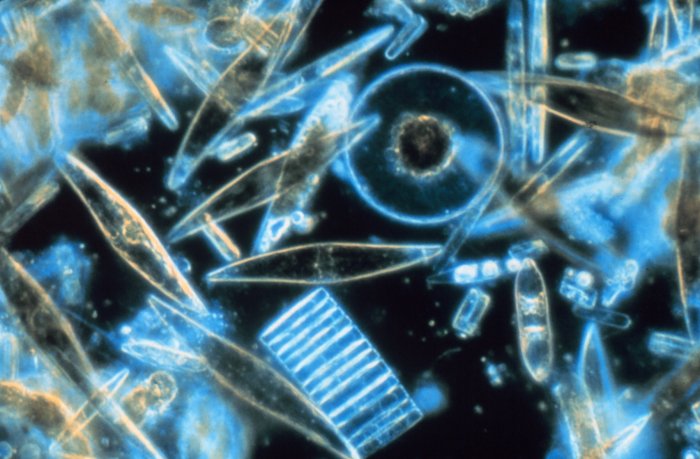
Toxic chemicals in airborne dust that settle onto the surface of the oceans could be disrupting marine food ecosystems by poisoning the phytoplankton at the base of the food chain that play a vital role in regulating global climate. In particular, dust blowing off the Sahara desert is laced with copper, which kills off some types of the single celled plants and algae that harness the sun's energy and absorb carbon dioxide from the atmosphere.
 Adina Payton from the University of California at Santa Cruz in the US led a team of researchers who took air samples from different currents blowing across the Red Sea. Adding the dust to samples of seawater, they measured the effect it had on phytoplankton.
Dust blowing off land can be beneficial to marine phytoplankton because it delivers nitrogen and phosphorous - elements that are usually in short supply and can limit the growth rate of phytoplankton. Dust can fertilize phytoplankton a little like when farmers put fertilizers on crops on land.
But Payton and colleagues discovered that dust samples taken from air blowing across the Sahara didn't stimulate phytoplankton growth but instead led to a sharp decline in various species.
To investigate the possible cause of these declines, the research team analyzed the composition of the dust coming from the Sahara and found that it had higher levels of various chemicals compared to dust coming from Europe, in particular copper. Copper was suspected to be the culprit because other studies have shown it to be toxic to marine phytoplankton.
Payton and the team tested their theory by adding copper at different concentrations to samples of seawater and measured the response of the phytoplankton finding that, as predicted, the growth rate went down faster when more copper was present.
Around 65% of the copper comes from desert dust, but around 30% is manmade coming mostly from combustion especially in industrial processes.
The researchers modeled the potential global affects of copper on a global scale and highlighted several key areas where it is likely that copper will reach toxic levels in the oceans, including in Southeast Asia and the Bay of Bengal.
The results of this study are especially worrying because they showed that different species of phytoplankton have different levels of sensitivity to copper which means the toxic dust could trigger shifts in the structure of marine food chains. These sun-harnessing phytoplankton are the basis of all other marine species in the open sea.
Boat made from a sieve
Edward Lear famously wrote about sending the Jumblies to sea in a sieve and many warned they would drown, but perhaps not if they were aboard a miniature boat made by Chinese scientists Qinmin Pan and Min Wang.
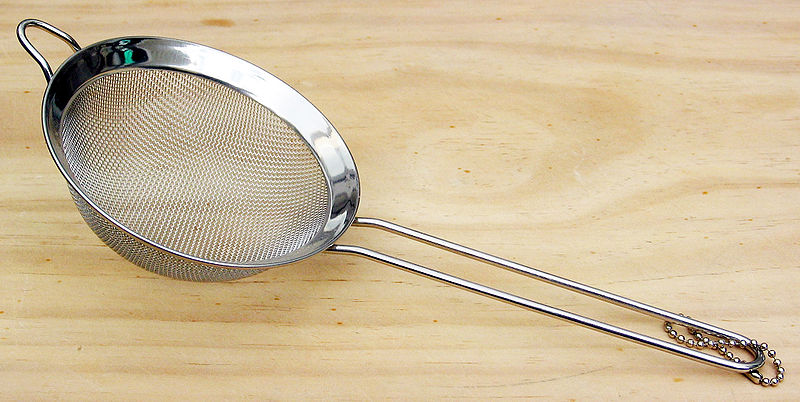 The two scientists based at Herbin Institute of Technology describe in the current edition of the ACS journal Applied Materials and Interfaces, how they have produced a water-repelling surface so powerful that a fine copper meshwork bent into a simple boat-shape will float on a bath of water, even when laden with sand "cargo".
The trick relies on chemically cleaning the copper surface and then "functionalising it" by dunking it in a silver solution and then a solution of dodecanoate, a fatty acid. Studying the treated copper meshwork under an electron microscope reveals that the silver form a system of very fine dendrites (branches) like the leaves of a miniature fern. The ends of these silver branches become decorated with the dodecanoate, which repels water and traps a layer of air against the mesh,rendering it water-tight.
The researchers admit that scaling the technique up to full-sized boats is probably not practical, but they suggest that this trick could be used for purposes such as underwater robots and underwater surveillance. The air-film trapped against the mesh, they say, can also dramatically reduce the drag on the hull of their "boat" and so could be used in drag-cutting devices (and that's drag as in resistance, rather than Edna Everage...).

Missing link in plants’ biological clock
Scientists have found a missing link in the workings of the biological clocks of plants.
You might think that it is just animals that can detect light and respond to changes in night and day, but plants can too. And until now there has been a mystery surrounding how plants do this. Previously, scientists have studied the plant equivalent of laboratory mice - called Arabidopsis - and tracked down two primary feedback loops, one that detects the onset of light in the morning, and a second that senses when light fades in the evening. What was missing was a system to link the two together.
Now, Steve Kay and his team of researchers from the University of California, San Diego think they have found that missing link: a protein called CHE.
The presence of CHE was predicted nearly a decade ago, but only now has it been found. What these researchers did was to hunt for proteins that bind to DNA and switch genes on or off. In particular they looked for proteins that changed in abundance over time, since those were the ones most likely to be involved in a plant's biological clock.
They found several cyclical proteins, but it was only CHE that stuck to the region of the plant DNA that is in charge of the ability to sense morning light levels. Taking a closer look the team also found that the same protein also binds to the region of DNA involved in the sensitivity to evening light levels dropping.
More and more evidence is piling up that biological clocks are crucial in controlling the growth of plants, and for things like timing flowering just right to ensure that flowers come out when it's not too cold still and when pollinating insects are flying around. Other studies have shown that altering the plants clocks can create crops that grow more vigorously, so if we can understand more about how those clocks work, crop scientists will one day develop crops that are even better.
12:43 - Scratches that Self-heal in the Sun
Scratches that Self-heal in the Sun
with Professor Marek Urban, University of Southern Mississippi
Chris - The work of Professor Marek Urban, who's a researcher at The University of Southern Mississippi. This material has the capacity to repair itself whenever it gets scratched. Sounds ideal for my car whenever I take a trip to the supermarket. Hello Marek, Thank you for joining us on the Naked Scientists. Tell us how this material works.
Marek - Essentially you can create a scratch on simply plastic. It's exposed to sunlight and certain reactive molecules open up. Consequently they react with other species that are present in the system and form what we call crosslinks. Those crosslinks essentially seal the scratches that are mechanically created. It's a little silent species sitting inside of a system that is capable of self-repairing on exposure to ultraviolet light.
 Chris - Tell us what the actual chemicals are that you've used in the mixture. How different are they from what we're currently using in paints and other surfaces?
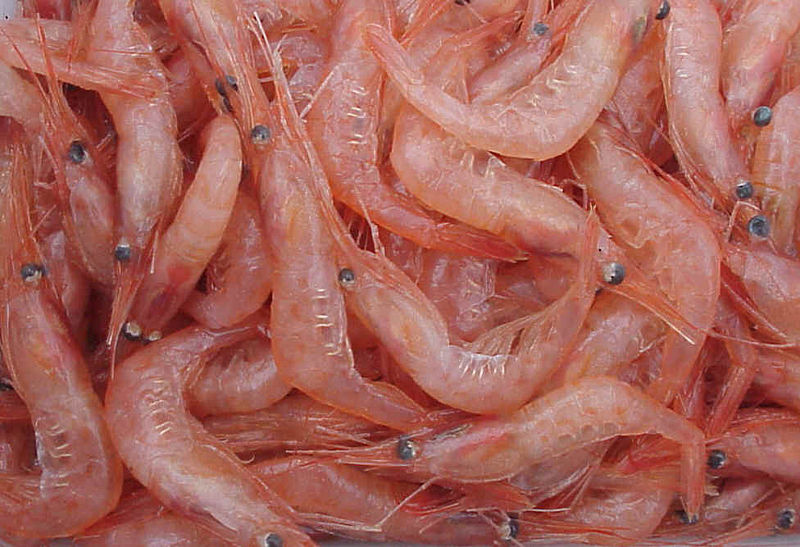
Marek - Mostly automotive paints and not only automotive but also floor coatings utilise polyurethanes which are fairly durable and fairly high-performance materials. However, they are not exempt from mechanical damage. What we've created is essentially we took a polyurethane network. Also we incorporated small amounts of chitosan. Chitosan is a derivative of chitin which is the second largest carbohydrate present on Earth after cellulose. This was modified with so-called oxitane and that oxitane ring is one of those reactive types that opens up as you make a mechanical scratch.
Chris - Chitosan is actually a derivative of chitin, as you say. That's the exoskeleton of things like crabs and lobsters, isn't it?
Marek - Exactly. You have plenty of those things, lenses along the coast of the country that deals with fishery. As a matter of fact a portion of our research was funded by the Mississippi Division of Marine Resources. That chitosan was modified with oxitane and that oxitane is a relatively easy-to-open ring. As a mechanical scratch is created that oxitane opens up creating a reactive species. Then, on exposure to UV light, creates another reactive species from chitosan. Those things react again to form a crosslinked network, therefore eliminating scratches.
Chris - To put it simply you have the chitosan which is this molecule and you've coupled onto the side of it a ring structure which , when the paint surface gets damaged, that ring busts open. This makes it chemically reactive and it can then grab either side of the damaged area and link it back together.
Marek - Right. Exactly. The quantities of this material are relatively small. Again, this is a proof of concept, at this stage. We don't seem to see reasons why that shouldn't work in many other systems.
Chris - And just to finish off, when can we see this being used? Is there any reason why we can't expect to see this cropping up on car paints and car surfaces very soon?
Marek - I think we should. There are different types of polyurethanes being used in a variety of systems. Some of them are water-based, some of them are solvent-based. It's sometimes system-dependent but those things can be worked out. I really hope that consumer-driven markets like automotive markets and others, for that matter, will pick up on that and take this seriously.
20:07 - Sizzling Science - The Science of Food
Sizzling Science - The Science of Food
with Susan Jebb, Gail Goldberg, Martin King
Meera - I'm here in the biology zone at the Cambridge Science Festival. There seems to be an emphasis this year on eating healthily and the importance of a healthy diet to have a healthy body. With me is Gail Goldberg from the Human Nutrition Research Unit at the Medical Research Council. Gail, your stand here is looking at the importance of a healthy diet, particularly for healthy bone. Which components of the diet are important for having healthy bone?
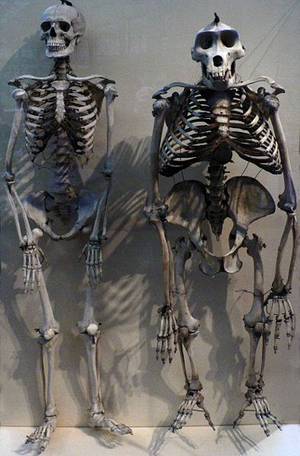 Gail - A number of components are important. The ones that are particularly important are calcium and vitamin D. 99% of the mineral in our skeleton is calcium. We're born with about 25g as a new born baby. When we've finished growing as an adult we have over a kilo of bone mineral in our skeletons. Vitamin D is important because that's a key to helping calcium form healthy bones. Firstly, by making sure that we take up enough from our stomachs. It also plays a role in helping to make sure that mineral goes into bone and stays there. We do get some vitamin D from a few foods but most of the vitamin D that we have in our bodies comes because of the action of sunlight on our skin which means that we make the vitamin D that we need.
Meera - What about calcium?
Gail - Particularly in countries like the UK we get most of our calcium from dairy products, milk and cheese and so on. That's because traditionally we eat a lot of those foods and the calcium that's in them is very easily absorbed by our bodies.
Meera - What are the health effects if we don't have enough calcium and vitamin D?
Gail - Well there's a number of consequences in children and young people. They might not grow as much as they should. Calcium is important in adulthood to make sure we've still got functioning bones. In pregnancy and breastfeeding women because the developing baby gets its calcium from the mother. In old age calcium stays important. One of the health consequences in old age is osteoporosis.
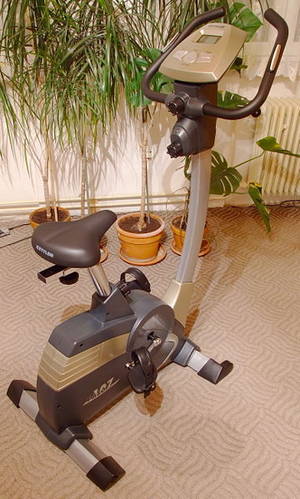 Meera - Another one of your stands over there seems to have an exercise bike that children are riding. I think I'm going to head over in that direction.
Gail - Exercise is important for bones as well.
Martin - What you want to do, estimate how much energy it takes to pump the water from the bottom of the tube to the top of the tube.
Meera - I'm in a section that looks at energy and where it comes from, I.e. the fact that it comes from our food. I'm here with Martin King. What's going on in this section?
Martin - Basically we're demonstrating here how much energy we burn of in everyday tasks, for example cycling.
Meera - In order to show this you seem to have an exercise bike with a tall tube in front of it. What's going on here?
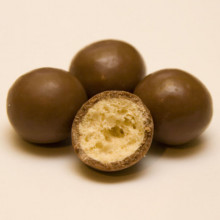
Martin - Basically the idea is, as you bike water is pumped from the bottom of the tube up to the top of the tube. We're getting the participants to estimate how much energy in the form of Maltesers it takes to pump the water to the top of the tube. Estimates have varied from 10-500.
Meera - And what is the answer?
Martin - The answer is 1.
Meera - Only one malteser?
Martin - That's right. Only one Malteser. This is shocking to most people.
Meera - I've just seen a child on this bike cycling for quite a while.
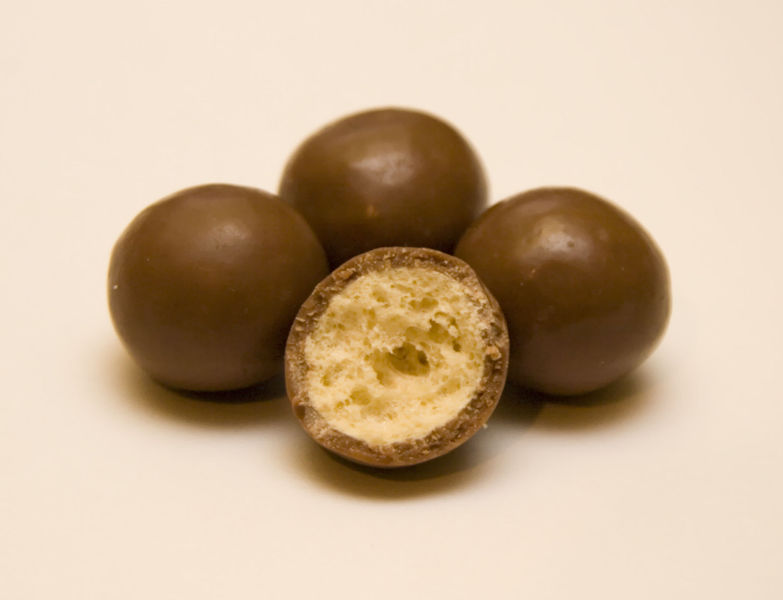 Martin - The average time it take is about 2-5 minutes, depending on the child. Another interesting fact is that you have to pump the water up the tube fifty times to burn off the energy found in a typical pizza.
Meera - So you say the children have been cycling for 2-5 minutes. Say the average was about 3 minutes and they have to do that 50 times. That's 150 minutes. That's over two hours of exercise on this bike just to burn off a pizza.
Martin - Yes. This is neglecting the fact that we all have what we call a basal metabolic rate. Basically the energy that you use without doing any work. This doesn't take that into account.
Meera - I've learned the importance of eating healthily for the strength of our bones as well as how much exercise we need to do to burn off something as small as one Malteser. Now I'm off to actually make healthy meals at the sizzling science lecture.
I'm now here with Dr Susan Jebb from the Medical Research Council who's been leading today's sizzling science talk and been explaining some of the science behind cooking. Hello, Susan. What have you been talking about in today's lecture?
Susan - We've been trying to show people that science is all around us, in everything we do and that cooking - there's a huge amount of science in there as well. Of course, we've also bee trying to give people some important messages about how the food we eat really can impact on our health.
Meera - how have you been getting the science of cooking across today?
 Susan - We've had a couple of little tricks of the trade. We've been using a water bath to cook the meat in. In that way we can hold the meat at a very particular temperature. If you cook meat at a higher temperature actually you begin to break down some of the muscle fibres and you really lose the texture. A water bath allows us to control the temperature far better than you could in a conventional oven.
Meera - During today's talk you were mentioning about the glycaemic index. What is this and why is it important when it comes to understanding about parts of the diet?
Susan - The glycaemic index is a measure of how rapidly the energy in food is absorbed into the blood stream. Some of the research suggests that people who tend to choose foods with a lower glycaemic index, meaning the energy;s released very slowly, have a reduced risk of developing things like diabetes and heart disease.
Meera - You also mentioned that if people don't necessarily have access to fresh vegetables all the time it's good to have frozen vegetables in the home, just as a backup. Are these still just as good for you as fresh vegetables?
Susan - Frozen vegetables are a fantastic alternative to fresh. These days they're picked and frozen so very quickly it really preserves al the nutritional value. Some veg don't freeze as well as others and so the texture is not quite as good. Some vegetables, like peas, like sweetcorn and even to some extent green beans, freeze really well. They actually make for a very cheap and convenient option.
Meera - What would you say the emphasis of today's sizzling science is?
Susan - I really want people to see food as something as something which is incredibly interesting and important and a really valuable bit of their lives. I think if they value food they start to think a little bit more about what they're consuming. That can only be good for health.
27:50 - The Use and Abuse of Statistics
The Use and Abuse of Statistics
with Dr Ben Goldacre
Chris - We're now joined by Ben Goldacre. Tell us a bit about what you'll be talking about because you'll be joining us at the Science Festival to give a talk about some of these things. What are you going to cover in your talk?
 Ben - You've just reminded me, I need to write one. I am going to write about the various different ways that people who really should know better make mistakes with statistics. Not the kind of easy ways that everyday people are fooled but people in senior roles in government and medicine and industry and the media and that kind of stuff.
Chris - We've heard the phrase 'lies, damn lies and statistics.' This is not a new phenomenon so there must be some fantastic examples that you can showcase your talk with.
Ben - Yeah and the interesting thing is that the same problems keep coming up time and time again. For example, screening is a very interesting issue. People are often, I think it's because it's attractive to think well, surely doing something is better than nothing - to imagine that screening could be useful way of firstly detecting breast cancer in people where breast cancer is very rare. So outside of the current screening window of women over 55. Also perhaps screening, as MI5 suggested recently, everybody's computerised communication records to spot terrorists or screening everybody for AIDS. The interesting thing is, when you're trying to screen for something that's very rare, like being a terrorist or having AIDS, actually you're false positives start to outweigh your true positives. Even if your test is very good.
Chris - Let's just define that. False positives are, of course people you accuse of being a terrorist and they're completely innocent.
Ben - That's right. It works best with a concrete example. If we take AIDS, let's say we've a really brilliant blood test for HIV. It will only give you a false positive in somebody who doesn't have HIV: one test out of every 10,000 that you do. 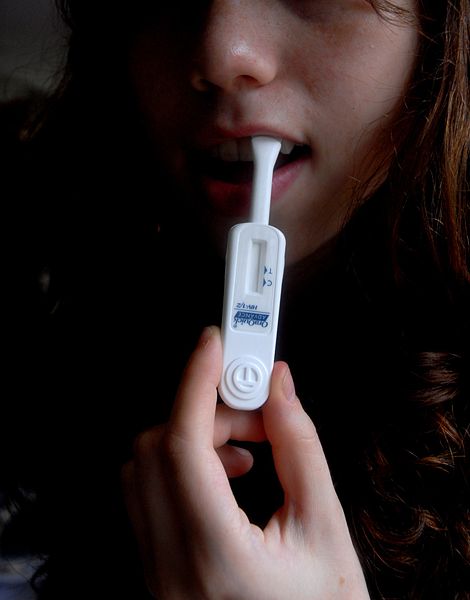 That's a very good test if you're doing your HIV tests on a population where people are fairly likely to be HIV positive. Let's say injecting drug users or perhaps gay men with a long history of unprotected sex. You might say the risk in that population is 1 in 100 and your risk of a false positive with each test is 1 in 10,000. In general if you get a positive HIV test in someone like that then it probably means they really do have HIV. Then if you do the same test on members of the general population who have a very low risk of HIV, let's say the general population in Britain your risk of having HIV is probably 1 in 10,000. If you're doing your test in a population where only 1 in 10,000 people have HIV and your test gives you a a false positive for 1 in every 10,000 tests that you do then actually a positive blood test is only going to mean that the person genuinely has HIV half the time.
Chris - What should we do about this? How should this alter our practise? What should we do to make sure we don't end up pursuing false leads statistically like that?
Ben - I guess what it means is you have to be very cautious about where you employ screening and whether you think it's a good idea or a bad idea. It depends on the maths of individual cases. Just recently the ex-head of MI5 wrote a report for, I think, IPPR. It got a lot of press coverage. It said, maybe we have to accept that the security services should have access to everybody's computerised records. Everybody's text message communication patterns, the lists of whom they phone, access to the contents of their emails, their tax records, their travel records, all of this stuff. Then we can use pattern-spotting software to try and identify who is a possible terrorist subject and who isn't. That sounds superficially quite appealing. You could make a case if it was true that was likely to spot terrorists. You could make a case. You could say maybe it was worth sacrificing our civil liberties and our privacy in order to catch terrorists. That's a separate argument, a moral argument. Before you even get there you have to be clear on whether screening is capable of spotting terrorists in the general population.
Chris - That's one of the criteria for screening. We say when we're screening for something, if we can't actually detect it effectively or do anything about what we find. We just don't screen for it.
Ben - Absolutely: There are two problems with screening for terrorists. One is that terrorism is extremely rare. There are probably 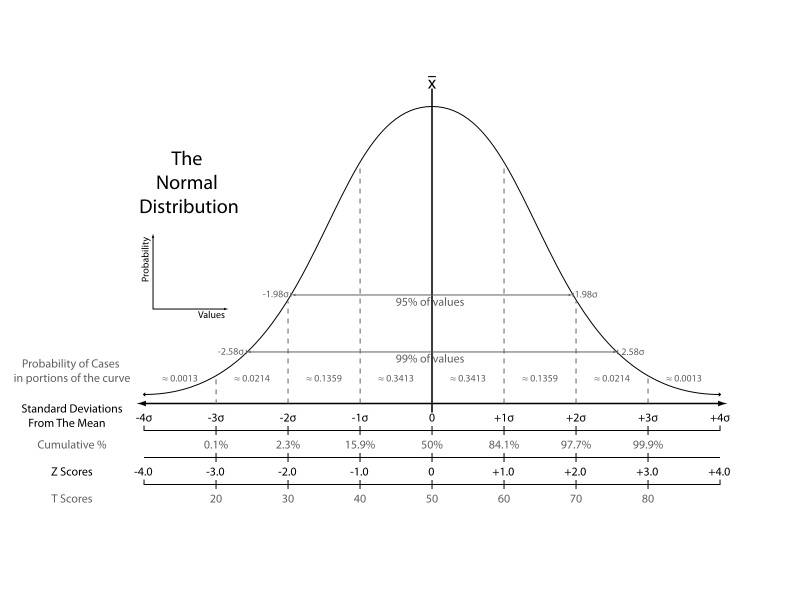 10,000 likely terrorist suspects in the UK, waiting to do something. In reality it's probably much lower than that. Then you've got to think, what's you r test for spotting a terrorist? Our tests for spotting HIV in blood are really good. They're only wrong 1 time in every 10,000 which means they're right 9,999 times out of 10,000. That's an amazingly good test and that still falls over when you're looking at something very rare. Your test for spotting whether someone's a terrorist from looking at their telephone records are going to be much less accurate than that. They're going to be much less accurate in the two important ways that a test can be flawed. First of all, they're going to be quite likely to miss true terrorist subjects but they're also going to be quite likely to falsely identify people as terrorist suspects when they're actually not. If you run the maths you'll see that even a test which is 99% perfect is unimaginably good. We'll still identify thousands and tens of thousands of people as suspects which is basically useless. It's worse than old--fashioned trade craft and investigation techniques. What are you going to do with 10,000 possible suspects to try and investigate all of those people in any detail is obviously impractical.
Chris - People who cast their mind back about ten-fifteen years will remember something called the Cleveland child abuse scandal which was precisely this. It was a flawed test which basically caught just as many people who were innocent as guilty and led to lots of people being accused of child abuse, and being abused, who hadn't.
Ben - Is that right? I know nothing about that, sorry.
Chris - It was a major issue with people applying a test which was very flawed in the sense that it was pulling out cases, some of which had been abused but many hadn't. It led to great amounts of heartache for the reasons you've outlined. It's very difficult to be accurate and specific with these kinds of tests. Let's wind this up by you telling us what you'd like to see done about this.
Ben - I guess a lot of the time discourse on screening is driven by politics and emotion. For example, politicians will want to say we're doing something useful about breast cancer or heart attacks or stroke or whatever. We're having a big screening programme. That feels like a really positive thing to do and it's the same with screening for terrorism. It's the same for screening for all kinds of things. I think people do just have to be rational about it and think through the figures. On the one hand there's the practical outcome that you want. On the other I actually am nerdy enough to think that the maths on screening is quite interesting in and of itself. That's good enough for me.
Chris - But you don't have to be a geek to go to Ben's talk. He's at the Cambridge Science Festival this week if you want to catch up with him.
Ben Goldacre is also the author of the
popular book, Bad Science.
35:37 - How a Mobile Phone Works
How a Mobile Phone Works
with Dr Chris Cox
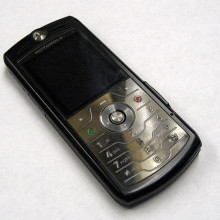
Diana - I've come to speak to Chris Cox here at the Science Festival to talk about the intimate workings of the mobile phone. Chris, when I make a call on my shiny new phone what's happening?
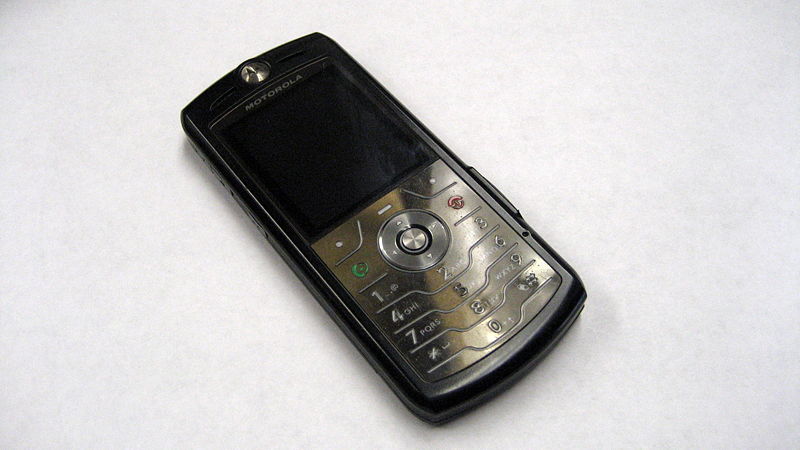 Chris C - There's quite a lot of steps it has to go through. Basically it all starts off when we speak into the microphone of a mobile phone and that turns our speech into a nice electrical signal representing the sound. That all then gets digitised, converted into a stream of binary 1s and 0s that represents the signal. The next step is it all gets compressed so that we all have to send fewer 1s and 0s. Basically that makes the whole process more efficient, slight loss of sound quality but it does mean that with lower data rates form each mobile phone the base station can accommodate more mobile phones in each cell.
Diana - How much is it compressed by?
Chris C - Basically it's typically down by a factor of ten or so. The original signal is 64,000 bits every second and it gets squashed to somewhere between 5000 and 13,000.
Diana - Here's an example of me talking at 64,000 bits per second...
Diana - And here's an example of me talking at 5,000 bits per second...
Diana - So you can hear how the audio degrades, especially when you're not getting a very good signal and that gives you that 'in the shower effect.' How is it possible to locate the last known position of a mobile phone? We hear about that a lot on the telly - maybe on Crimewatch, something like that - but how is it actually done?
Chris C - That's quite an important technique, often for emergency calls, tracing crimes and stuff like that. The most common technique is basically by triangulation. If you've got a mobile phone sitting in the middle of, say a triangle of three base stations then the mobile phone can measure the time at which the different signals from the different base stations all arrive. By comparing those times it can work out exactly where it is and report the result back, basically the same technique that seismologists use for locating earthquakes.
Diana - There've been plans floating around, lots of rumours saying that they're going to put mobile phones on planes. I don't know if I want to listen to someone saying 'I'm on the plane' but if they do that then how's it going to work?
Chris C - Well I must confess I'm not sure I do either. Let's see how that all works. First of all, there's been a bit of a delay because they want to make certain there's no interference with the electrical systems on board the aircraft. Once they have made absolutely sure of that there's going to be a tiny base station in the aeroplane itself which will just be picking up signals from the hundred or so passengers on board. Then after picking up the signals the aeroplane will send that down to a dedicated receiver on the ground, just by a point-to-point link that can handle a really high data rate.
Diana - We've had the eighties brick and we have lovely touch-screen phone that can do what seems like just about everything. What could possibly be next?
Chris C- There's a few different things. First of all, fairly similar to little receivers in aeroplanes we're likely to be getting little base station receivers for our homes as well. That is going to allow us to have all the capacity of a mobile phone base station that would normally be over a whole town for our own home. That will allow us to have really high data rates for really fast applications on our mobile devices in our home.
Diana - Would it be possible to share these base stations even if it's not your home base station? If you're out and about you could get this high data rate from someone else's house.
Chris - Er - you would need to sort the billing arrangements for that! Try to sort out if it's you paying the bill or the other person owning the other thing paying the bill. That is probably the next step down the road but we'll probably get there eventually.

47:52 - Do people moult seasonally?
Do people moult seasonally?
We put this to Des Tobin, Associate Dean for Research at the School of Life Sciences, University of Bradford:
For most animals, like rodents you have a clear-cut wave of hair growth where all the follicles are synchronised. Moulting requires synchronicity in the follicles because the hair grows in a cycle of growth that we call anagen and a resorbative phase called catagen. In the human there is quite a bit of synchronicity in the very early stages: before birth and in the neonatal phase but it breaks up very quickly so that you get what we call a mosaic form of hair growth. Each follicle is an autonomous mini organ. Whilst, to some extent that can be re-synchronised, for example, when women are pregnant because they change their hormonal stimulus. Some studies have been done way back on hair on the thigh. I don't know why they chose thigh hair to check the seasonality of hair but it was shown that in certain times of the year perhaps a little bit related to weather (although with humans you have to be very careful because of the fact that we're wearing clothes for a very long time and we don't need it for the same thermo-regulation that mammals would have) but there is some kind of very minor peaks. If we were to do hair counts we tend to see more shedding as we go into the summer period than going into the winter period.
How do homing pigeons find their way home?
Chris - This has been an area of intense research in recent years. It turns out that pigeons an a number of other species including bats have metal deposits in their heads. These metal deposits, haematite, they're iron and they're magnetically sensitive. They use the Earth's magnetic field as a kind of compass. What they do, they know the sun rises in the east and sets in the west and so by using sunrise and sunset they are able to gain a timing. They set their compass according to where the sun is at certain times. That gives them their compass directions. By changing their orientation relative to the Earth's magnetic field they are able to navigate. They use this as a broad directional cue. At the same time they also use visual cues because they have the hippocampus part of their brain which registers where they are in relation to their environment. They remember visual landmarks and marry them together so they know where they're going and how they get home.
Can you completely get rid of MRSA?
Chris - Yes, MRSA - Methicillin-Resistant Staphylococcus aureus. This is one of the hospital superbugs that we've talked about. It's a very resistant bacterium but there are antibiotics including one called Vancomycin which can destroy it. It tends to colonise lots of people. Probably about 10% of people might carry MRSA. It's increasing in the community now. What we're finding is that if people do get it then it can be cured by a big dose of antibiotics even if you've got it in places like the lungs. No reason to panic too much.






Comments
Add a comment