Does Farting make you Weigh Less?
Can sea water keep roads frost-free? Why does the LHC need to be so cold? How does antifreeze work and what's the freezing point of beer? This week we run the risk of frostbite to tackle the coolest science questions as well as warming up in the hot tub to hear what household appliances devour the most power! We also find out how researchers are growing stem cells from umbilical cord blood, the scientific reason why a needle is so hard to find in a haystack, and how the smell of a fertile woman boosts a man's testosterone. Plus, do people really look like their pets?
In this episode
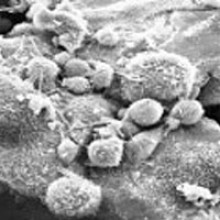
Growing umbilical cord blood stem cells
Scientists have discovered a way to dramatically boost the numbers of stem cells used for bone marrow transplants.
The technique uses stem cells known as CD34 cells, which are present in the blood of a developing baby. 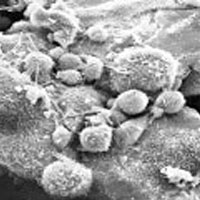 A small number of them can be harvested from the umbilical cord immediately after a baby is delivered and, in recent years, companies have begun to provide storage services so that parents can preserve these cells in case their child ever needs a source of stem cells in the future. They can, for instance, be used as a bone-marrow transplant if the individual develops leukaemia later.
Unfortunately, the numbers of cells that can be harvested like this is often only about 10% of the number needed for a successful bone marrow transplant. The obvious solution - trying to grow the cells in a dish - invariably causes them to lose the ability to behave as stem cells, rendering them useless. But now, writing in Nature Medicine, researcher Colleen Delaney, who's based at the Fred Hutchinson Cancer Research Centre in Seattle, together with colleagues at the University of Washington, has found a way to expand the numbers of these stem cells without causing them to lose their important stem cell-like behaviour.
The researchers have found that a key chemical signal, called Notch1, which normally helps to control the growth of bone marrow cells in the body, can be used to induce CD34 stem cells to grow in the dish. Critically, Notch1 makes the cells divide, increasing their numbers up to 164-fold, but without sacrificing their key stem cell properties.
Using this technique, the team showed, initially in mice and then in a small group of humans with life-threatening leukaemias, that cells produced this way can be used for bone marrow transplantation.
Most importantly, they found in the human subjects that the transplanted bone marrow "took" and began to produce new blood cells ten days sooner than patients treated with conventional bone marrow transplant techniques. This could make a significant impact on survival which, previous studies have shown, is strongly linked to how quickly a patient recovers the ability to begin producing new blood and immune cells again following a bone marrow transplant.

02:43 - Why rare objects are harder to find
Why rare objects are harder to find
Scientists have uncovered the scientific reason why hunting for a needle in a haystack is so hard - and often fruitless.
If you're a little bit scatterbrained when it comes to organising things and often spend an evening rifling through bits and pieces which, of course, were filed away in a "safe place", you can probably identify with the premise of this study.
It's said that when you're looking for unusual objects you're not as good at finding them. So, if you're on the security staff at an airport and you have 600 bags to scan, of which 15 contain some sort of weapon, you're much less likely to find all 15. Proportionate to the number of things, searchers will make more errors if the object they're looking for is rare. According to lead researcher Jeremy Wolfe, "If you don't find it often, you often don't find it."
The reverse is also true if you're looking for something that occurs more often, such as sun lotion, in which case you might think you can see it when it isn't there.
In Current Biology this week, the researchers from Harvard have been looking at why this happens. They used two groups of between 12 and 13 volunteers to search through some computer-generated bag contents.
Common sense might tell you that, because something's rare you need to look through more boxes or bags and your brain just gets used to saying 'it's not there' all the time. And so you start to miss the thing you're looking for.
But the new study shows that it's actually the "Ooh, it's there!" response, which happens more slowly with rare objects.
This is an adaptive behaviour so that, in terms of our ancestors, if you were foraging for food you'd be more likely to stay in areas where it was plentiful and less likely to stray into areas where it was rare.
The findings of the study could be useful, say the researchers, in training security staff at airports or even for helping radiologists to spot more tumours on scans. According to the team, if people doing these sorts of jobs spend a couple of minutes doing a simulated search for common weapons or tumours, they might then do a better job at really finding rare ones for the next 30 minutes or so.
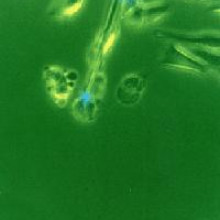
Spiking Cells
A living cell is an immensely complicated chemical machine, working with thousands of interacting molecules, and we haven't got an instruction manual.
 Usually, if you're given a machine you don't understand, you prod it and see what happens. One of the biological equivalents of this is to introduce new molecules into a cell, and then study the consequences.
Unfortunately for biochemists, a cell is bounded by a membrane, which is deliberately structured to filter the molecules entering or leaving the cell.
Scientists already have ways to get around this by genetically altering cells so that they produce certain molecules, by doing some clever chemistry or even by injecting molecules directly into cells by hand. But these are very laborious processes and sometimes only work for certain types of chemicals.
Now, Alex Shalek from Harvard University and his collegues have developed a far easier method. They have taken vertical silicon nanowires, essentially a forest of little silicon spikes a few tens of nanometres across and about 100 nanometres high, and covered them in molecules they want to inject into the cells.
Then they put cells on top and they slowly settle down over about an hour and are penetrated by the nanowires. Once this has happened, whatever was covering the nanowire is now inside 95% of the cells. The cells seem perfectly happy in this state and have been grown for several weeks with no apparent ill effects, despite being impaled on multiple silicon spikes.
The team have used this technique to successfully inject DNA, RNA, peptides, proteins, and small molecules into many different types of cells and also detected the effects of the molecules within these cells. The technique means that it's also possible to experiment on hundreds of cells at once so you can get good statistical data on the results.
More recently the team have even been able to ink-jet print hundreds of small patches of different chemicals, and combinations of chemicals at different concentrations, onto a slide. This has allowed them to do hundreds of different experiments all at once and even remove the cells, intact, at the end of the experiment, opening up the possibility of doing multiple experiments on the same cell.
It is unlikely this approach could be used therapeutically, but instead it provides a very powerful way to learn about living cells.

Fertile females increase male testosterone levels
Scientists have found that the male arousal hormone, testosterone, peaks in line with a woman's fertility.
Writing in the journal Psychological Science, Florida State University researchers  Saul Miller and Jon Maner recruited 37 male students aged 18-23 and four non-pill-using females aged 18-19.
The men, who did not know the purpose of the study, were asked to sniff T-shirts that had been worn by the women for three nights at points straddling ovulation on days 13-15 midway through their cycles, when fertility peaks.
The group were also asked to smell a second set of T shirts worn by the same women, also for three nights, but this time towards the ends of their cycles (days 20-22). A set of unworn T-shirts were also included as a control, and the females were asked to use only neutral-smelling soaps and to avoid wearing perfumes or consuming foods with strong odours during the study.
Before and after the men smelled the shirts, saliva samples were collected to determine testosterone levels. They were also asked how "pleasant" they found the shirt odour in each case.
The analysis showed that the men rated the smells of the shirts worn around the time of ovulation as more pleasant, and the average testosterone level was also significantly higher compared with when they smelled control shirts or shirts worn by the women towards the ends of their cycles.
This suggests, say the researchers, that some sort of smell "cue" is produced by women to broadcast their fertility and that this has the effect of raising male testosterone levels, which is linked to libido and arousal...
Copper-powered carbon sequestration
We've heard about carbon sequestration, deep beneath the Earth, but now here's another way of dealing with the CO2 problem - with copper.
Part of the reason that CO2 is a problem is that it's quite tricky to extract it from the air as it's quite a stable molecule, at least compared with oxygen. And so most of the time gaseous oxygen will bond to a metal, for example, before carbon dioxide does.
But this new copper complex, reported in the journal Science this week, can ignore boring old O2 and go straight for CO2.
A team of researchers, led by Elisabeth Bouwman at the Leiden Institute of Chemistry, say that typically, the problem with oxygen is that it will gain an electron more readily than CO2.  But this copper complex will happily donate electrons to carbon dioxide instead.
So, to extract CO2 from the air, they put this copper complex into solution. Atmospheric CO2 to which it's exposed is then absorbed. Next, to remove the captured carbon, they just added a lithium salt solution, apply a low voltage - 0.03V - across it, and the carbon precipitates as an organic compound.
As a bonus, this by-product can be converted into useful compounds which can be used in cleaning products and things like wood preservation.
But what's really useful is that the copper complex can be cleaned at the end of the reaction and re-used. The researchers report that they managed to do this six times in seven hours.
Also, compared with other methods of sequestration, it's actually quite cheap although there is a possibility that accessible copper ores might run dry not too far into the future!

13:33 - Geology of a Natural Disaster
Geology of a Natural Disaster
with Dr Paul Mann, University of Texas at Austin’s Jackson School of Geosciences
Chris- You couldn't really have escaped the coverage this week of the disaster that's happened in Haiti. We've heard lots and lots of reports from Port-au-Prince, the capital city in Haiti where they had the earthquake earlier this week. It was said to be magnitude 7 on the Richter scale and the number of people who may be dead or injured runs into many thousands. Loads of those reports have looked at the humanitarian crisis, but very few of them have actually looked to what's going on geologically. So, we've invited Dr. Paul Mann, a Geologist at the Institute for Geophysics at the University of Texas at Austin, to join us and fill us in a bit more. Paul, welcome to The Naked Scientists.
Paul - Okay, thank you for having me.
Chris - It's a pleasure. Could you first of all, in practical terms explain to us what a magnitude 7 quake is?
Paul - Okay. The term magnitude refers to the Richter scale which is a way to assign a number to quantify the amount of seismic energy released by an earthquake. It's a logarithmic scale, so an earthquake with a magnitude 5 on the Richter scale would be 10 times larger than a magnitude 4.
So just to tell you what the effects of these different magnitudes might be as a person, the 0 to 2 level is not felt. The magnitude 3 level would be felt, but there's no damage. Magnitude 4 you have shaking with limited damage. Magnitude 5, you're talking major damage. Magnitude 6 is considered a strong earthquake and that can cause destruction especially in populated areas. Just to give you an idea of how many magnitude 6 earthquakes there are per year, there's about 120. Magnitude 7, which is the size of the Haiti earthquake is considered a major earthquake with damage over large areas. There's about 18 magnitude 7 events per year. Remember that most of them are occurring in unpopulated areas, so that the Haiti event is unique in that respect, in that it occurred in a very densely populated area. Therefore, you have a lot of casualties.
Chris - And geologically Paul, what actually went on to cause this to occur?
Paul - Well basically, we're on a plate boundary. We're on a boundary between a  small plate, it's called the Caribbean plate, and the North American plate. And if you can visualize this geographic region, this is the Caribbean - we've got Haiti and Dominican Republic sharing the island of Hispaniola. We've got Jamaica off to the west. We have Central America farther to the west. So through this area runs a roughly east-west trending fault system. We call it a 'strike-slip fault' and what that means is that the two sides of the fault are moving horizontally with respect to each other. But this fault movement doesn't occur in a steadily slipping way. Instead, it occurs with the sort of spasmodic jerking motions. These faults, because they're so irregular along their surface can actually store motion for hundreds of years.
So, what's happened in Haiti is that the fault is basically a frozen surface. It hasn't moved since, we think, about 1770. As the plates keep moving past the fault which is frozen, the fault reaches a point where it can no longer sustain the stresses that have built up along it. So, what happened in Haiti was that suddenly the fault ruptured in order to catch up to the plates which have been smoothly moving past each other for these hundreds of years.
Chris - And when you say energy is being stored in the fault, in what form is the energy being stored? Because obviously, the plates are trying to move past each other, a couple of centimetres a year, the fault isn't going anywhere. So where is the energy actually going and how is it being stored there?
Paul - Well, the energy is elastic energy and it's being stored in the rock beneath the fault trace that we see at the surface. And remember the surface area of this fault is very large because it's cutting down through the upper part of the crust. This particular earthquake, its hypocenter, or the zone of rupture at depth, was about 5 kilometres below the earth's surface, so it gives you an idea of the large surface area along these very irregular fault planes. But it would be analogous to drawing a rubber band back and that rubber band is storing elastic energy to the point where the rubber band breaks, and that would be analogous to the earthquake.
Chris - You made some predictions a couple of years ago, or a year and a half ago that this may be about to happen. How did you manage to do that?
 Paul - Well, in seismology, we avoid use of the term 'prediction' and really to predict something, you have to be able to precisely state many aspects of the earthquake including the epicentral area or where the earthquake occurs, the size of the earthquake, which is magnitude 7 in this case, and most importantly, when exactly that earthquake is going to occur. For example, it's going to occur two weeks from now or two years from now. Unfortunately in seismology, there is no success by anyone in predicting earthquakes. What we did with this event is what we call "forecasting", much like a meteorologist might do on a weather forecast. We stated that we had a major fault which we call the "Enriquillo-Plantain Garden fault zone." We know this fault extends about 600 kilometres between Jamaica and Southern Haiti. We know that from our GPS studies which were done by Dr. Eric Calais at Purdue University that this fault was moving at a rate of about 7 millimetres a year, and remember the fault itself isn't moving, but the plates on either side of it are moving at that rate. And finally, from our historical records of Haiti, we know that the last fault moved, or the last large earthquake which we think was related to this fault, occurred in the 18th century. So we take the amount of time, roughly 250 years, we take the rate derived from the GPS studies, 7 millimetres a year, we calculate how much strain has accumulated which was about 2 meters. We can convert the amount of strain accumulated to the size of the expected earthquake which we had said was about 7.2 and the event turned out to be 7.0. But I think the key element here is that we did not make any statement about "this earthquake was going to occur on January 12th". All we said was that this was an area of high seismic risk, especially given the existence of Port-au-Prince, a city of 2 million people, very poor construction practices, and it's only 20 kilometres north of the fault.
Chris - And just to finish off very briefly, Paul. What's the chances that this is going to happen again very, very soon? Do you think this is done for now or do you think that there's a lot more energy still sitting there and we should expect this to rumble on a bit longer?
Paul - Well, one of the interesting aspects of this type of strikes of earthquakes is that the release of strain over an area in this case of about 80 kilometres can actually cause an increase in strain on the adjacent segments of the unruptured fault. And there are many people now at the US Geologic Survey and other universities who are working on models which are trying to predict, or to forecast, whether these adjacent of the fault will rupture and what the timeframe might be. But again, with any studies of earthquakes, we have to be very careful about using this word prediction, just because it is a very inexact science at this point
How many days in a month can a woman become pregnant?
Well, the fertile window is around the time of ovulation, which is day 14. So you're really looking at 2 or 3 days either side of that because sperm can persist or survive inside a woman for 2, maybe 3 days. And so that's why it's really important to use safe sex practices ahead of ovulation. Also, the time of ovulation can vary by a couple of days in some women, so it's really important to avoid, if you don't want to get pregnant, unsafe sex in that week in particular.
Do Women attract men more when fertile by subconsciously acting differently?
Well that was what people said about the study done [by Geoffrey Miller and his colleagues] on the lap dancers. [They found that lapdancers' tips shoot up by over 200% when they are at their most fertile]. Some suggested tThat perhaps the women were making themselves more attractive to the men and it was a female behavioural thing that was making them more attractive. In the present study [in which men were asked to sniff T-shirts worn by women at different phases of their menstrual cycles], what the researchers sought to do was to iron that out by making sure that the women who wore the T-shirts that were sniffed by the men only bathed using a neutral smelling soap. They all used the same cosmetics. They didn't wear perfumes and other kinds of things. They also avoided eating foods that might make them stink, like garlic. The researchers actually say that these steps were taken in the paper. So, in other words, they attempted to control for the possibility that the women were making themselves more attractive. Instead, what we think is happening is that it's actually some other chemical which is in some way stimulating the men, but we don't actually know what it yet. That will come next, I guess.
Why are my windows so drafty?
You're entirely correct about thermodynamics. If you've got two stationary objects and you join them together thermally, heat will always flow from the hotter object to the colder object. It's actually pretty much how we define temperature.
So what's happening with your window is because cold air is definitely coming into your house, this situation's a bit different. You're not touching two objects together and cold is moving into your hot house. What's actually happening is that cold air is moving in to your house. The laws of thermodynamics say nothing about where air goes, they don't disallow this. So basically, large lumps of objects can move around as they like, not ignoring the laws of thermodynamics, but they aren't constrained by them in that way.
Were medieval people less smelly?
Diana - I think for the most part, the answer is probably no. I don't know if you were ever a fan of Blackadder or anything, the stereotype for Baldrick, the smelly peasant, is probably quite true. And actually, if you've ever been to any of those reconstruction sites like Jorvik that's about 200 or 300 years before the medieval period, it's not quite medieval, but I think it gives you a really good idea of what things might have smelled like and they include also some toilet smells and cooking smells, mouldy things. Smells are pretty awful. And from what we know from the archaeology, there wasn't a lot of bathing going on for the peasants at least. And there was certainly, in the houses of medieval people, all sorts of bits of evidence for maggots and flies and things just living in the house with them, but it may have been for the more upper class medieval people like Lords and things that they did actually bathe maybe once a week. Chris - They used to keep their clothing near the loo in their castle, didn't they? Because castles had guarderobes which is the bogs and correct me if I'm wrong, but wasn't that done under the intention that the things that rot your clothes, moths and things that would make your clothes go horrible, would avoid the stink for the same reason we would? Diana - Yeah and they were probably slightly better ventilated than the rest of the places. Well, because of course their toilets were just, holes. Chris - Indeed because your clothes would smell otherwise, wouldn't they? Diana - Exactly. So, yes, they probably did smell pretty awful. Also, actually, there's another thing I'd like to add is that if you're constantly being exposed to horrible smells, you're going to be desensitized to them, aren't you? So perhaps, in that sense... Chris - I think there are limits.
Does too much calcium make your bones brittle?
The answer is, yes it does, surprisingly. Calcium links up with phosphates to make the chemical "apatite" (calcium phosphate), one of the hardest chemicals we know, which is what makes bones hard and stony, and tough. But if you have too much calcium, that can be as bad as having too little, as in condition osteoporosis where the bones actually begin to lose their calcification and the matrix of the bone, which makes them weak and more likely to break. There's also another disease called "osteomalacia" where you have too little just of the calcium and that also makes bones weak. But some people actually lay down too much calcium in bone, a condition called "osteopetrosis" from "petros" as in stony. This is where people can have say, five times the amount of calcium in their bones that they should have. It's a genetic condition. It's very rare and I think it also goes by the name "Albers-Schonberg disease" or something like that, but it's very rare. In these individuals, the cells that break down bone, called "osteoclasts", don't work properly. This is because the way bone is normally formed involves an equilibrium between laying down new bone and breaking down old bone, and that's how bones are continuously remodelled. So if you shift that equilibrium on one direction or the other, you either lose or gain bone. And what scientists have found is that in people who have osteopetrosis, the osteoclasts that normally breakdown bone cannot work properly. They have a deficiency of an enzyme called "carbonic anhydrase" and you need that to break down the calcium phosphate, the apatite, in order to remodel the bone. As a result, they just keep on making their bones get harder and harder, and harder. Eventually they go beyond the point of this being beneficial and the bones become less flexible and more likely to break, so they get very brittle.

31:35 - Artificially Intelligent Games
Artificially Intelligent Games
with Chris Vallance, BBC Technology Correspondent & Rollo Carpenter, Icogno Ltd
Meera - It's time for our first technology update of 2010 and I'm here with our resident techie, Chris Vallance. Hello, Chris and happy new year!
Chris V - Happy new year to you too, Meera.
Meera - So, what's been happening in the world of technology over Christmas? I hear that artificial intelligence has been playing a big part.
Chris V - Well, you said 2010, so I'm going to take you to 221B. 221B Baker Street home of Sherlock Holmes. Over Christmas, we had the release of the new Guy Ritchie film. As 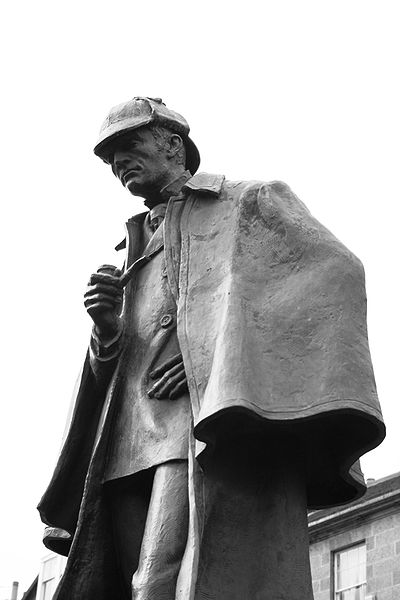 part of a trailer for that, if you like a digital interactive trailer, there's an online game called 221B. Now what's interesting about that is the way in which it uses artificial intelligence. As part of the game, you get to play as Holmes or Watson and you have to interrogate suspects. You have to ask them questions and the answers they give help you complete the game. The problem is, when you're asking a game character something, you could ask them it in any number of ways. Just using ordinary English, the possibilities are endless. So your options are: let's do it like one of those old, choose your own adventure game books - essentially, "if you want to do A, click here, if you want to B, click here." That's a bit limiting. So what the game designers decided to do is approach an expert in artificial intelligence to help them enable natural language type interactions with the game characters.
Meera - So how does this actually work and what's different about it?
Chris V - This is one of the big challenges in game design. Natural linguistic interaction with non-player characters. What this does is it uses chatbot technology to recognize what a question means. Now it doesn't have any understanding of the meaning of words. It doesn't have lots of long lists of complicated grammatical rules. What it does is fuzzily pattern-matches your question. So, it's very good at matching your question with the questions it knows how to answer, it does that and produces an answer according to the script. So the real key here is its ability to recognize questions and know what the appropriate answer is. In effect, it's creating a digital actor in the game, with a script, but one who can understand kind of what you're saying and respond appropriately.
Meera - And now, you actually met up with the creator of this to find out a bit more.
Chris V - Yes, I spoke to Rollo Carpenter who developed the artificial intelligence running the game characters and he explained how his system worked...
Rollo - My work has been all about creating artificial intelligence that talks, that communicates about anything and everything, and that attempts to look intelligent. To appear to be self-aware. The same fuzzy technology, fuzzy interpretation of inputs is used in the game. So it is our role to predict what you as Holmes or Watson, might know at that point of the game and the conclusions you might draw, the questions you might ask.
Chris V - But given the nature of language, there are a near infinite number of possible questions you might ask. Some grammatical, some not grammatical. So how does the computer understand the question?
Rollo - It understands by predicting what you will say and finding the nearest match amongst its trillions of predictions.
Chris V - So essentially, it's a kind of pattern recognition.
Rollo - Exactly. It is a kind of pattern recognition, but where the patterns are all treated fuzzily. If you mistype a few letters, it's not going to be upset.
Chris V - You've used the technology you've developed to build artificial personalities, but there are clearly commercial applications for this kind of technology. What do you see as its potential uses?
Rollo - A machine that can genuinely understand what people say is valuable in almost any number of ways. But some of the most obvious and immediate concern with customer services, support, marketing, and so forth.
Chris V - So when I ring up the call centre at some point in the future, I might get a computer?
Rollo - Indeed. The people at the end of the phone all too often have to work to a very restricted script and a computer would be capable of handling scripts 10,000 times larger. And so, it may actually do its job enormously better.
Chris V - That was Rollo Carpenter whose chatbot technology drives the characters in the game.
Meera - So Chris, have you actually had a go on this and if so, were you able to solve a mystery?
Chris V - I didn't get as far as solving a mystery, but I did try out interrogating one of the characters and you can see the results of that up on a video on BBC News online. It does work surprisingly well actually, asking questions in natural ways, even trying to catch it out a little bit.
You can still have a go with the game online.
Meera - So, I'm going to probably have a go on that as soon as possible, but is this something we're likely to see more of in other areas of gaming?
Chris V - I think it's hard with the big budget games. Game designers have told me the challenge there is essentially that you have very complicated pieces of animation for console games when you have these stunning visuals. You get voice actors to do the dialogue. So, spontaneously creating dialogue and the action to go alongside it is quite a big technical challenge, just from the sound and visual side, let alone making that dialogue meaningful. So this is still an area where there's a lot of development to be done. It's still a big technical challenge.
Who uses the most electricity?
Diana - I'm actually a bit of a games consoler myself. So, this was quite enlightening for me. I've got some numbers for you. I've made the assumption that you pay 15 pence per kilowatt-hour, assuming the Euro is on parity with the pound at the moment. So let's imagine that your husband is playing on a 42-inch LCD TV. That's pretty big and will draw about 200 watts. So that will cost about 3 pence per hour and if you're doing two 5-hour sessions over weekends, that's going to be about 30 pence per weekend. Now his Xbox on its own draws about 160 watts, so that's going to be 24 pence for the same amount of time. The total will be about 54p for a 10-hour weekend session. Now the hot tub is where it gets a bit serious, I'm afraid. From my research, most hot tubs seem to use about 2,000 watts which is a lot and that's going to cost about 30 pence per hour, so it's going to be 90 pence for a 3-hour session, Ã?,£2.40 for a full [8-hour] day and for a full week, Ã?,£16.80. Diana - And then if you want to compare it with your bulb usage, so if you've got energy saving bulbs, I'm guessing that you're good boys and girls over there. Amanda - I don't use them for all the lights, but we've got a lot of spots in our house. Diana - Well if you're using a nice 20-watt energy saving bulb and you've got three of them for 8 hours overnight, seven days a week, that's going to cost you about 50p. But if you've got the old fashioned incandescent ones, that's going to be Ã?,£2.52, but I'm afraid the whirlpool there or the hot tub, that's going to be the real killer.
Why does the LHC need to be so cold?
Dave - There are temperatures in the LHC of about 1.9 Kelvin. That's 1.9 degrees above absolute zero, so about minus 271 (and a bit) degrees centigrade. There's a couple of main reasons for doing this. One of the big ones is that inside the LHC there are huge magnets which are used to bend the particles around corners. They have incredibly strong magnets and you can't do that with a normal permanent magnet, you just can't get them strong enough. So you have to use an electromagnet. If you made the electromagnet out of normal copper wire, it would just melt in no time because of the huge current you need to get that strong a field. So, what they have to use is superconducting magnets.
A superconductor is a material which, when you cool it down enough, its resistivity goes to zero, so it will pass a current with no resistance at all. This is great for a magnet because you just start a current flowing in it and keeps on flowing forever.
The problem with superconductors is the bigger magnetic field you apply to them, the lower the temperature they start working. So, if you want to make incredibly strong magnets, you have to use very, very low temperatures and they're using about 1.9 degrees above absolute zero. This is actually below the temperature of liquid helium at normal atmospheric pressure so what they have to do is they take liquid helium which they have made essentially with a very, very big fridge by compressing gases and letting them expand. And as they expand, they get colder. You then take liquid helium and pump on it, so you reduce the pressure above it. So then it boils and boils, until it gets colder and colder, down to about 1.8 Kelvin. Then they pump that around the system and cool down the magnets. Chris - I would come off there by saying, "Cool!" but that would seem like an awful pun. But the bill for doing that must be absolutely huge or once you've got it to that liquid state, is it so well-insulated that it just stays that way? How does it work? Dave - It is going to need a huge amount of energy because although they're not moving that much heat out of the system, they're probably moving a couple of hundred kilowatts of energy, which by the standards of huge industrial processes isn't very much. The problem is the colder the object you are taking energy from, the harder work it gets. So, if you move energy from somewhere at room temperature to somewhere a couple of degrees hotter, then that uses very little electrical energy if you move it from something at 1.2 Kelvin to a room temperature that - with quite an immense amount of energy. Chris - And will you get a magnetic field once you've fired up the magnet that would just sustain itself because there's no resistance and will you only be losing the magnetic field because the particles will sap energy from it? So, it will therefore need to be topped up for that reason.the magnetic field that will be generated at those low temperatures,
Dave - The superconducting magnets, once they start going, they essentially work like a permanent magnet. People have done experiments with superconducting magnets and as far as they know, some of them will keep on going for billions of years. The real problem is if part of the superconductor warms up, at which point, you get a huge amount of electrical energy running around it. All of which is dumped into a very small area of the superconductor, so it gets very, very hot. All this liquid helium which you've got inside the magnet suddenly boils. And that produces a huge amount of gas which expands very, very rapidly. This was the problem they had last year when it went horribly wrong. This huge amount of gas, then pushed the magnets around. Billions of pounds worth of stuff just shuffled around this system and it caused an immense amount of damage.
How do mosquitoes lay their eggs?
Mosquitoes depend on water for their life cycle. Different mosquitoes live in different environments and as a result they depend on different types of water - stagnant water, big ponds of water, dumped car tyres with a bit of water and so on. You can actually tell which species of mosquito you're dealing with depending upon where they're laying eggs.
The bottom line is the mosquito goes down to the water once it's mated and different species of mosquito lay eggs in different ways. But they all lay their eggs into water.
Certain species lay them as individual eggs which drift off; others lay big rafts of eggs. The eggs mature and hatch into little larvae, which then have an aquatic phase; they grow in the water and eat algae and things, growing into large mosquito larvae. These then mature into full blown mosquito flies that then take off and come and bite you. You just have to keep an eye on a patch of water and you'll see the mosquitoes coming down to lay their eggs!
Can we create artificial nerve signals?
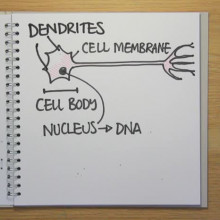
Chris - Yes we can. We actually know quite a lot about how nerve information travels. If you can imagine a nerve cell as a bit like a long straw, with sides and a space in the middle - what nerves do is to move positively charged ions, in this case sodium ions, from the inside of the nerve, to the outside world. So the inside of the nerve is a bit negative compared to the surroundings. When a nerve impulse travels along a nerve, what happens is that some "positive" (some sodium) goes back inside the nerve through tiny pores, which are on the surface of the nerve. This is called de-polarising the nerve, and it makes that section of the nerve become, transiently, a bit positive.
Now this does two things; it starts an electrical signal rather like a Newton's Cradle running inside the nerve, but it also activates other little channels and pores on the surface of the nerve a bit further downstream. They open and let in some more "plus" to sustain and maintain the propagation of the signal. In a big nerve, this signal is actually travelling along at something like 100m/s. The impulse (or action potential) only goes in one direction though because, in the opposite direction - where it's just come from, the nerve pumps the "plus" back out again, so it goes back to being net minus and the nerve resets itself.
This process happens in milliseconds, so you can literally conduct hundreds if not thousands of these impulses down a nerve in less than a second. The information can travel very, very fast.
You can also make this happen by artificially stimulating the nerve. If you apply a little bit of electricity to the wall of the nerve fibre itself you can actually make that process trigger off, and then it self-sustains. The signal will propagate along the nerve to wherever it goes - in both directions.
Scientists use this for a number of reasons; one is that you can artificially activate muscles that way - so if you've been paralysed, for example, you can use techniques like this to restore movement to certain muscle groups by electrically stimulating certain nerves that supply those muscles. Another reason is to use brain stimulation - this has been done quite effectively in Parkinson's disease. Scientists implant a little electrode in a part of the brain which makes movements and is involved in the same circuit as is affected by Parkinson's disease. If you stimulate those bits of the brain electrically, you can trigger off impulses in the right way and the right rate to help people who have Parkinson's symptoms to overcome their symptoms and move a bit more easily.
So, it is possible to re-create nerve signals. At the moment it's fairly low resolution: you're not stimulating individual nerve cells, you're stimulating clusters of nerve cells. But at the same time, you can do that.
Also, if you listened to last week's programme, you'll know that we talked about cochlear implants, which are things that basically stimulate the nerve that conveys hearing information into the brain stem. They're doing effectively the same thing - stimulating nerve cells directly to send sound information into the brain.
Diana - I remember about a year ago we had a story on Breaking Science with the researcher Andrew Schwartz who monitored the signals being sent from Chimp's brains, and then translated them using a computer into muscle movements.
Chris - I guess that's going the other way - rather than putting input into a cluster of nerve cells, he was recording the activity, understanding how nerves are encoding information and using that (once it's been decoded by a computer) to then drive muscle movements in an arm.
I think they were making the Chimpanzees reach out and grab things just by the power of thought.
Diana - Yeah, that's right.
Melting Ice with Salt
We were asked why councils don't use seawater to melt ice on the roads, so why not find out the answer with an experiment?
Does beer have a lower freezing temperature than water?
Dave - Yes. Beer's got lots of things dissolved in it - alcohol, sugar etc. Anything dissolved in water will reduce its freezing point. So beer does freeze below zero, maybe at -1 or -2.
Chris - And CO2, I suppose, if it's fizzy - that will have an effect too?
Dave - That will also have an effect, definitely.
Chris - So if you were to take some beer and put that in the freezer, could you make it much stronger? Is this a way that you could illicitly do a bit of distillation, because you would freeze the water into ice first, and then some slightly more alcoholic liquid will be left?
Dave - That's right. When you freeze water it can't take in all these solutes, the dissolved things, into it's structure, because ice remains really quite pure. What's left gets stronger and stronger. I don't know if you've ever drunk frozen squash or frozen fruit juice? The stuff you drink first, which is the liquid which melts first, is incredibly strong and very sugary, and then slowly as it melts it gets weaker and weaker, until what's left is basically pure water.
Does internal gas affect your weight?
Diana - Well we have had a bit of a discussion about this and I think what it comes down to is what your farts are composed of!
Of course, there is some hydrogen sulphide in there and occasionally some methane. I think it depends what kind of bacteria you have in your gut, but I think it was about five out of seven people will have methane produced in their farts. And, of course, methane is lighter than general gas (air) and therefore, you would think, if you have that in your gut, then it would make you a bit lighter.
But, of course, there's a question of pressure. So, if you have a lot of gas in your body that's under pressure, it would actually be denser than air and actually make you heavier. What do you think Dave?
Dave - Yeah. The things which could be in the gas, one is hydrogen which is one of the lightest gases we know of and that can be up to 50% of your flatulence, so if it's made mostly of hydrogen then it's going to be much less dense and the pressure change is going to be very, very small. So when you expel the gas, it could even make you heavier, because the hydrogen could've been acting a bit like a helium balloon in floating you ever so slightly.
Diana - I don't know if you could do a test by seeing if that gives a squeaky pop with a lighted splint?
Chris - Maybe Kitchen Science for the future!
Does tapping a drink can to stop it exploding work?
It does certainly have an effect. Or it can have an effect. I haven't got it to work 100% but it's supposed to help. The idea is that if you have shaken up a can, the reason why it explodes is there's lots of little bubbles of carbon dioxide in the liquid already. That gives the dissolved gas lots of nucleation sites - places to start bubbles, and they can get bigger very, very quickly. Because these bubbles start under the liquid, it all explodes and forms a foam. If you tap it, the idea is you dislodge the ones which are stuck around the bottom and along the sides to get fewer bubbles in there at the bottom, so it makes the foam much more slowly and it doesn't make a mess.
Do all satellites orbit in the same direction?
Well the answer is, in most cases, yes. This is because they condense out of what's called a proplid, or proto-planetary disc. This is a big spinning disc of material which initially starts off as an envelope around a star that forms the centre of the solar system or in a particular galaxy area you're looking at. This disc of matter then condenses or accretes into planetesimals, little objects that accrete more matter to become much bigger objects. And since angular momentum is conserved, this means that they will all be spinning. Then, once everything has collided with everything else that it's going to, and when you look at the equations, you end up with a cluster of bodies that are usually all turning in one net direction.
But that's not to say that big collisions can't come in and then turn things around a bit. Uranus, for example, is turning on it's side, and we think that this is possibly due to a big collision with something else way back in history.
So the answer is yes. We think things do go around in one direction and in the same plane, but there are exceptions at the level of individual bodies, which can spin in funny directions.

61:16 - Do people look like their pets?
Do people look like their pets?
We put this question to Dr Lance Workman, psychologist at Bath Spa University:
I think there are two reasons why pets look like their owners. A first reason is that we tend to buy pets, and dogs in particular, that fit in with our lifestyle. So if you are an active robust person with lots of energy, who likes to go outdoors a lot, then you may well buy a dog that is likewise full of energy. It's a bit like selecting a spouse. It'll work really well if you find someone who fits in with your lifestyle. That's the first reason. I think the second reason is a more subtle one and that is that I think we're drawn to others that look a bit like ourselves. It's a bit of an old Freudian notion, but I think it does stand up to scrutiny. So, at some subconscious level when we chose a pet, we're looking for something that in some way reflects ourselves. I think there's both of these reasons going on there. I think you begin to look for similarities rather than differences. So I think if we say, "Oh, here's Fred and his Jack Russel - don't they look similar?" You're already led along that path. There's something that some people call confirmation bias. For example, if you go to a fortune teller and they say six things out of 20 that are correct, you go away and you remember those six things and you forget the other 14. My own study suggests that people get this right about 2/3 of the time, maybe 60% or something like that. So there's a good 30 to 40% of the time they are wrong in matching pets up to their owners.
I think, again, we remember the ones we get right. But 2/3 is well above chance, so it's a mixture of some real truth in the idea that we look like our pets and the fact that we look for evidence that supports that case. Diana - So, although we do tend to remember better those pets which resembled their owners, it looks like many pet buyers will tend to choose animals which look a little bit like they do. And in Lance's research, he tested this by showing 70 volunteers photos of dogs and dog owners and asked them to match one to the other, and 60% of the time, they got it right.
- Previous Make-up, Cleopatra and Temples
- Next Water, Snow and Icy Roads.








Comments
Add a comment